Agra: The Mughal Capital
The Agra Safarnama runs 34.8 km across 10 monuments, from Ram Bagh to Taj Mahal, part of The Empire Trail. Agra is known as the mughal capital, here is the story the route tells, one stop at a time.
Ram Bagh
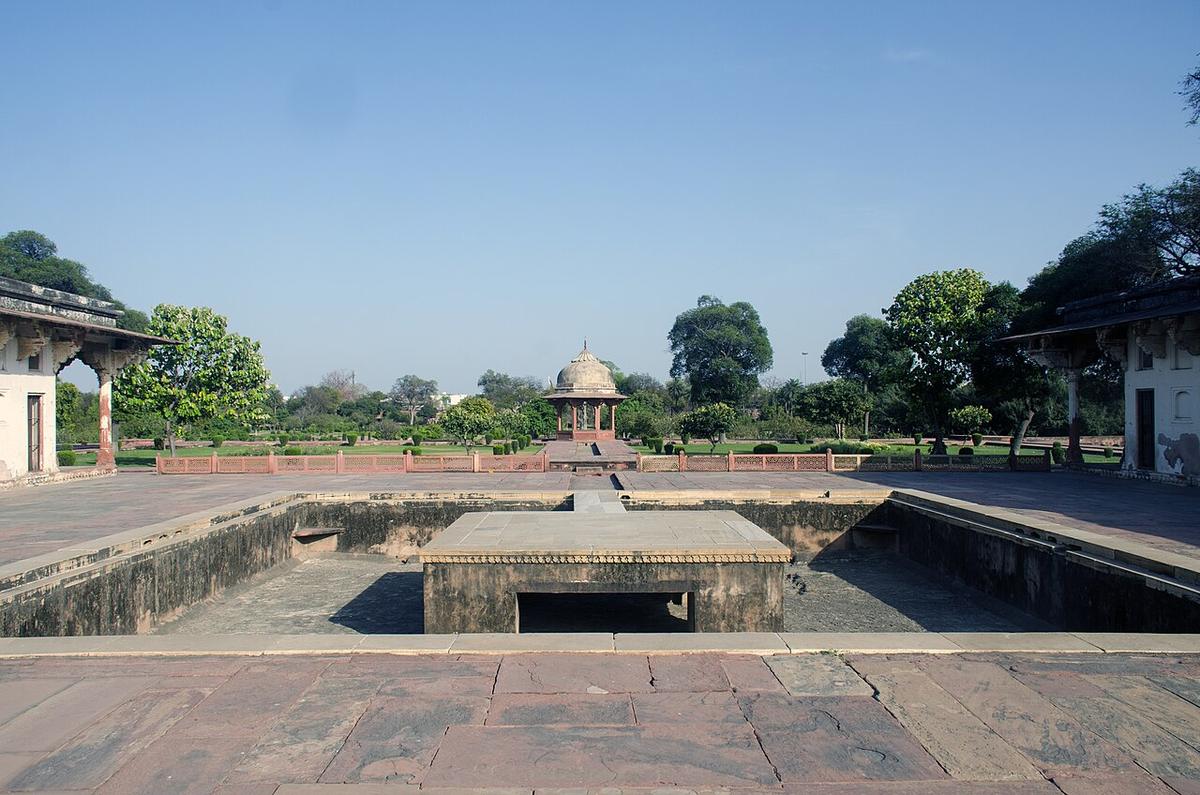
The oldest surviving Mughal garden in India, laid out by Babur around 1528 on the east bank of the Yamuna. He built it on the charbagh plan he had grown up with in Central Asia, a square quartered by water channels, raised terraces catching the river breeze, pavilions to sit in, and he called it Aram Bagh, the garden of rest. When Babur died in 1530 his body was kept here before the long journey to Kabul for burial. The name shifted from Aram Bagh to Ram Bagh during the Maratha years, 1775 to 1803.
Chini Ka Rauza
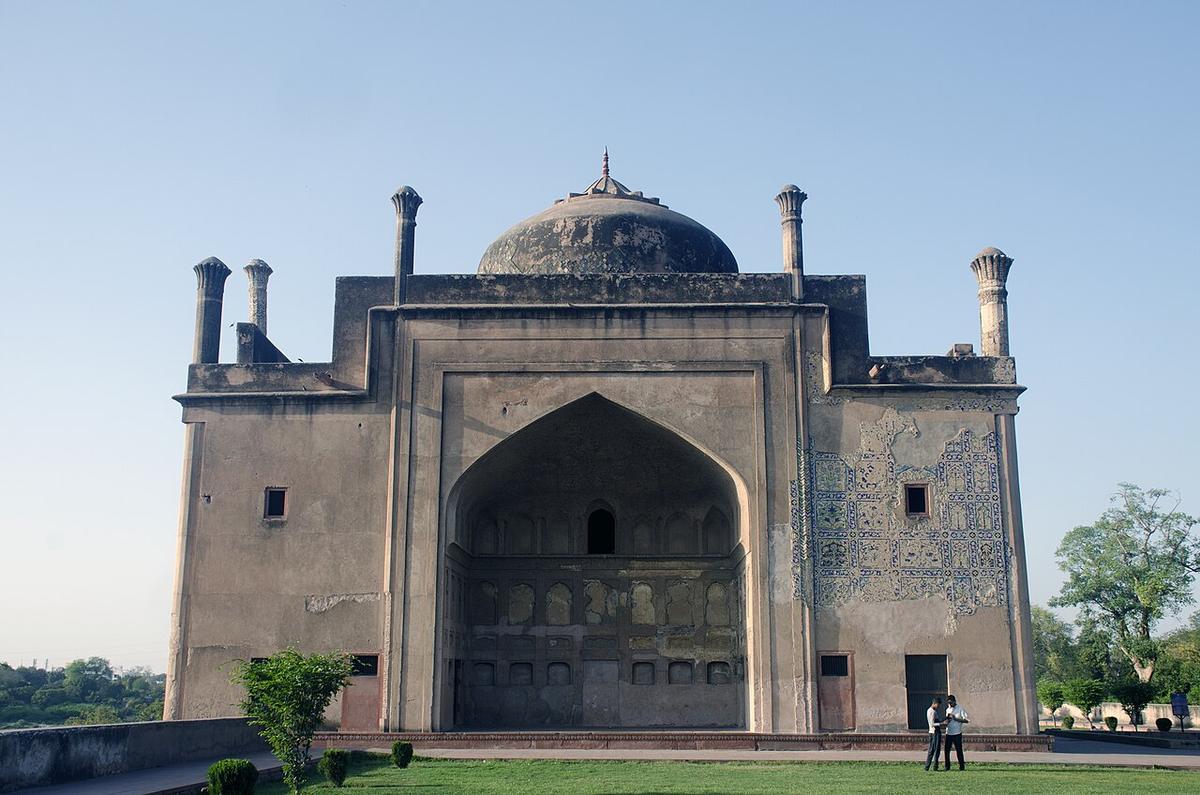
The tomb of Allama Afzal Khan Shukrullah Shirazi, a Persian poet and scholar who rose to be a minister under Shah Jahan, built around 1635 on the river bank. It is the only monument in Agra ever faced entirely in glazed Persian tilework, the same blue-and-turquoise kashi craft you see across Iran. Most of the surface has flaked away over four centuries, but ragged patches of the colour still hold on the wall that faces the water.
Itimad-ud-Daulah
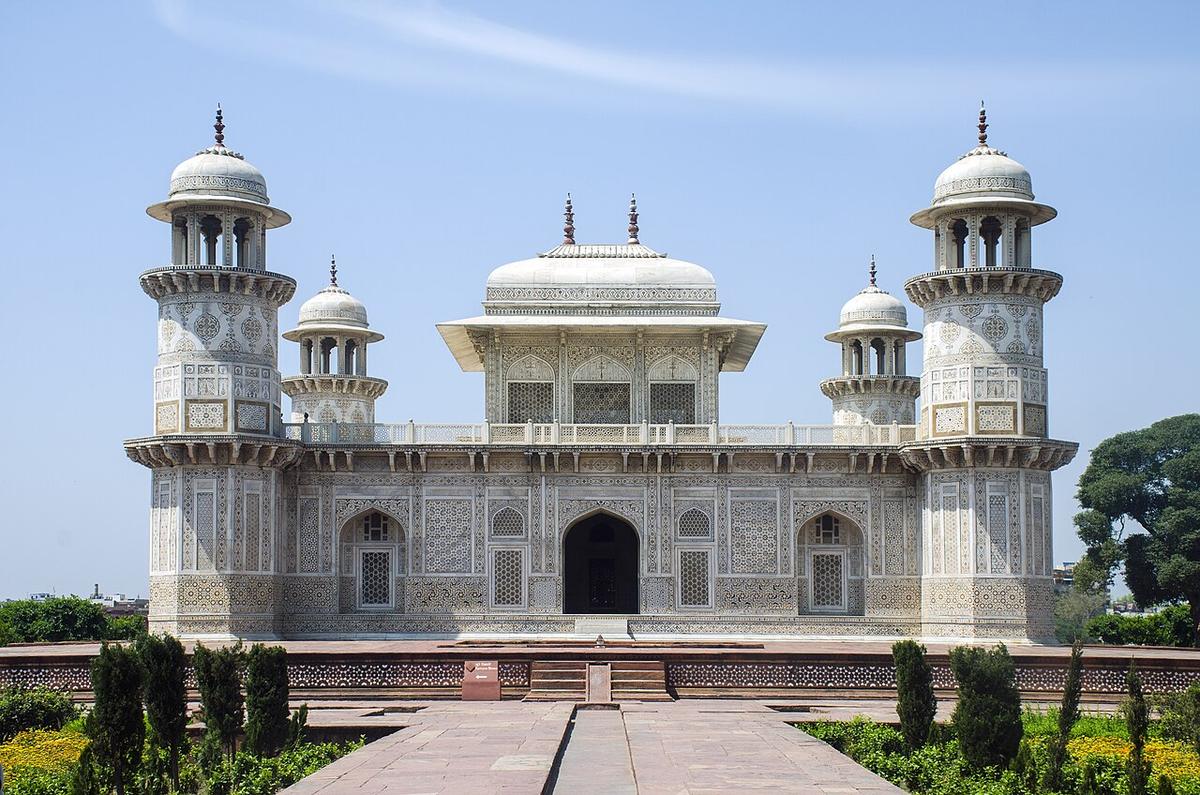
The tomb of Mirza Ghiyas Beg, Jahangir’s chief minister, holder of the title I’timad-ud-Daulah, "Pillar of the State", and the father of Empress Nur Jahan. She built it for him between 1622 and 1628. It is the first Mughal building made entirely of white marble, and the first to carry pietra dura, inlaid flowers and vines cut from carnelian, jasper and lapis, across its whole surface. Everything the Taj would do a decade later is tried out here first, at a quarter of the size.
Mehtab Bagh
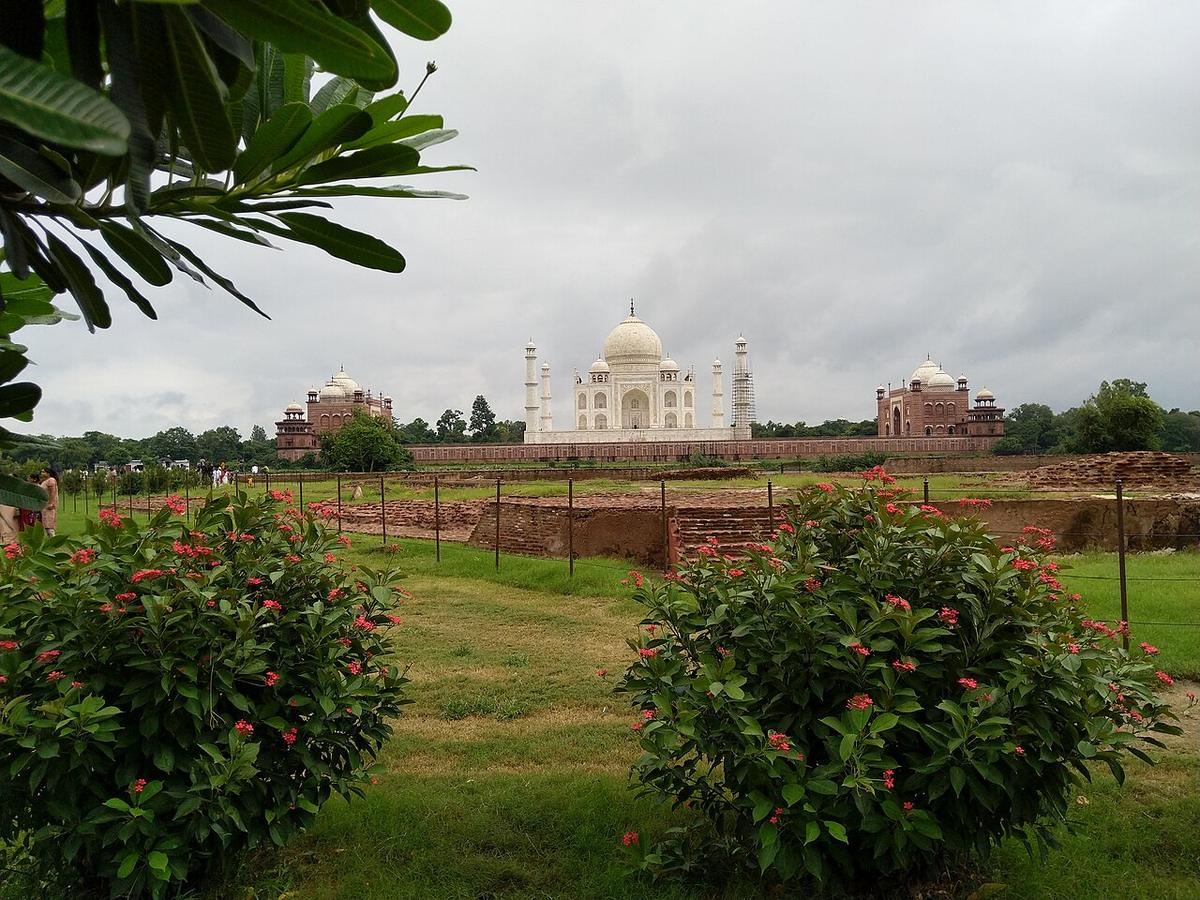
A charbagh laid out on the north bank exactly opposite the Taj, on the same central line, so that the mausoleum sits perfectly framed in the garden’s far wall, it was designed as the place to view the Taj from, especially by moonlight. It silted over and flooded for centuries and has since been replanted. The broken foundations down at the water’s edge are the source of the old story that Shah Jahan meant to build his own tomb here in black marble; excavation has turned up no black tomb, and the "black marble" was white marble stained dark by time.
Guru Ka Tal
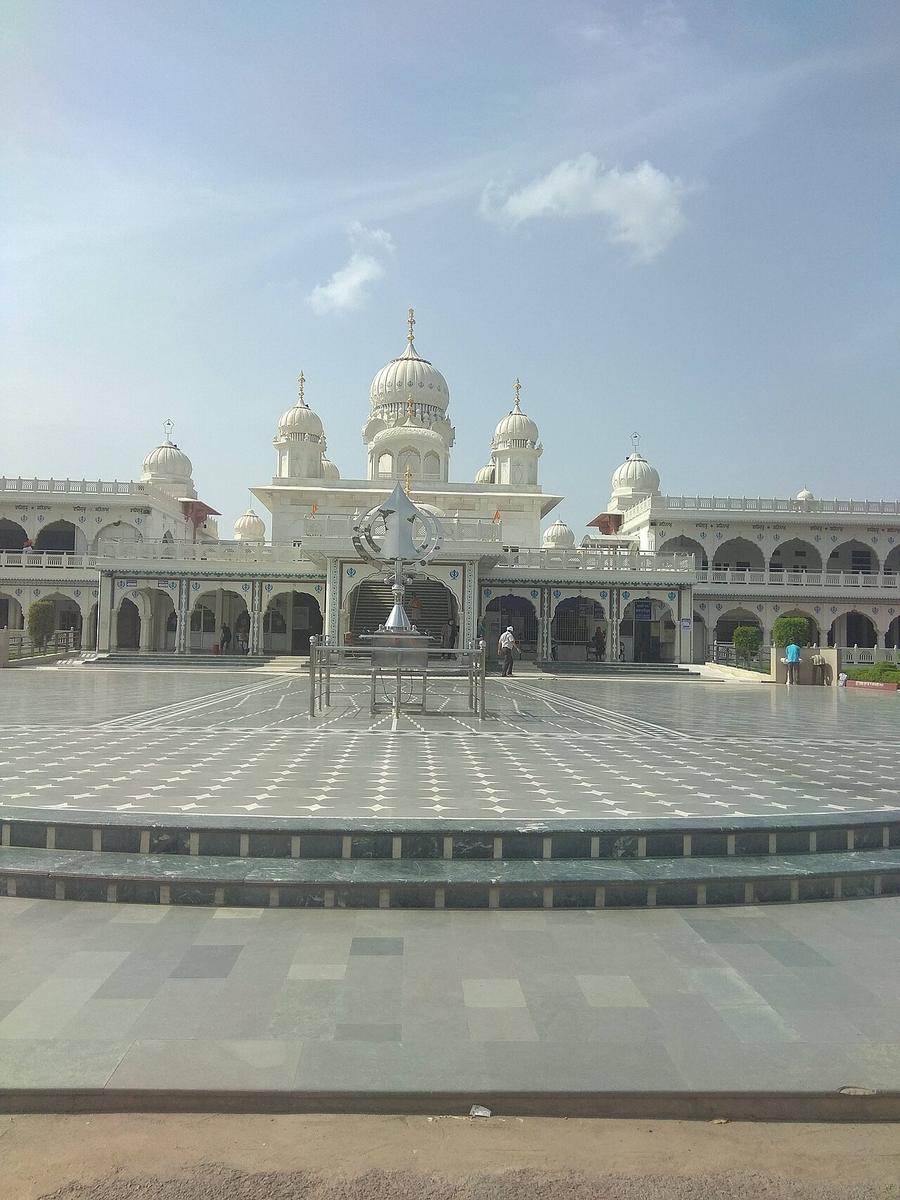
Built around 1610, in Jahangir’s reign, as a great stone tank to catch and hold the monsoon for a dry stretch of the Agra road. It later became a Sikh gurudwara: by tradition the ninth Guru, Tegh Bahadur, was arrested here in 1675 as he travelled toward Delhi, where Aurangzeb had him executed for insisting that Kashmir’s Hindus had the right to keep their own faith. The cell where he was held is marked as Bhora Sahib.
Tomb of Akbar the Great
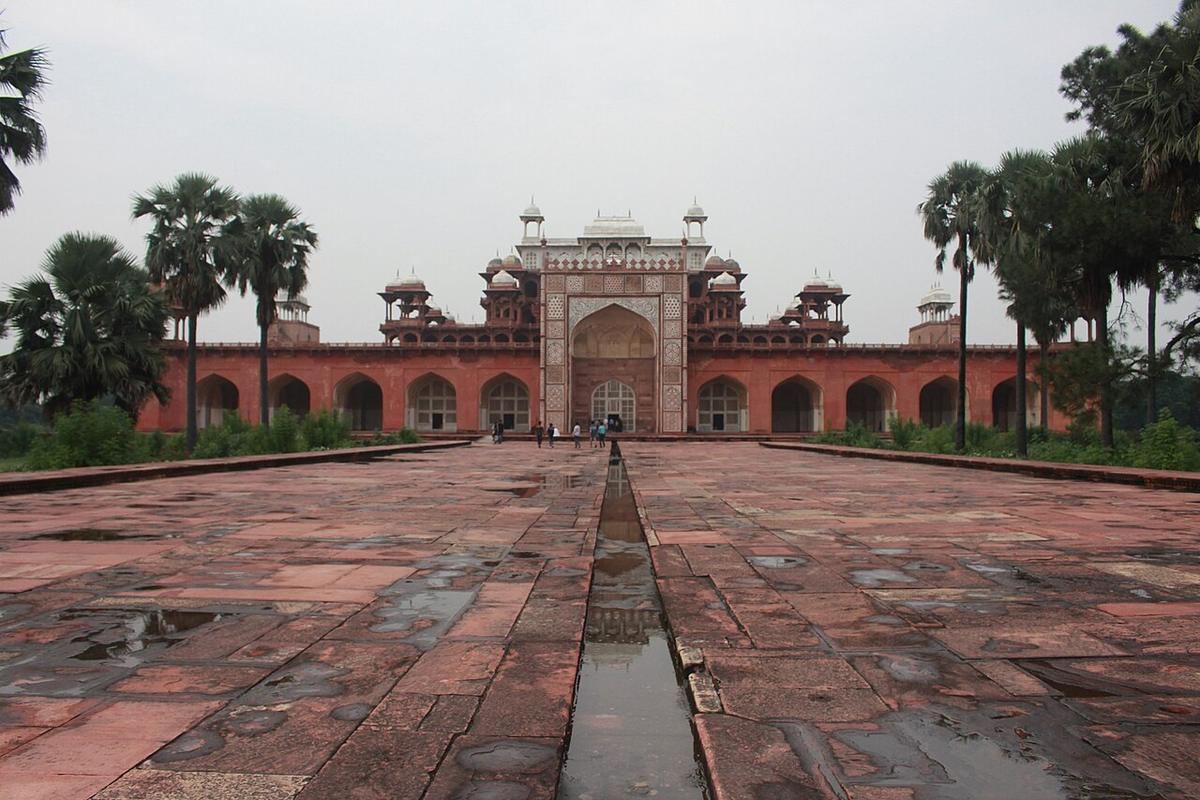
Akbar picked the site at Sikandra and started work on his own tomb; his son Jahangir completed it in 1613. It refuses the single dome of the usual imperial mausoleum and instead climbs in five open, columned tiers like a stepped pyramid, and its carving deliberately braids together Hindu, Jain, Buddhist, Christian, Islamic and Persian motifs, the same synthesis Akbar tried to make of the empire’s religions. Jat rebels under Raja Ram forced their way in during a revolt in 1691 and are said to have burned his remains.
Tomb of Mariam-uz-Zamani
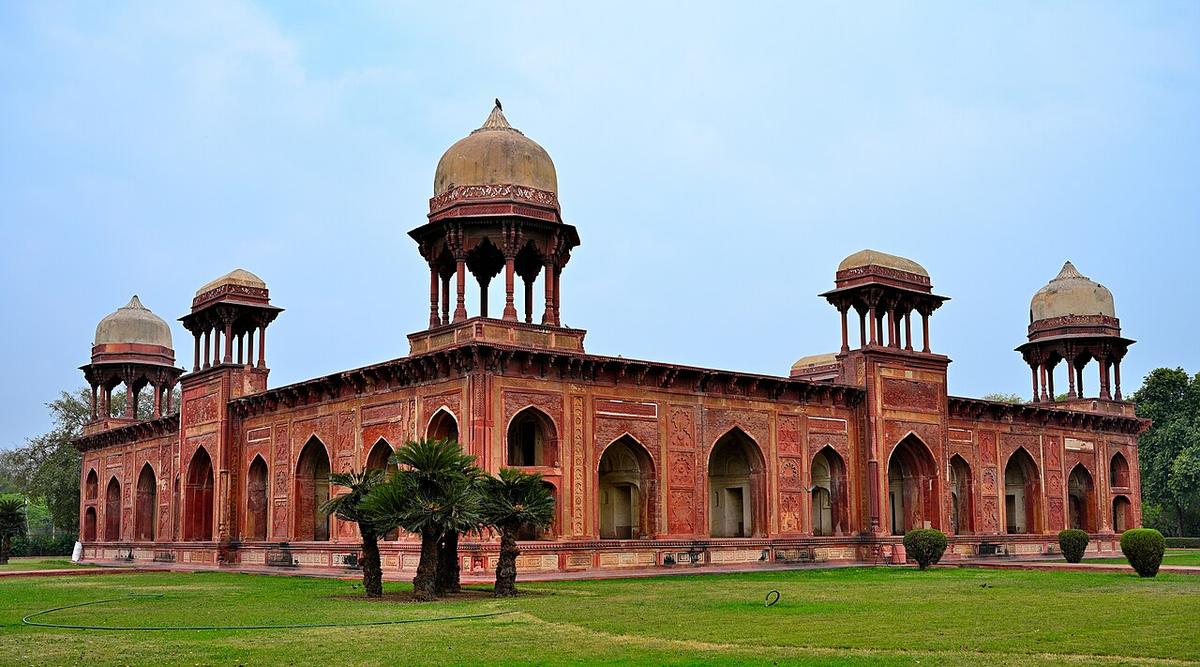
The tomb of Mariam-uz-Zamani, a princess of Amber who married Akbar, became his senior wife and the mother of the next emperor, Jahangir, and was the highest-ranked Hindu empress the Mughals ever had. She kept her own faith at the centre of the court, and ran her own international trade, owning ships that carried pilgrims and cargo to Mecca. Jahangir converted a Lodi-era garden pavilion at Sikandra into her tomb, finished in 1623.
Jama Masjid
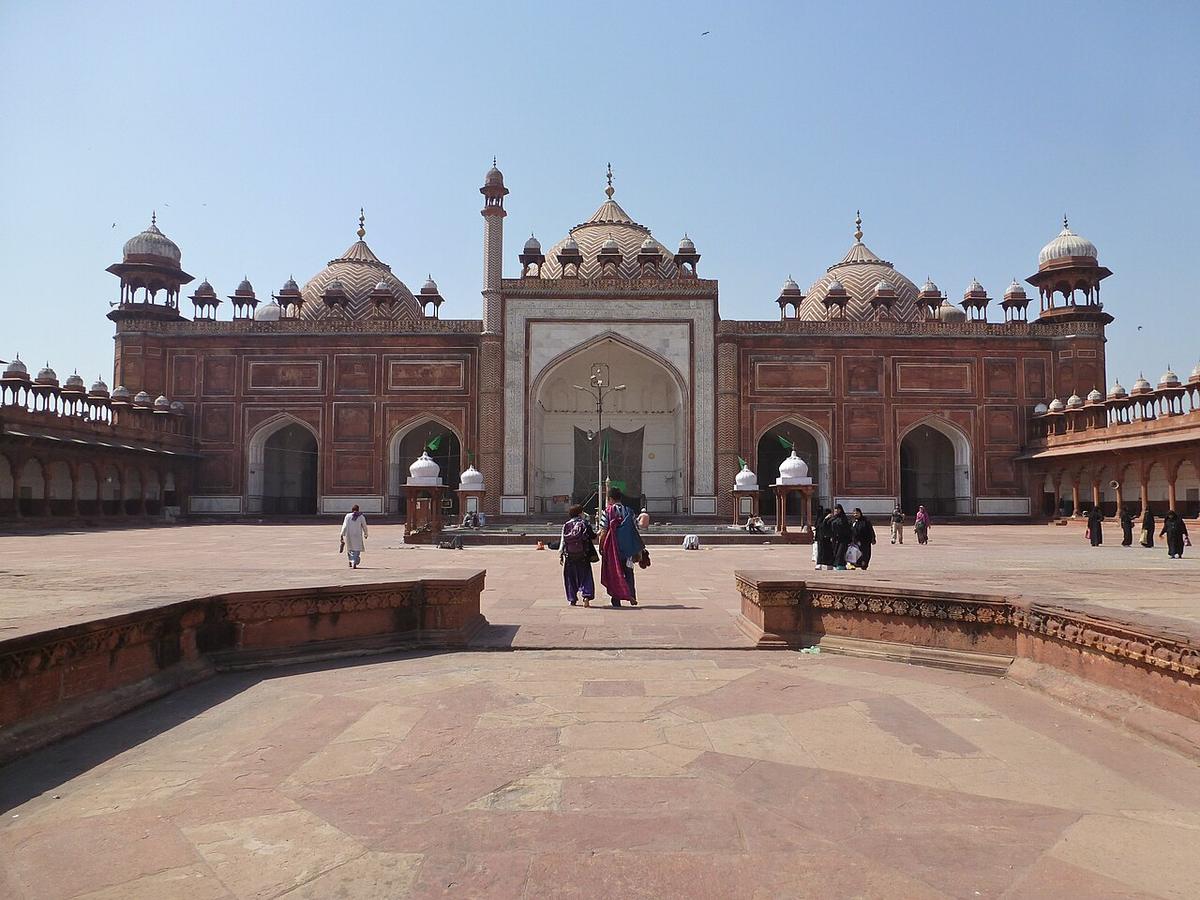
The congregational mosque of Agra, built in 1648 by Jahanara Begum, Shah Jahan’s eldest daughter, the woman who would later nurse him through his years as a prisoner. It was raised to face Agra Fort across an enormous walled square, the two buildings in conversation. After the revolt of 1857 the British demolished its great gateway and ran the railway line straight through the square, which is why the mosque now sits stranded, cut off from the fort it was built to answer.
Agra Fort
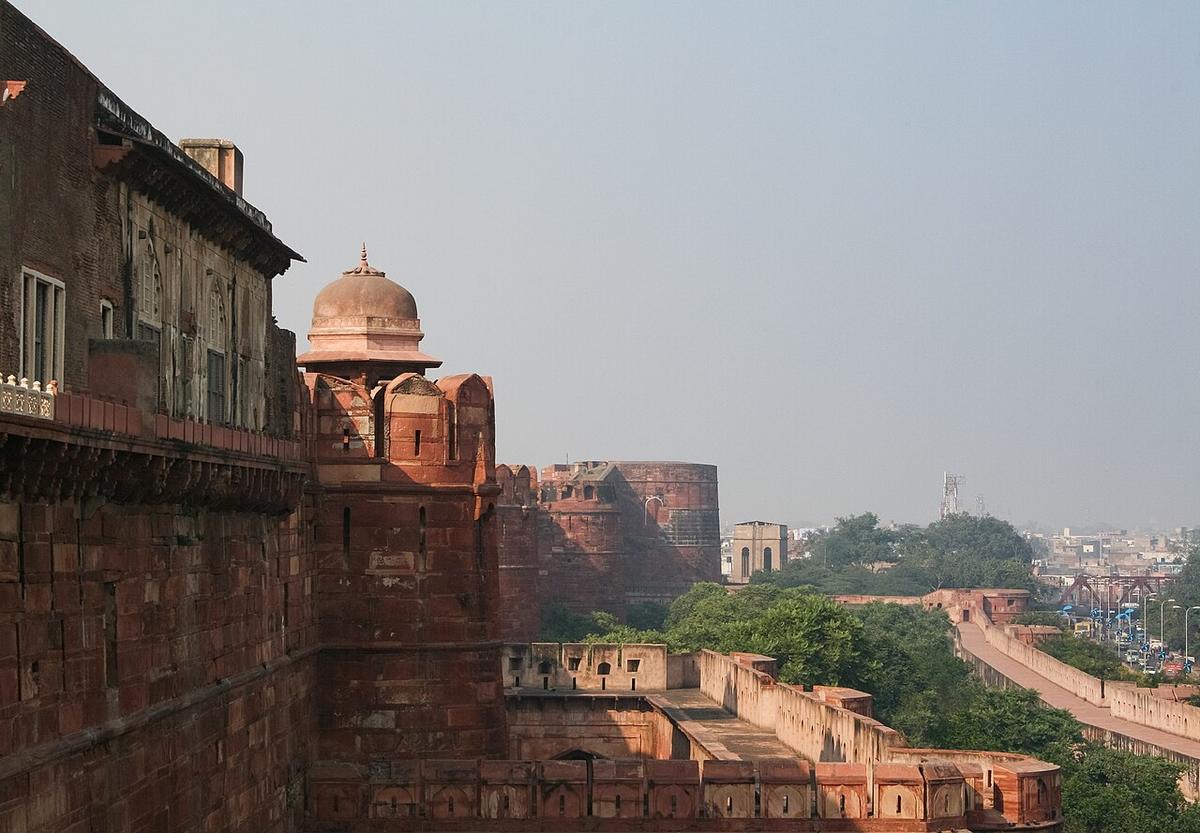
Akbar rebuilt this fort in red sandstone between 1565 and 1573 on the site of an older Lodi stronghold, a walled city behind a 21-metre rampart and a double moat. Shah Jahan later filled it with white marble: the Khas Mahal, the Diwan-i-Khas, the Moti Masjid, and the octagonal river tower, the Musamman Burj. In 1658 his son Aurangzeb seized the throne and imprisoned him in that tower. Shah Jahan spent his last eight years there, looking downriver at the Taj, and died in 1666 with that view.
Taj Mahal
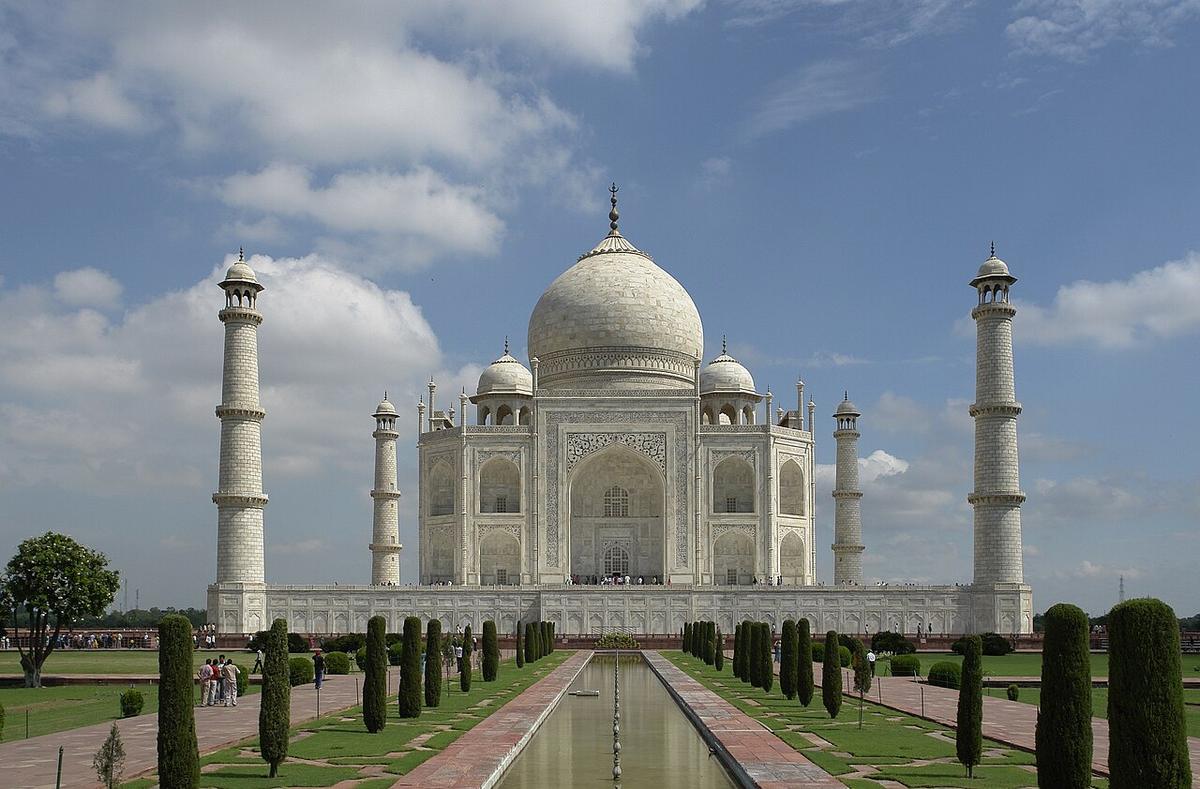
Shah Jahan’s mausoleum for his wife Mumtaz Mahal, who died in 1631 giving birth to their fourteenth child. Building began around 1632; the tomb itself was finished by about 1643 and the full complex, gateway, mosque, guest house, the great charbagh, by 1653, worked by a labour force of roughly twenty thousand in white Makrana marble inlaid with pietra dura. The plan is almost perfectly symmetrical about its central axis. The single deliberate break in that symmetry is Shah Jahan’s own cenotaph, set beside hers, off-centre, after his death.