Bhubaneswar: The Temple City
The Bhubaneswar Safarnama runs 3.4 km across 4 monuments, from Parasurameswara Temple to Rajarani Temple, part of The Cultural Trail. Bhubaneswar is known as the temple city, here is the story the route tells, one stop at a time.
Parasurameswara Temple
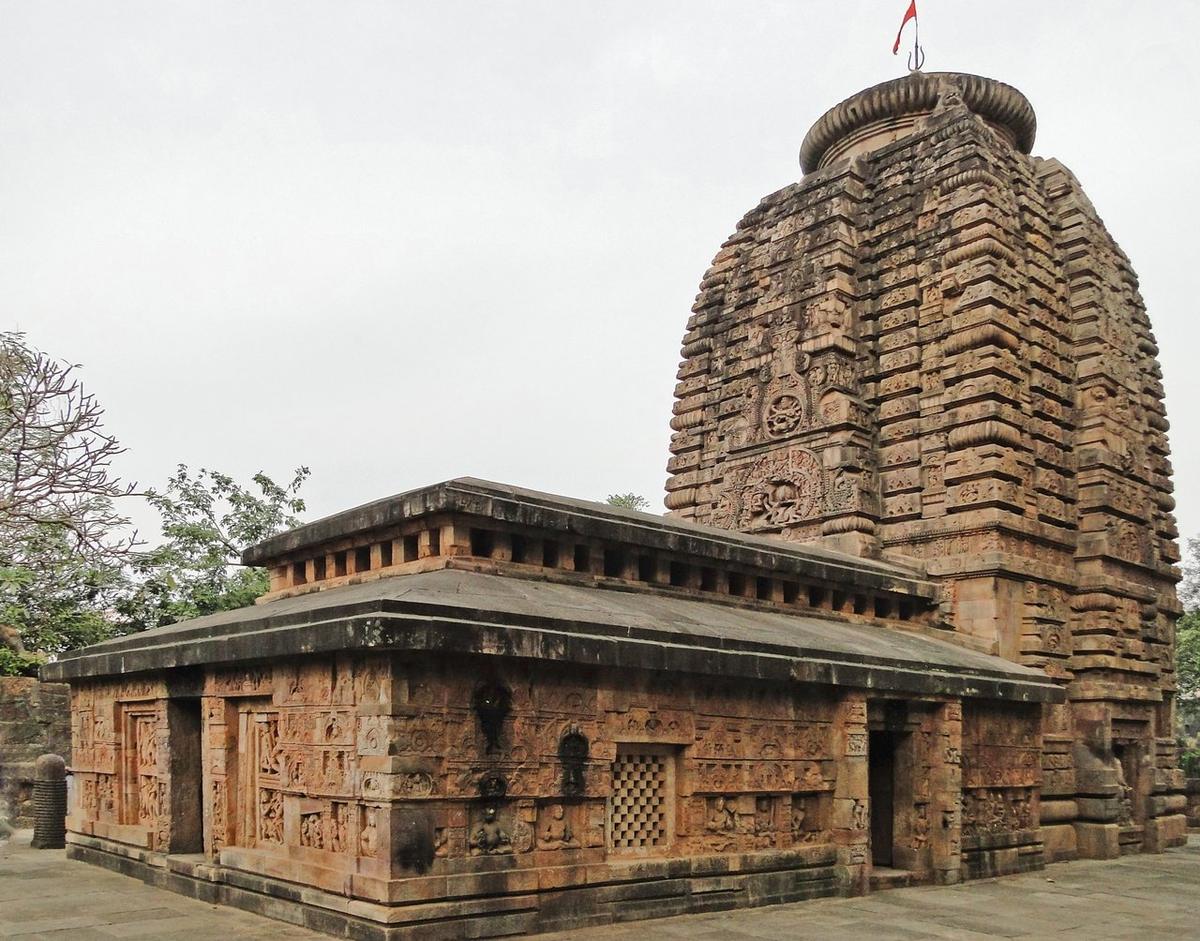
Built around the 7th century and dedicated to Shiva, Parasurameswara is the oldest well-preserved temple in a city that would eventually hold hundreds of them. Its deul (tower) and jagamohana (porch) are already recognisably in the Kalinga style that later temples on this route would take to far greater scale, a modest, complete first draft of an architectural language Odisha would keep refining for the next four centuries.
Mukteshwar Temple
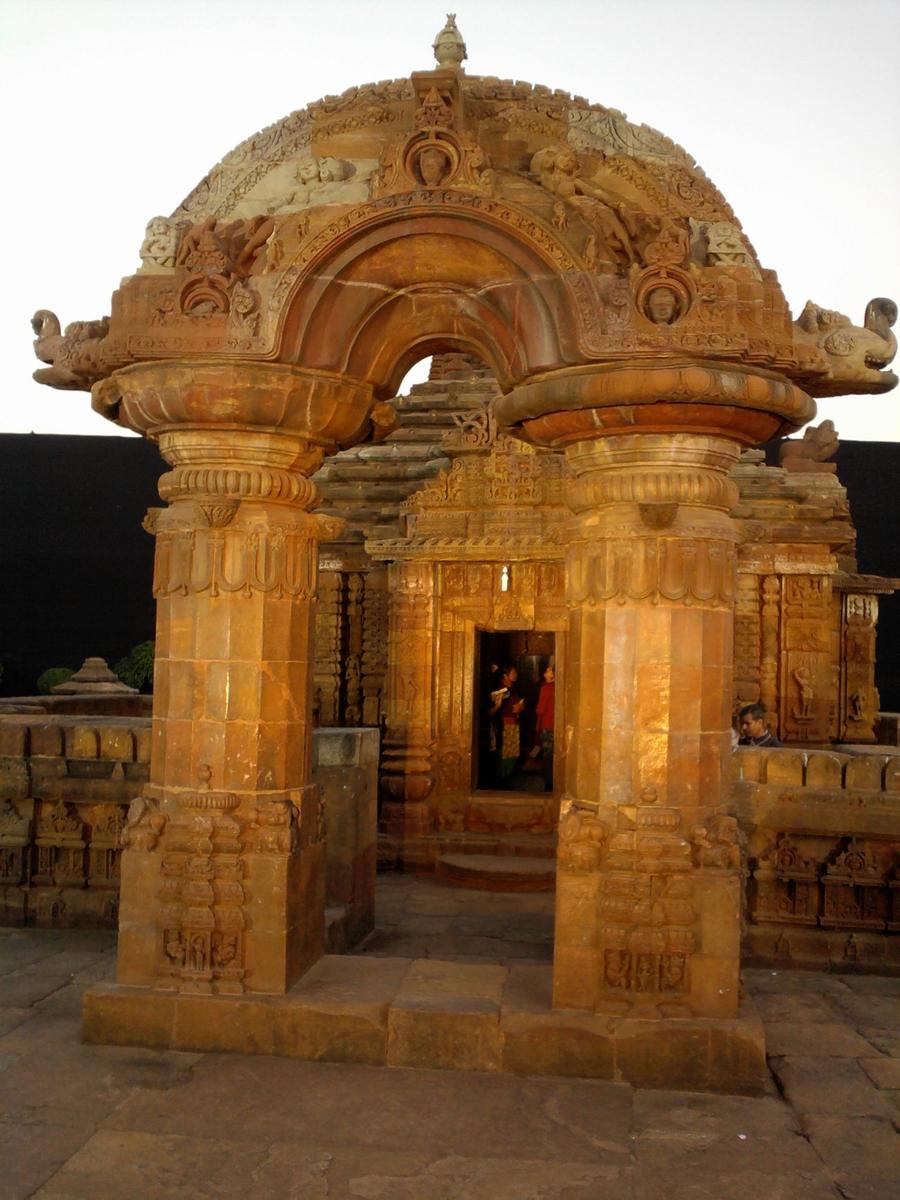
Built around the 10th century, Mukteshwar is small compared to what follows on this route, but its torana, a freestanding, ornately carved arched gateway set in front of the entrance, has no real precedent elsewhere in Odishan temple architecture and is often singled out as the finest single piece of carving in the whole city. A modest temple, but the doorway alone is why people still detour a hundred and fifty metres to see it.
Lingaraj Temple
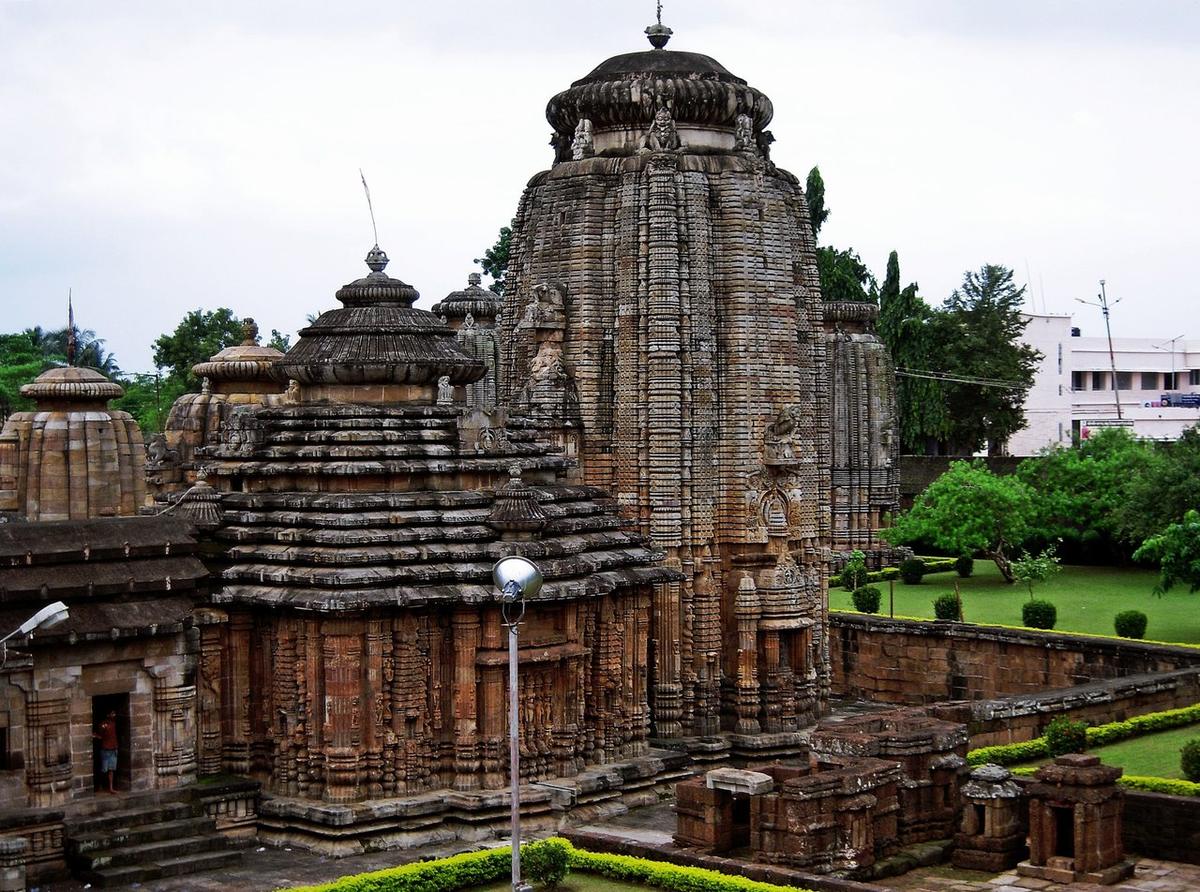
Commissioned in the 11th century by the Somavamshi king Jajati Keshari and completed by his son Lalatendu Keshari, Lingaraj enshrines a swayambhu (self-manifested) Shivalinga some eight feet across, and, unusually, is worshipped as a joint form of both Shiva and Vishnu together, known here as Harihara. Its 55-metre tower is the tallest and grandest in Bhubaneswar, the point Kalinga architecture had been building toward since Parasurameswara four centuries earlier.
Rajarani Temple
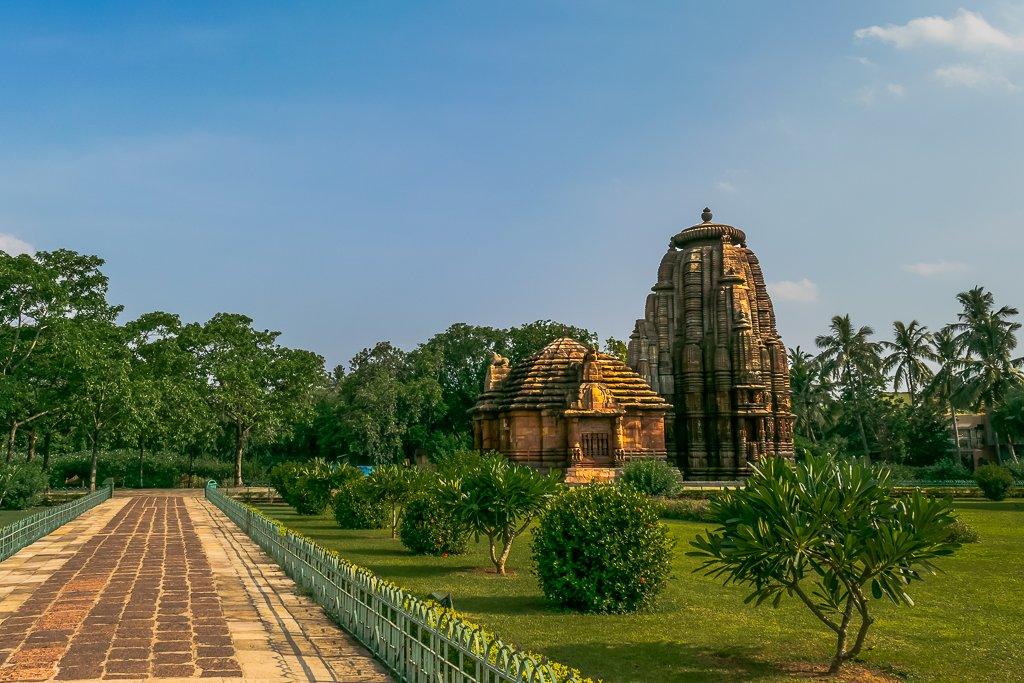
Built between 1000 and 1022 CE by the Somavamshi ruler Indraratha, after whom it was originally named Indreswara, Rajarani has no presiding deity in its sanctum at all, which is why it is popularly known as the “Love Temple”: built purely for its architecture and sculpture rather than active worship. Its distinctive reddish-gold sandstone, quarried locally and still called Rajarani stone, carries eight carved Dikpala guardian figures around its exterior.