Delhi: The Capital
The Delhi Safarnama runs 30.7 km across 10 monuments, from Qutub Minar to Red Fort, part of The Empire Trail. Delhi is known as the capital, here is the story the route tells, one stop at a time.
Qutub Minar
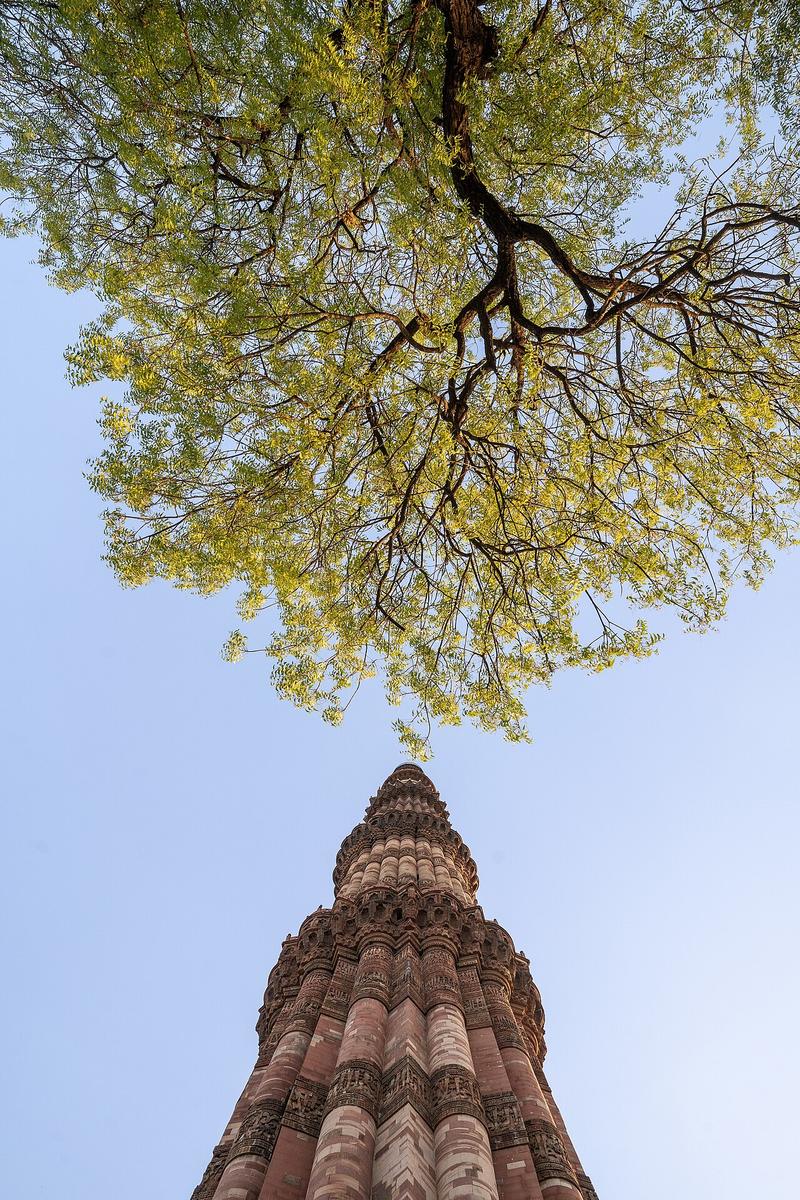
Begun in 1192 by Qutb-ud-din Aibak, the first sultan of Delhi, to announce the start of Muslim rule, and finished by his successor Iltutmish. At about 72.5 metres it is the tallest brick minaret in the world, red sandstone banded with marble, the lower storeys carved with lines of the Quran. Around its foot stand the Quwwat-ul-Islam mosque, the first mosque built in India, raised from the stone of twenty-seven demolished Hindu and Jain temples whose carving still shows in its pillars, and a fourth-century iron pillar that has barely rusted in sixteen hundred years.
Hauz Khas
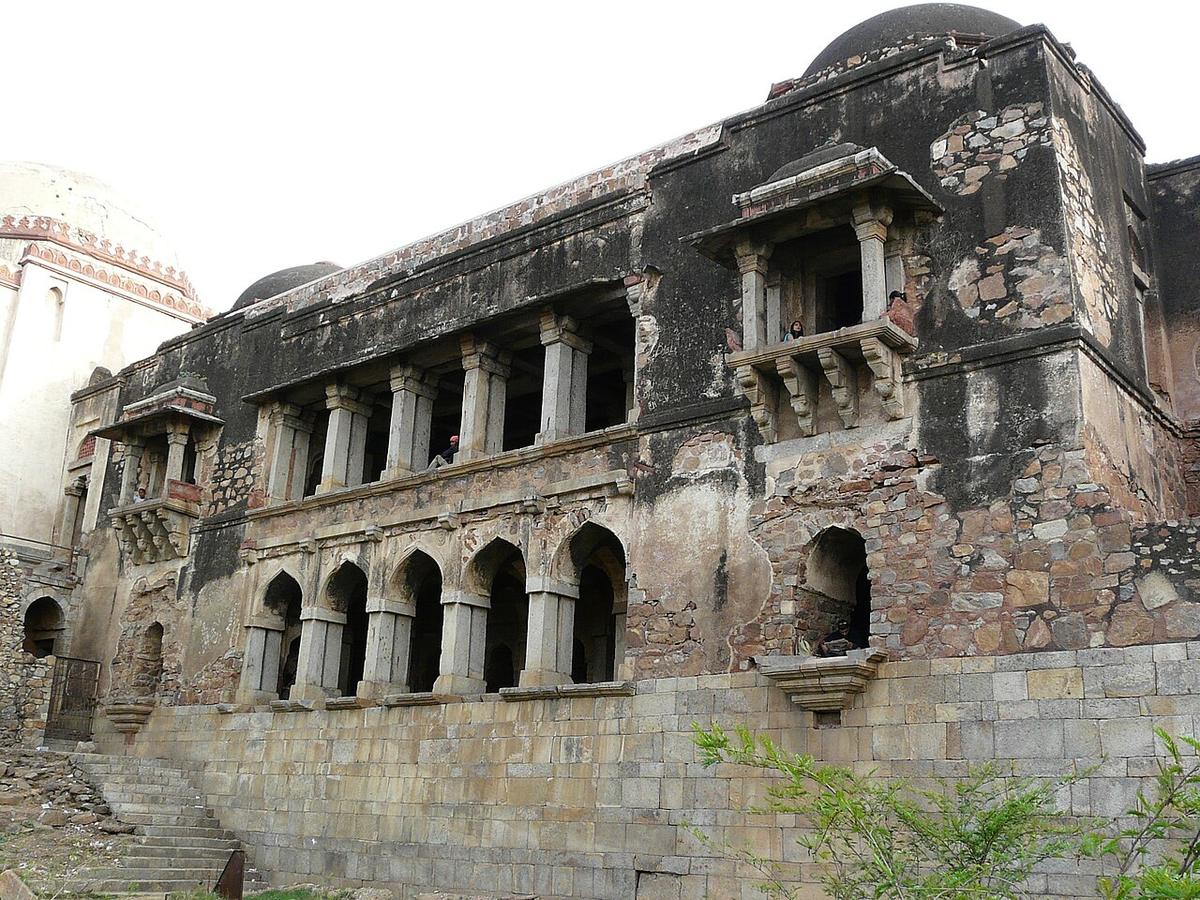
"The royal tank." Alauddin Khalji dug the reservoir around 1300 to water his new city of Siri; it silted over within a generation. In 1352 Firoz Shah Tughlaq had it cleared and re-lined, and built a madrasa along two of its banks, for a time the largest and best-equipped Islamic seminary anywhere in the world, with his own plain tomb set at the corner where the two wings meet. The water, the L-shaped college and the row of domed pavilions all still stand around what is now a lake and a park.
Safdarjung’s Tomb
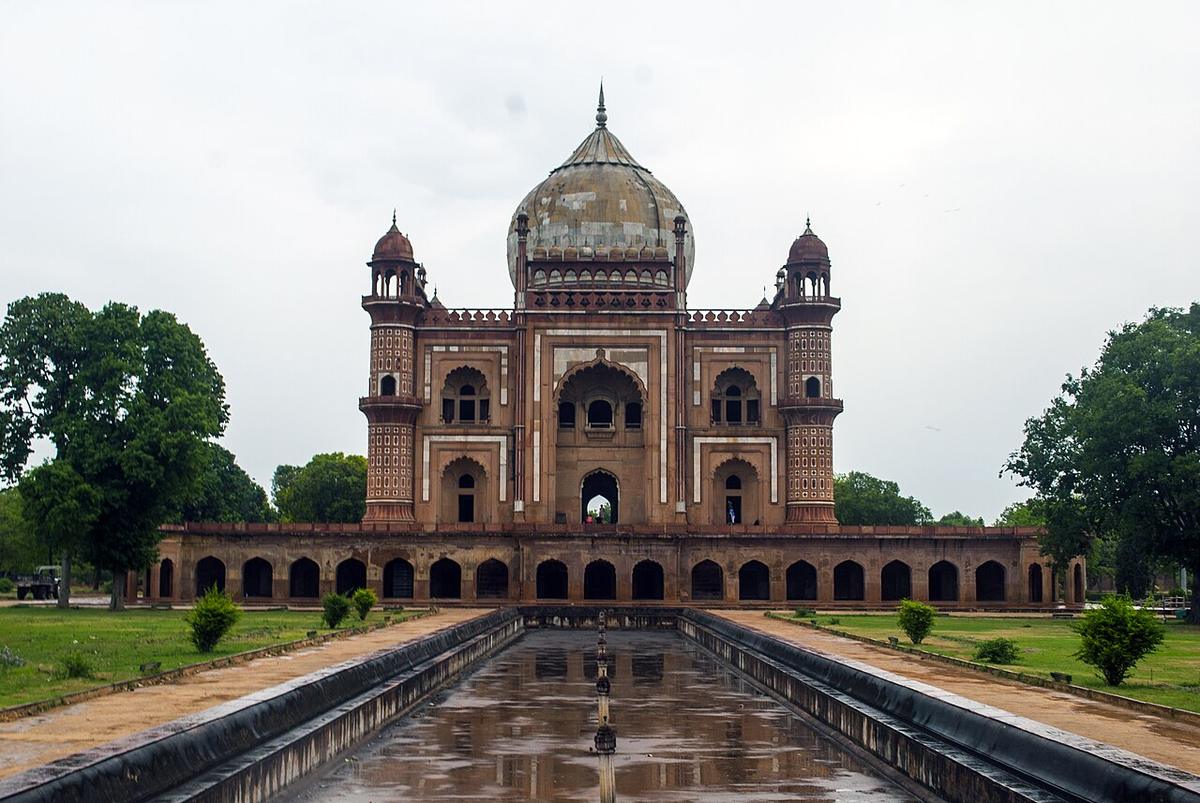
Built in 1754 by Nawab Shuja-ud-Daula for his father Safdarjung, Nawab of Awadh and a prime minister of an empire that was already coming apart. It is the last of the grand Mughal garden-tombs, a four-quartered charbagh, a domed mausoleum of marble and sandstone, a slightly squatter, heavier echo of Humayun’s Tomb two centuries earlier. Some of its marble is said to have been prised off an older tomb nearby, because there was no longer the money to quarry new.
Lodhi Gardens
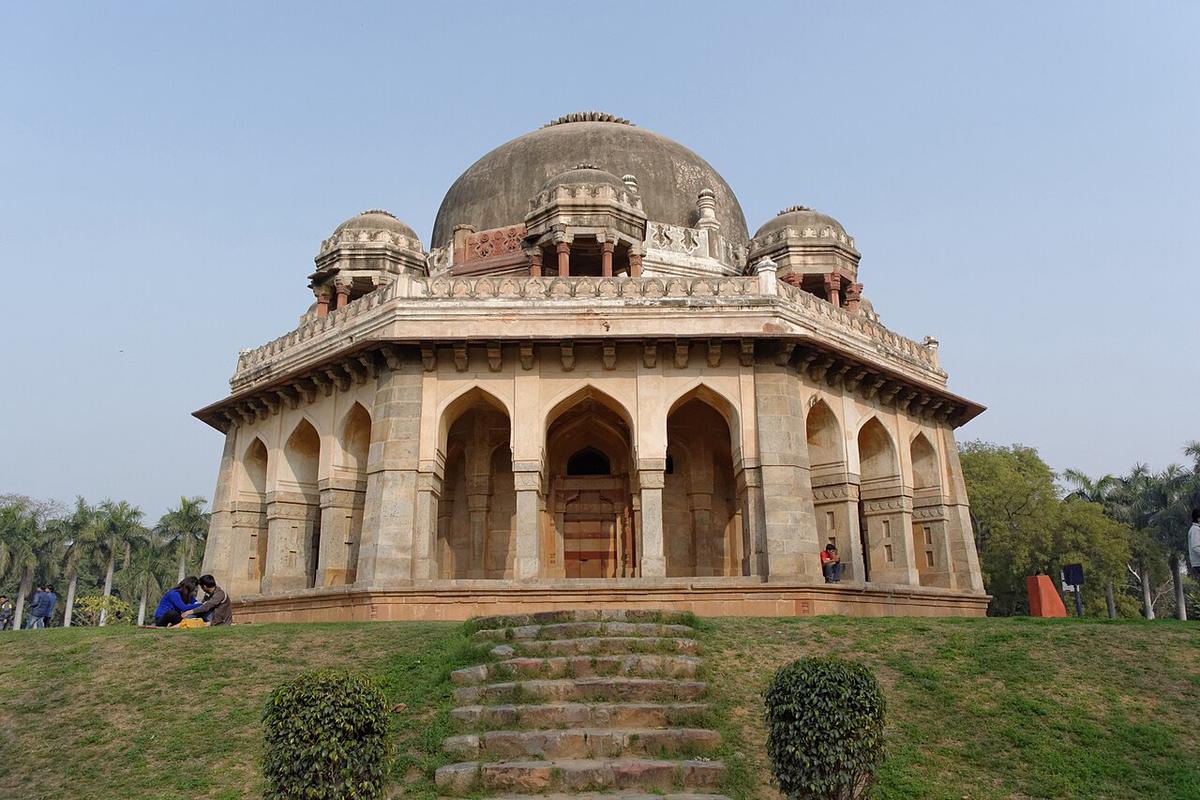
Ninety acres holding the tombs of the Sayyid and Lodi sultans who ruled Delhi in the 15th and early 16th centuries, the octagonal tombs of Mohammed Shah and Sikandar Lodi, the Bara Gumbad and Sheesh Gumbad, a small mosque. For four centuries villages grew up in and around the ruins; in 1936 the British cleared the people out and landscaped the whole thing into a park.
Humayun’s Tomb
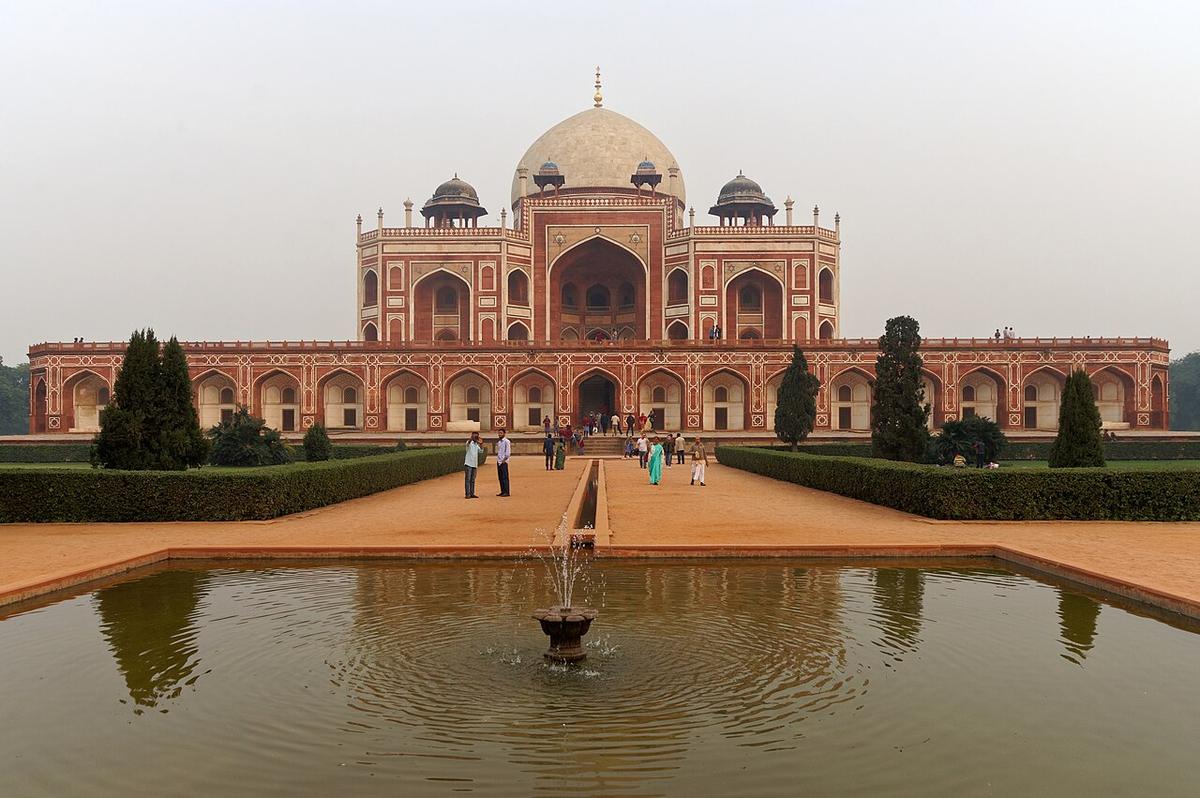
Commissioned around 1565 by Humayun’s widow, Bega Begum, and designed by the Persian architect Mirak Mirza Ghiyas. It is the first great Mughal garden-tomb in India, a high double dome of red sandstone and white marble, set dead-centre in a four-quartered garden crossed by water channels, and everything the Taj Mahal would do seventy years later is first worked out here. Some hundred and fifty Mughals are buried inside; it is also where the British ran the last emperor, Bahadur Shah Zafar, to ground in 1857.
Purana Qila
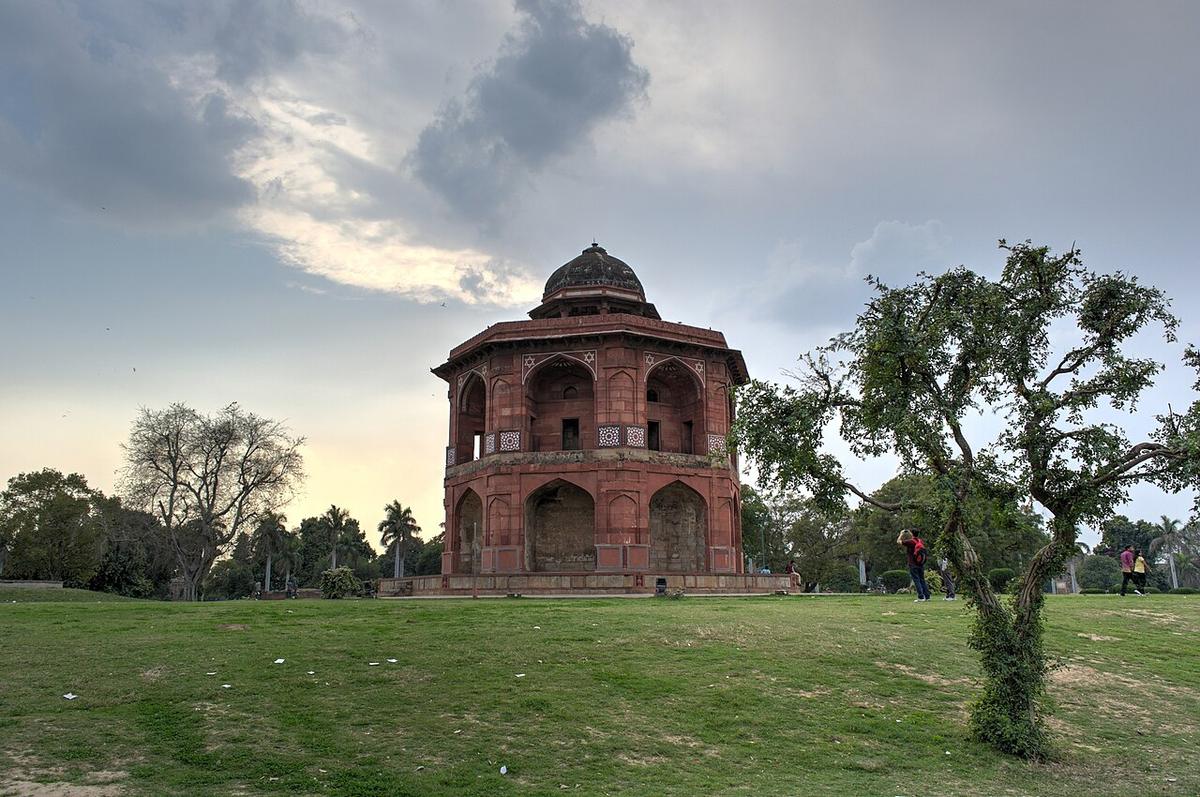
The "Old Fort", held by tradition to be Indraprastha, the Pandava capital of the Mahabharata, and excavation here has turned up pottery a thousand years older than the Mughals. What stands above ground is Sher Shah Suri’s and Humayun’s work from the 1530s and 40s: the great Bara Darwaza gate, the Qila-i-Kuhna mosque, and the octagonal Sher Mandal, the small library tower from whose stone steps Humayun slipped and fell to his death in 1556.
India Gate
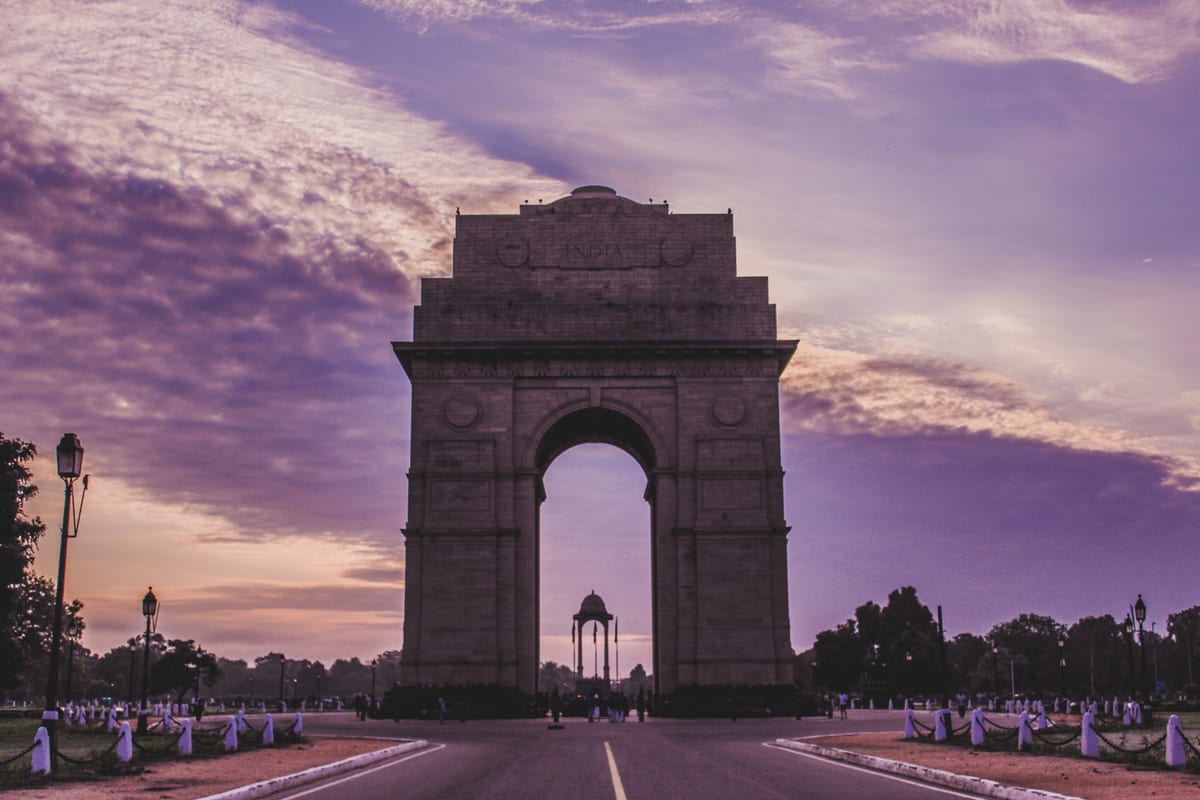

A forty-two-metre arch designed by Edwin Lutyens, begun in 1921 and finished in 1931, cut with the names of some seventy-four thousand Indian soldiers who died in the First World War and the Third Anglo-Afghan War, men who fought other people’s wars far from home. The canopy behind it once held a statue of King George V; it stood empty for decades and now holds a statue of Subhas Chandra Bose.
Jantar Mantar
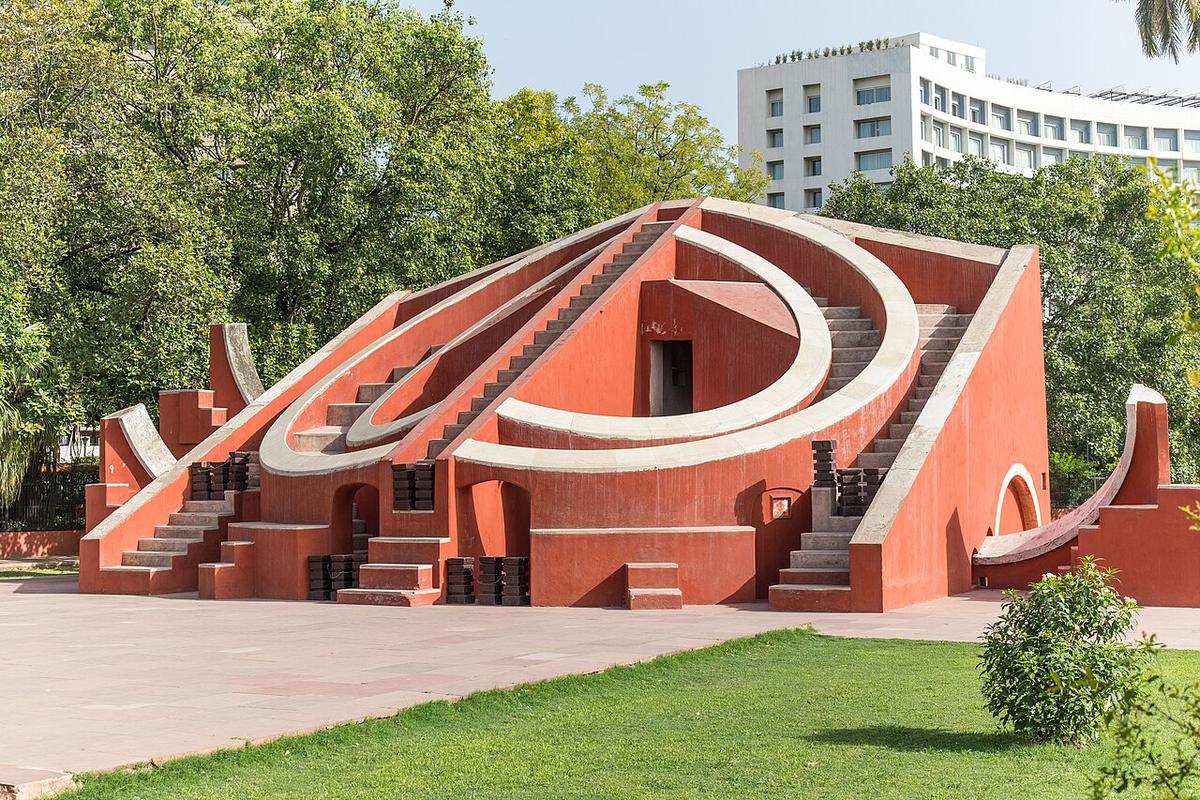
Built in 1724 by Maharaja Jai Singh II of Jaipur, the same ruler who laid out Jaipur and its observatory, on the orders of the emperor Muhammad Shah, to fix the astronomical tables that had drifted out of true. Thirteen enormous masonry instruments measure time, follow the sun and pin the positions of the stars with nothing but the naked eye and a shadow: the Samrat Yantra sundial, the Misra Yantra, the bowl-shaped Jai Prakash.
Jama Masjid
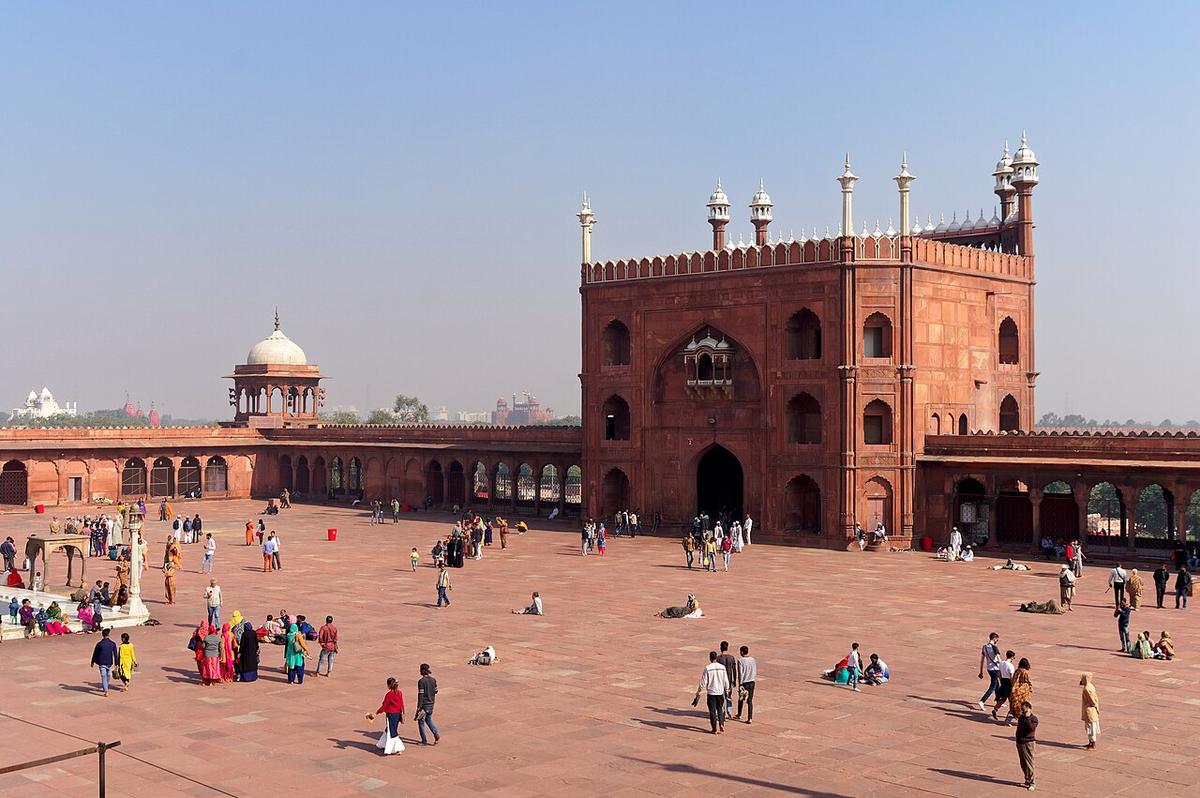
The Masjid-i Jahan-Numa, "the mosque that commands a view of the world", built by Shah Jahan between 1650 and 1656 as the last great work of his reign. It is the largest mosque in India, a courtyard that holds twenty-five thousand people, three bulbed marble domes, two forty-metre minarets striped in red sandstone and white marble, and it was set on its rise to face the Red Fort straight down the main avenue of the new city.
Red Fort
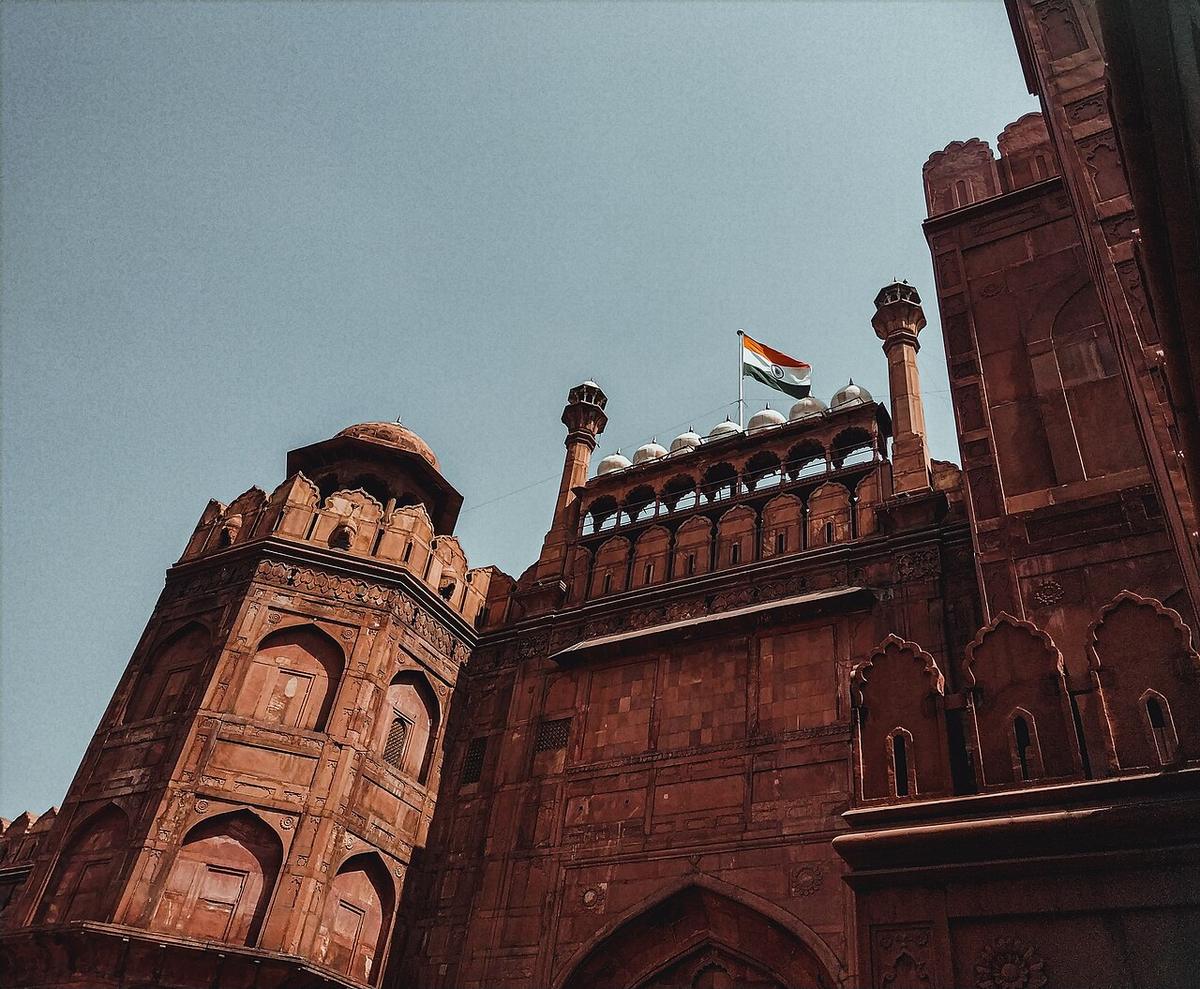
Shah Jahan’s citadel-palace, built 1638 to 1648 as the core of Shahjahanabad, his new Delhi, two and a half kilometres of red sandstone wall, the Diwan-i-Am and the Diwan-i-Khas with its couplet "if there be a paradise on earth, it is here", and the Peacock Throne that Nadir Shah carried off to Persia in 1739. The British demolished most of the interior after 1857 and turned it into a barracks. And every Independence Day since 15 August 1947, the prime minister has raised the flag and spoken to the country from the rampart above its Lahori Gate.