Fatehpur Sikri: The Abandoned Capital
The Fatehpur Sikri Safarnama runs 2.4 km across 10 monuments, from Hiran Minar to Tomb of Salim Chishti, part of The Empire Trail. Fatehpur Sikri is known as the abandoned capital, here is the story the route tells, one stop at a time.
Hiran Minar
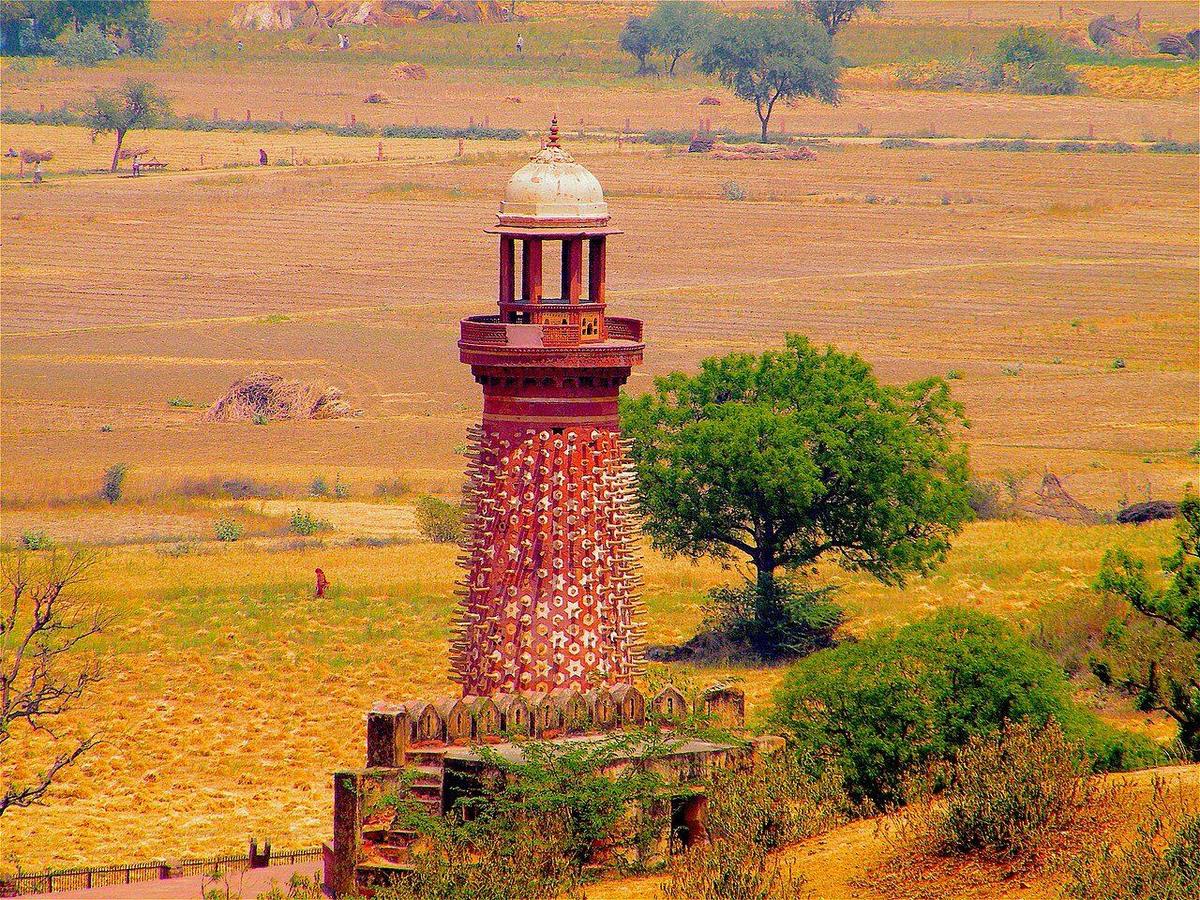
A round tower about twenty-one metres high, its whole surface bristling with hundreds of stone spikes carved to look like elephant tusks. Tradition says Akbar raised it over the grave of Hiran, his favourite elephant; more likely it was an akash-diya, a lamp-tower to guide travellers in along the old road from Agra, and a marker for the edge of the imperial hunting grounds. It stands apart from everything else, the first thing an arriving traveller saw, and now almost the last thing left standing outside the walls.
Diwan-i-Am
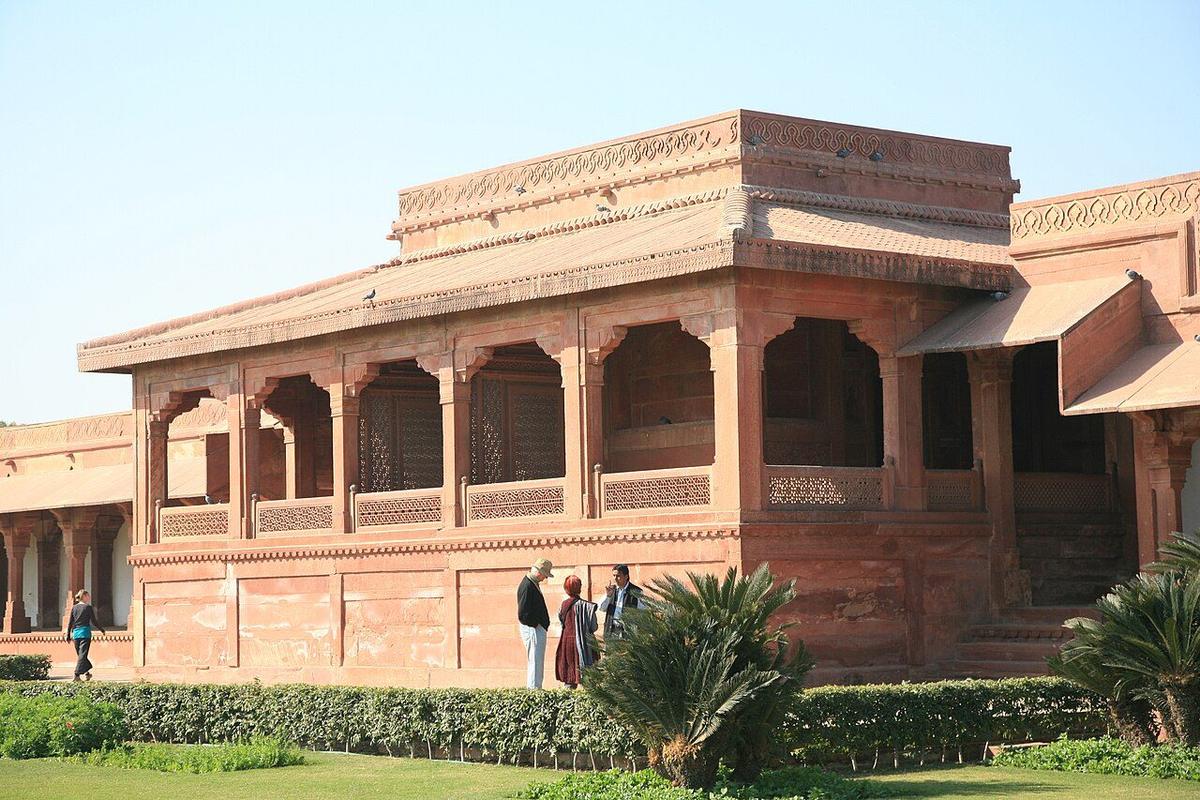
The Hall of Public Audience, a long open courtyard closed at one end by a pillared hall, where Akbar heard petitions from anyone who came: a merchant cheated of a debt, a village with a tax it could not pay. He sat in a raised, jali-screened box at the centre. Justice here was fast and personal, and sometimes brutal, sentences were carried out in the same yard, occasionally by elephant.
Diwan-i-Khas
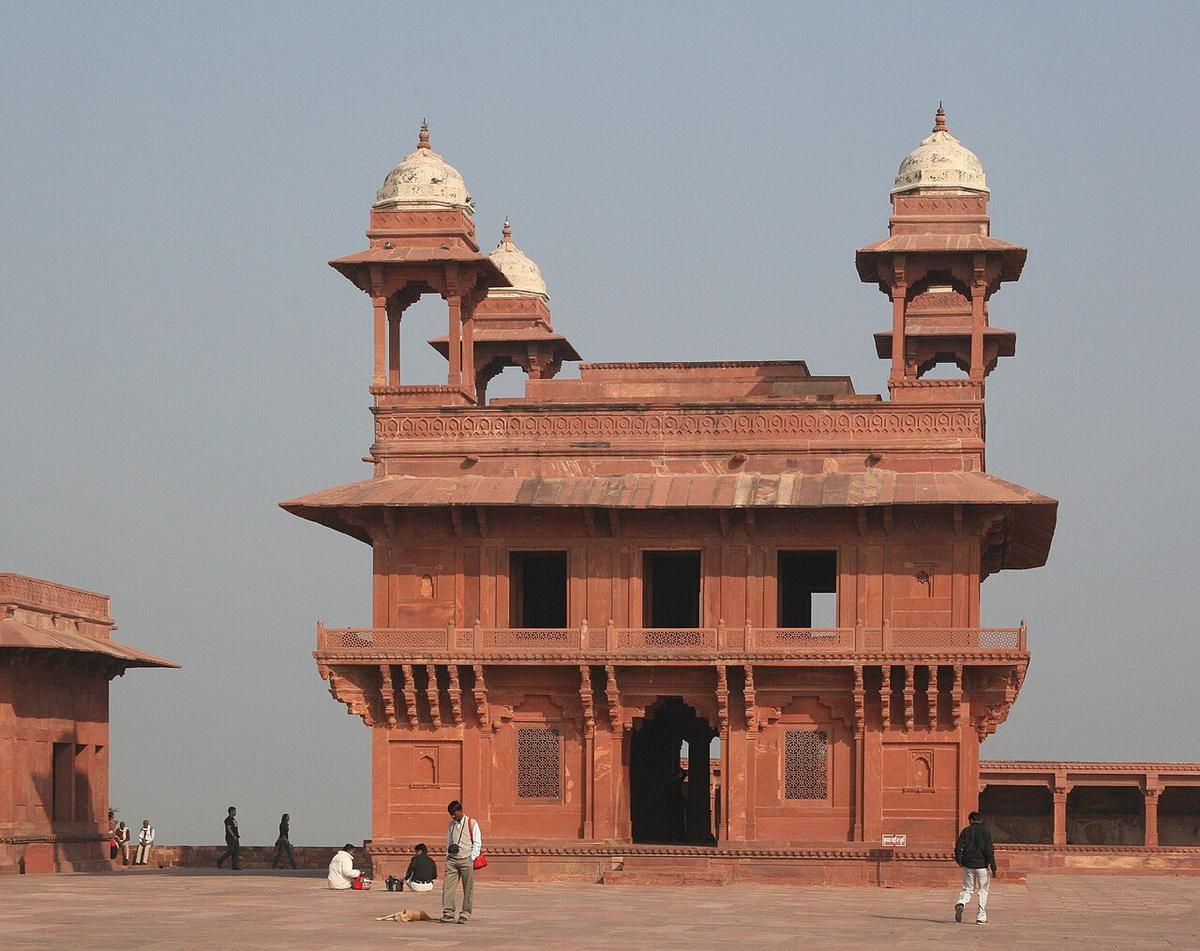
From outside, a plain two-storey cube. Inside, a single giant column rises from the floor and blooms at the top into a vast carved bracket-capital, and from that platform four narrow stone bridges run to the corners of the room. Akbar sat on the central platform; his advisers stood at the ends of the bridges. This is where he held the debates between Muslim, Hindu, Jain and Zoroastrian scholars and Jesuit priests from Goa, the argument out of which he tried to distil one faith, Din-i-Ilahi. It won almost no followers and died with him.
Anup Talao
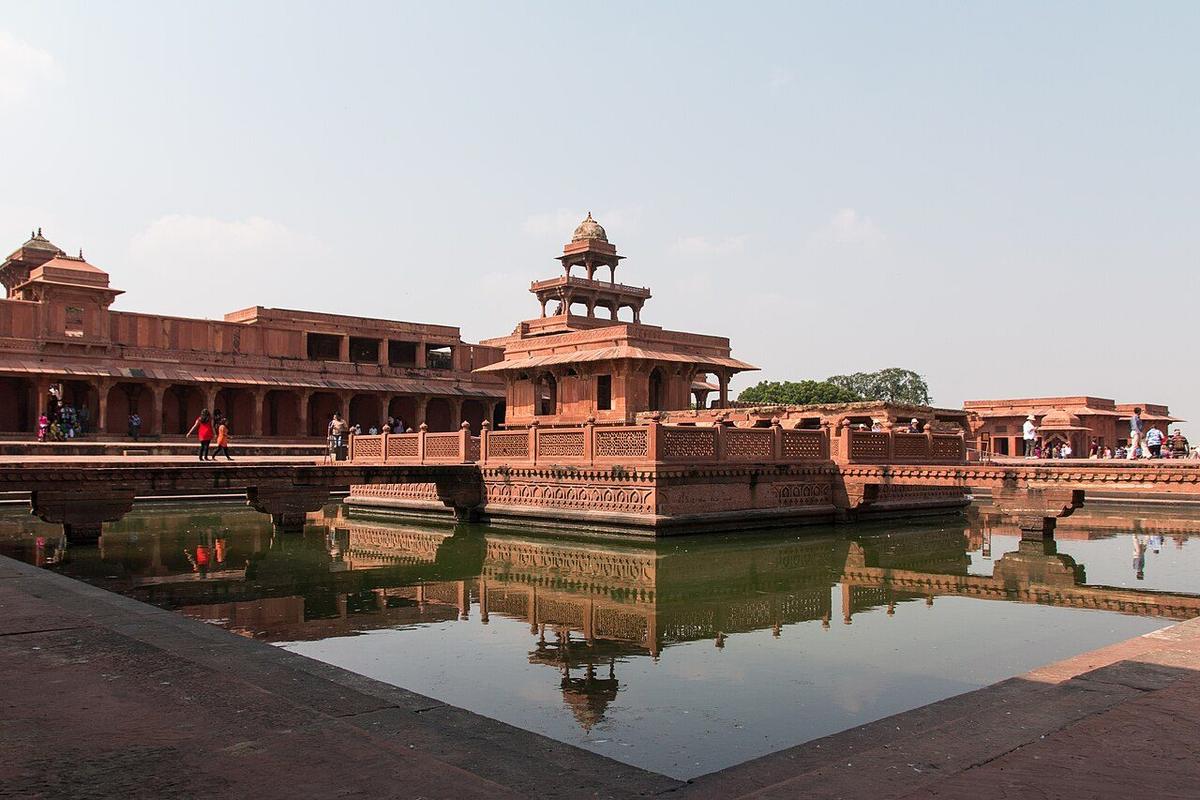
A square ornamental tank with a small platform at its centre, reached by four slender causeways, beside the pavilion where Akbar’s inner circle gathered. By legend the court musician Tansen stood on that platform and sang Raga Deepak with such force that the courtyard lamps lit themselves, then sang Raga Megh Malhar to call the rain that would cool him down. Whatever the truth of it, the tank was once filled with rosewater, or with coins for the poor to take.
Panch Mahal
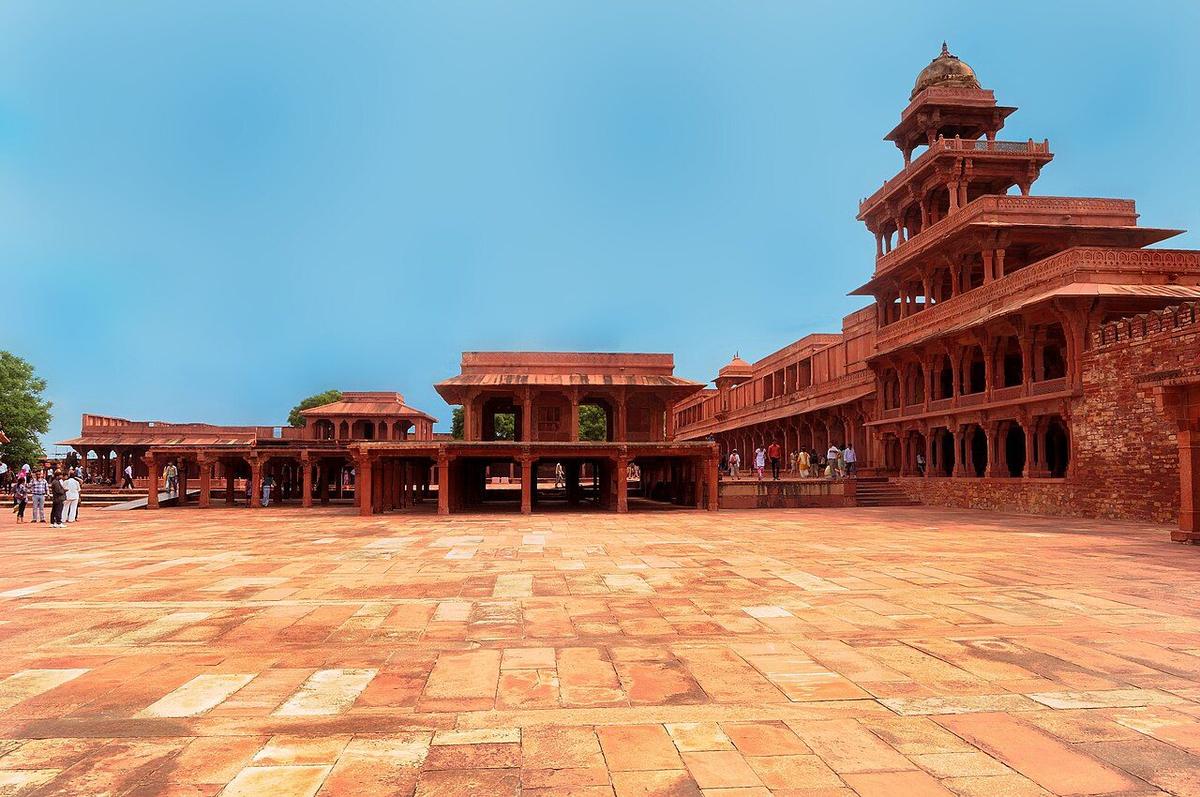
An open pavilion of five storeys stacked like a wedding cake, each one set back from the one below and held up on columns, no two of the lower eighty-four pillars carved alike, with a single small domed kiosk on top. It had screens once, and was used by the women of the zenana to sit out of the sun and take the evening wind coming off the lake, now vanished. It is the tallest thing in the palace quarter and the most purely pleasant: a building for doing nothing in comfort.
Jodha Bai’s Palace
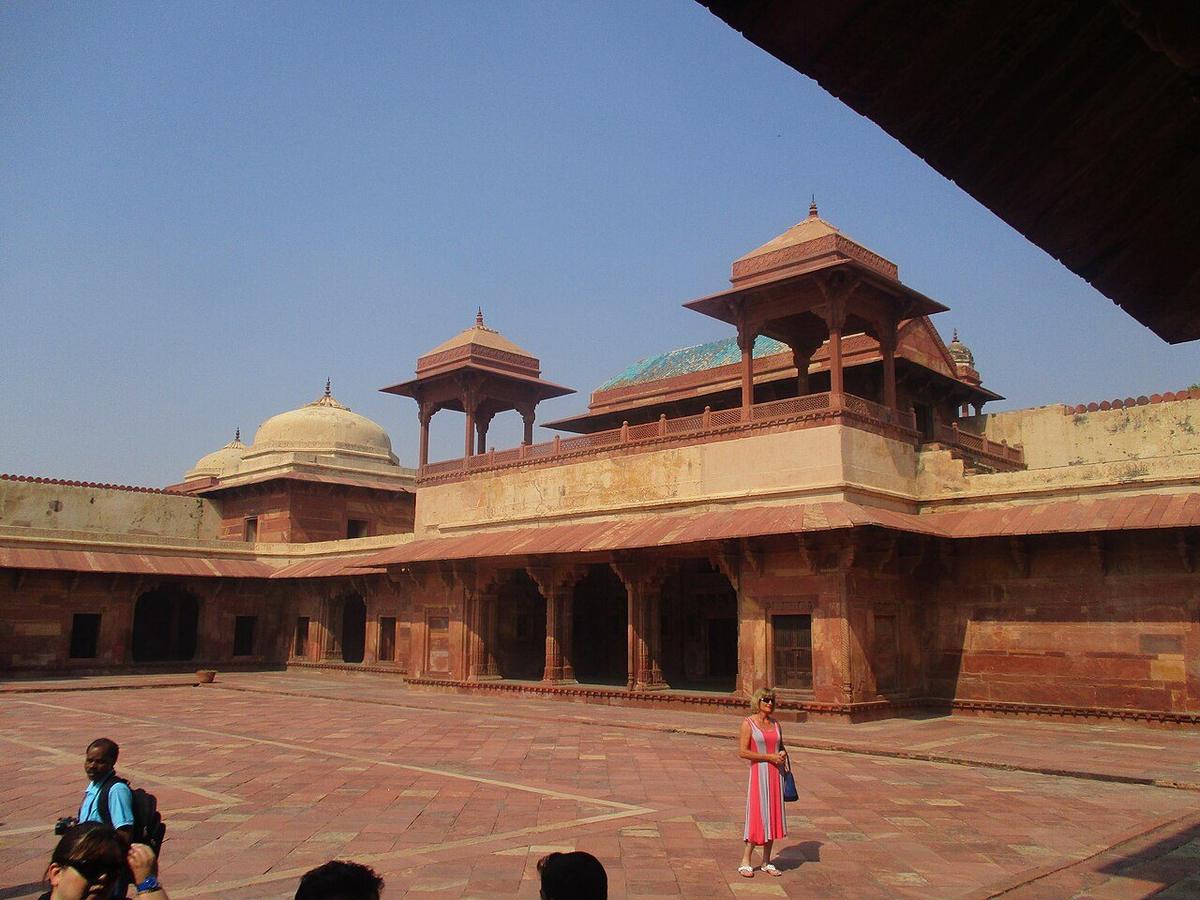
The principal queen’s residence, named by later guides for Jodha Bai, though it was really the household of Mariam-uz-Zamani, the Amber princess who was Akbar’s senior wife and Jahangir’s mother. It is a self-contained fortified block around its own courtyard, built in a heavy Gujarati-Hindu style with almost no Islamic detail: pillars, brackets and a tulsi niche that would not look out of place in a temple. The blue-glazed tile roof on the northern wing is the one flash of colour left.
Birbal’s House
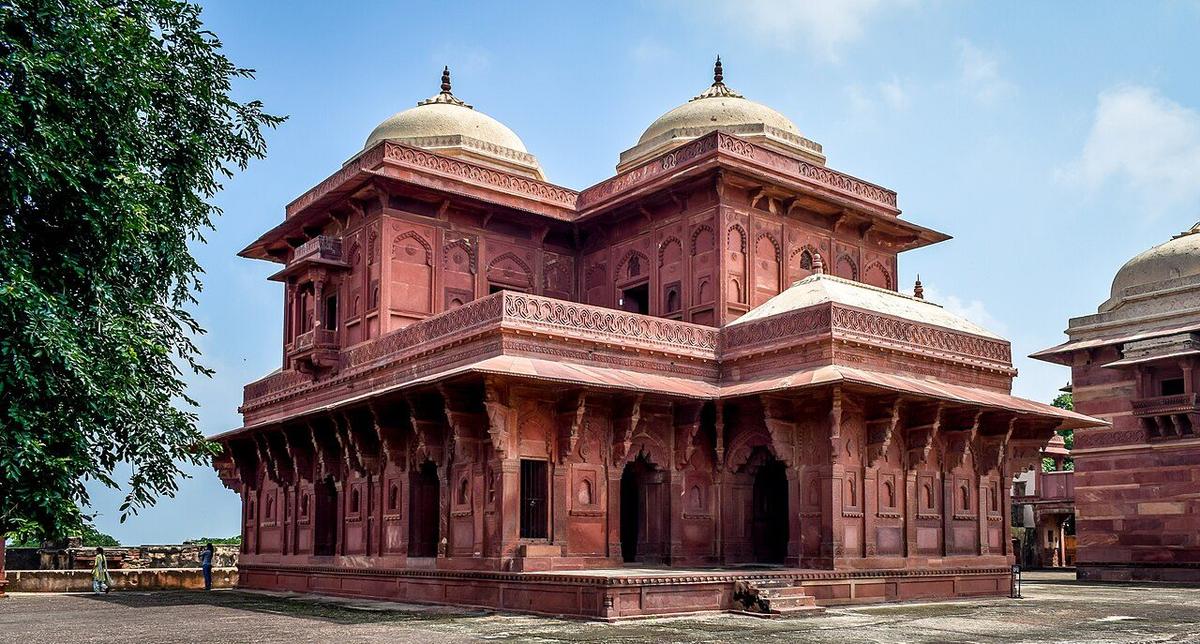
A compact two-storey house, every surface, brackets, ceilings, the eaves, cut with dense low-relief pattern, some of the finest carving on the site. It is traditionally given to Raja Birbal, the Hindu poet and adviser famous in folk tales for talking Akbar out of bad ideas with a joke; more probably it housed two of the senior queens. Birbal himself died in 1586, leading an army into an ambush in the northwest, the one time his advice was ignored and he went anyway.
Jama Masjid
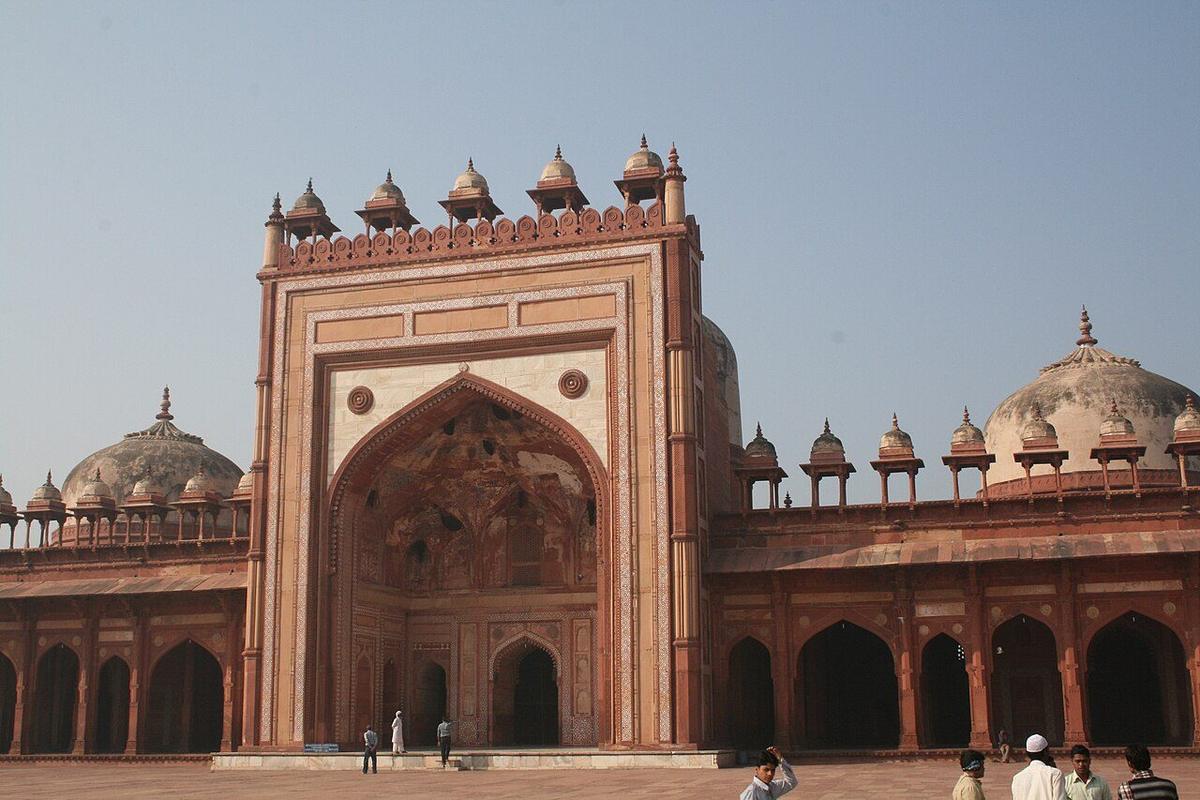
One of the largest mosques in India when it was finished around 1571, and the reason the whole city stands here: it was raised beside the hut of Shaikh Salim Chishti, the Sufi who had told a childless Akbar he would have three sons. The prophecy came true, the first, born nearby in 1569, was named Salim after him, and Akbar moved his capital to the saint’s doorstep in thanks. The prayer hall’s western wall still glows with painted floral work; the courtyard is vast enough to lose a crowd in.
Buland Darwaza
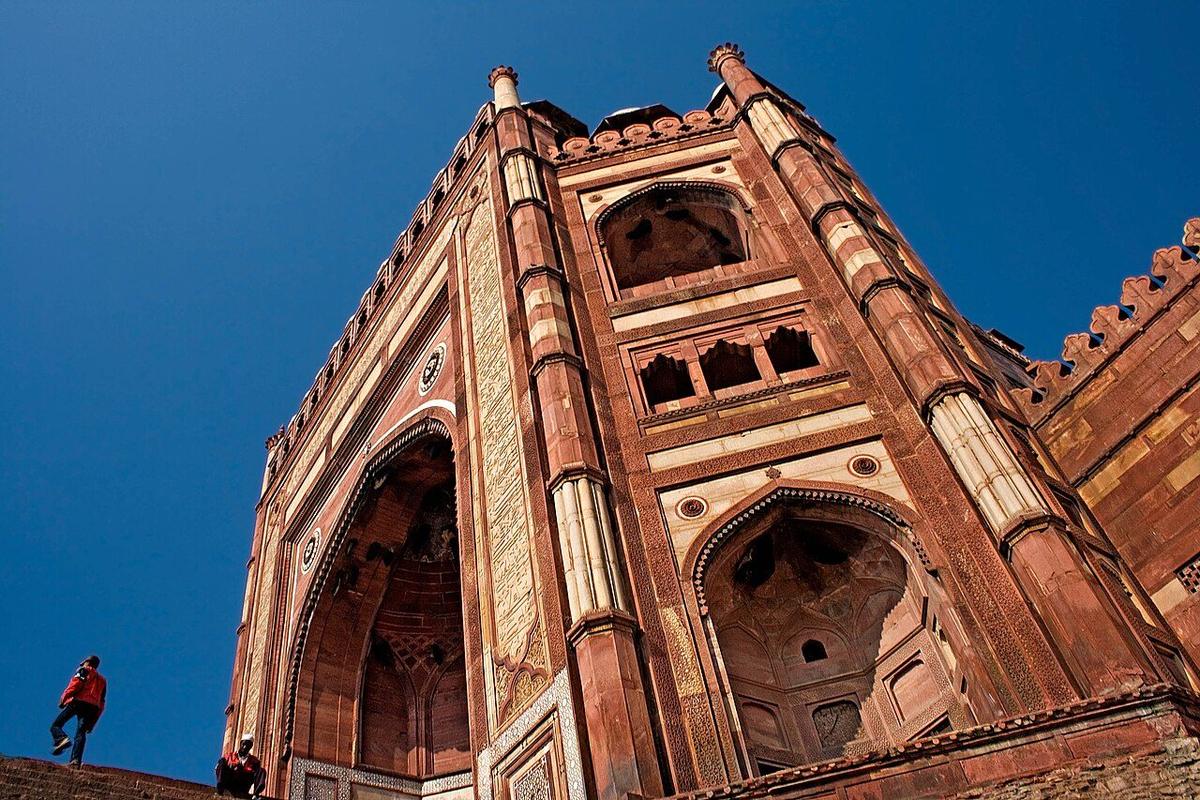
Akbar added this gate around 1576 to mark his conquest of Gujarat, a wall of red sandstone and marble fifty-four metres high from the road below, climbed by a flight of about forty steep steps, so that you arrive at the mosque already made small. Across its arch runs an inscription attributed to Jesus: "The world is a bridge; pass over it, but build no house upon it." Within thirty years the city it guarded was empty.
Tomb of Salim Chishti
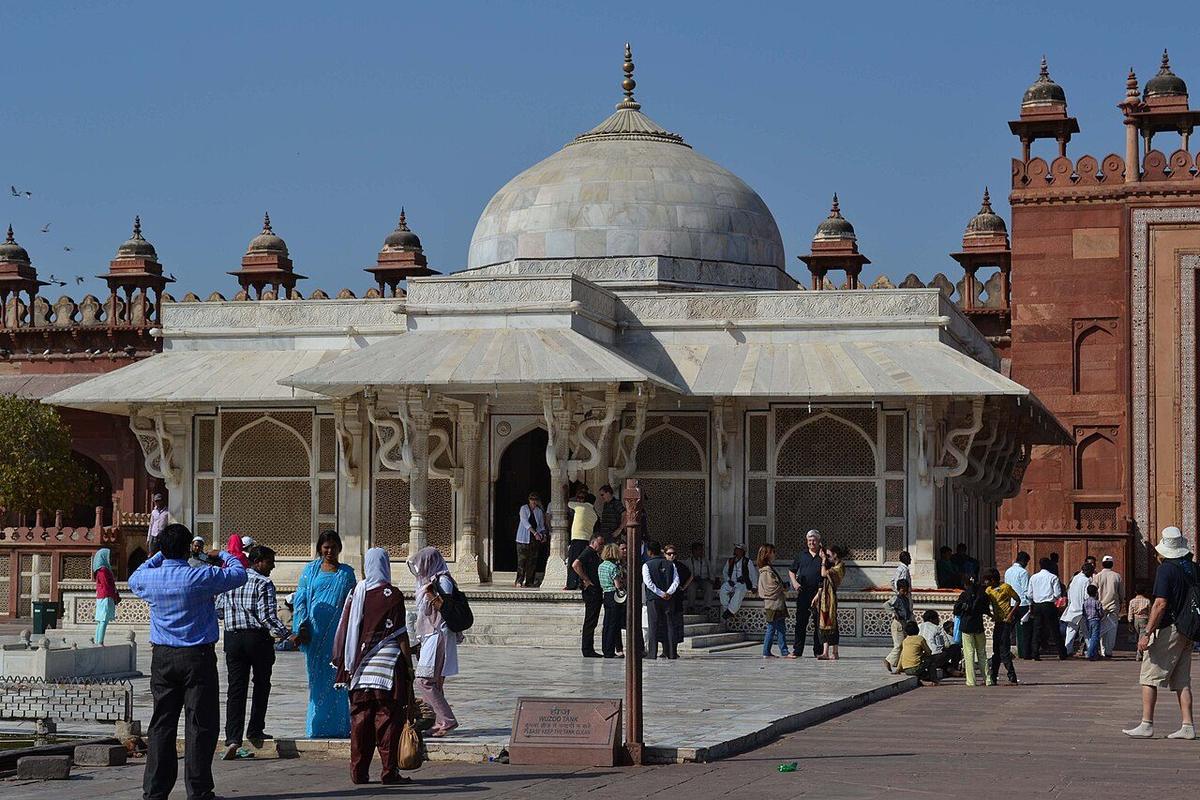
A small square tomb of pure white marble in the mosque courtyard, finished around 1581 over the grave of the saint whose prophecy built the city. Its walls are cut into jali screens of serpentine, interlacing curves, some of the most delicate stone lattice anywhere, and the porch columns end in dragon-headed brackets. Pilgrims still tie a thread to the screen and wish for a child, exactly as Akbar’s household once did. The marble outlasted the sandstone city around it by centuries.