Goa: Beaches and Basilicas
The Goa Safarnama runs 2.5 km across 6 monuments, from Basilica of Bom Jesus to St. Augustine’s Tower, part of The Coastline Trail. Goa is known as Beaches and Basilicas, here is the story the route tells, one stop at a time.
Basilica of Bom Jesus
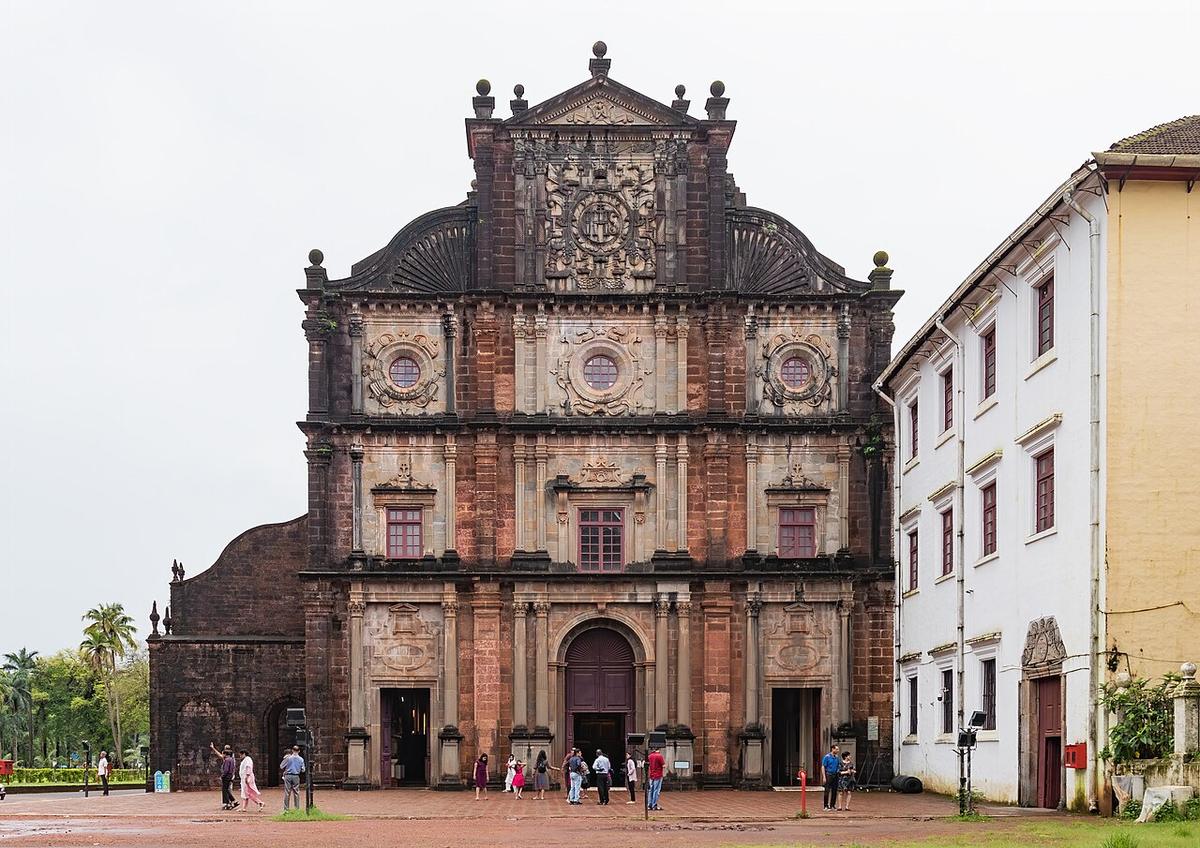
Ground was broken on this Baroque basilica in 1594 and it was consecrated in May 1605 by Archbishop Aleixo de Menezes, sixty years after Portuguese Goa first asked Rome for a permanent home for the saint. It has held the body of Francis Xavier, the Jesuit missionary who died off the China coast in 1552, since 1624, brought out for public veneration roughly once a decade in a ceremony that still draws hundreds of thousands. UNESCO lists it among the "Seven Wonders of Portuguese Origin in the World," and it remains the oldest working basilica in Old Goa’s church cluster.
Church of St. Francis of Assisi
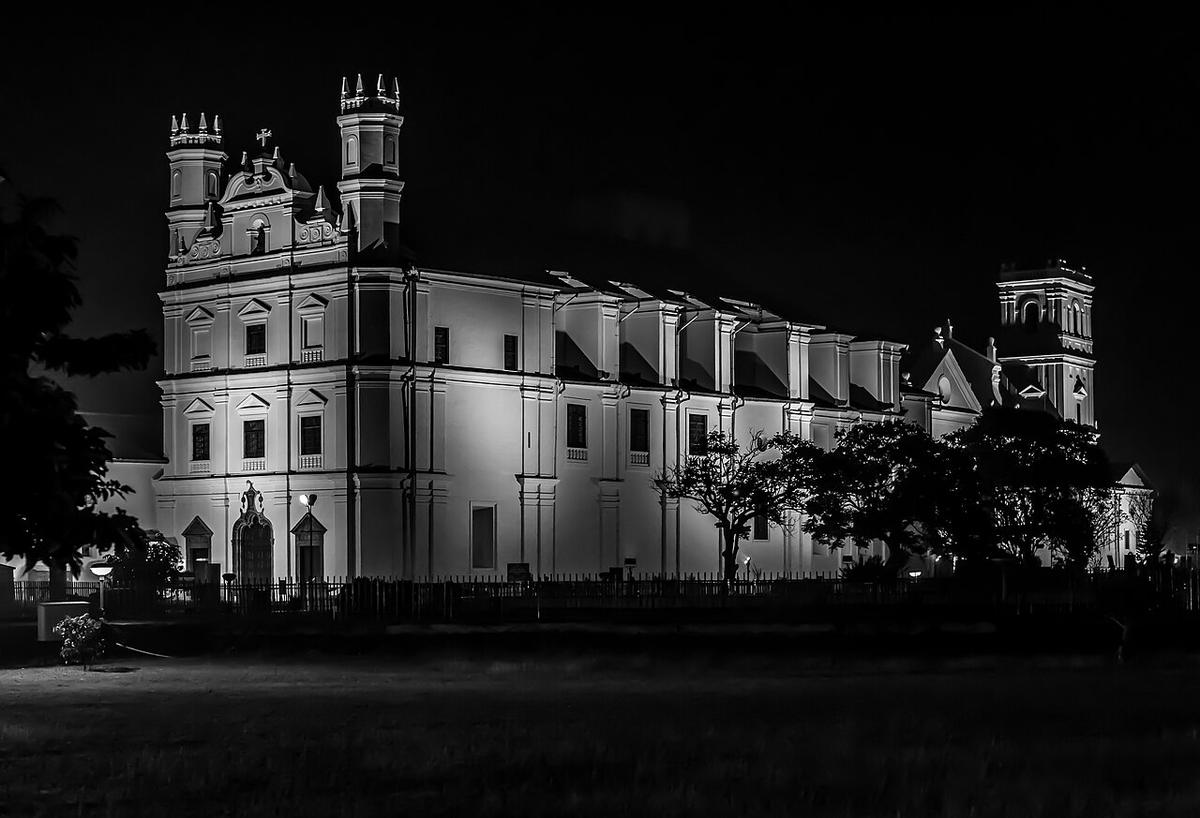
Eight Portuguese Franciscan friars landed in Goa in 1517 and built a small chapel here that was enlarged into a church by 1521 and consecrated in 1602; the building standing today, replacing that earlier structure, was erected in 1661. Its exterior keeps a plain Tuscan restraint, but the interior turns fully Baroque, thick with gilded Corinthian woodwork around the main altar. The adjoining convent now houses the Archaeological Museum and Portrait Gallery, opened in 1964, the friars’ old cloister doing a second, secular job.
Se Cathedral
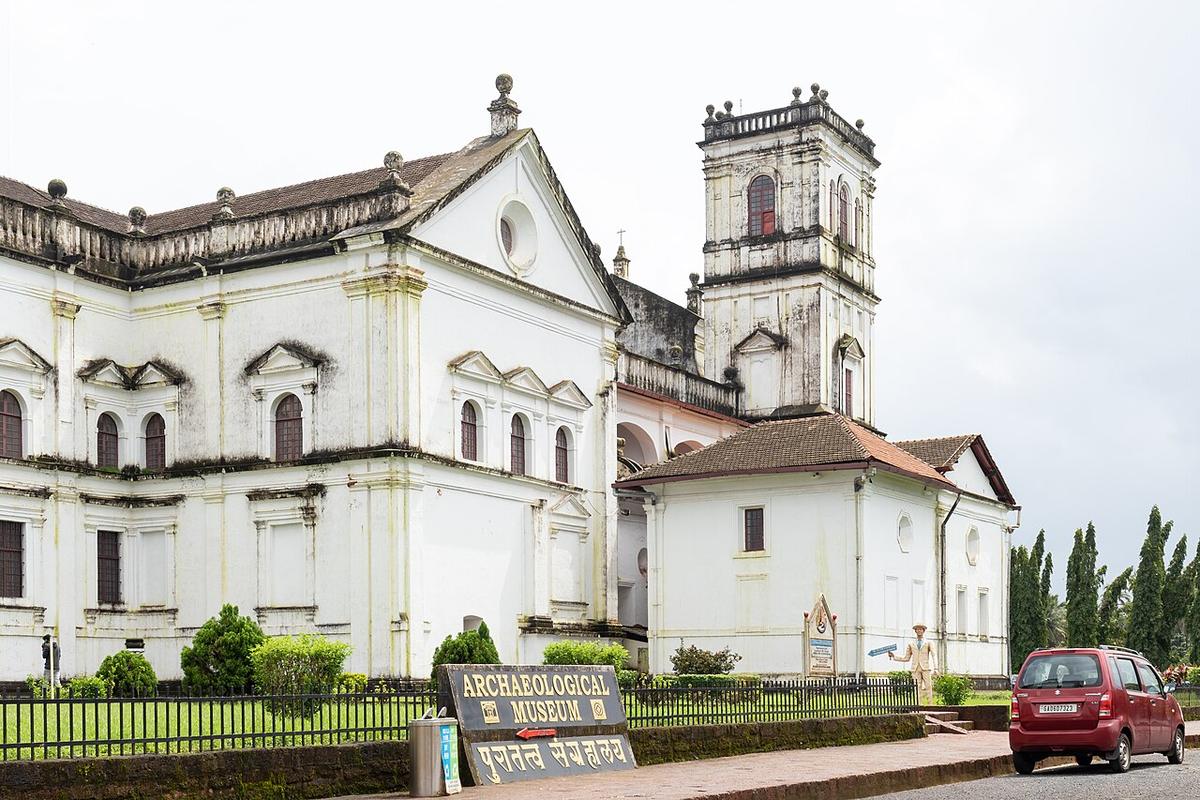
Commissioned to mark the Portuguese capture of Goa in 1510, won on the feast day of Saint Catherine, whom it is dedicated to, construction began in 1562 and the cathedral was completed in 1619, consecrated the following generation in 1640. At 76 metres long it was once reckoned the largest church in Asia, and its Golden Bell, cast to a reportedly unmatched tone, still rings from a single surviving tower; the other one collapsed in 1776 and nobody ever rebuilt it.
Arch of the Viceroys
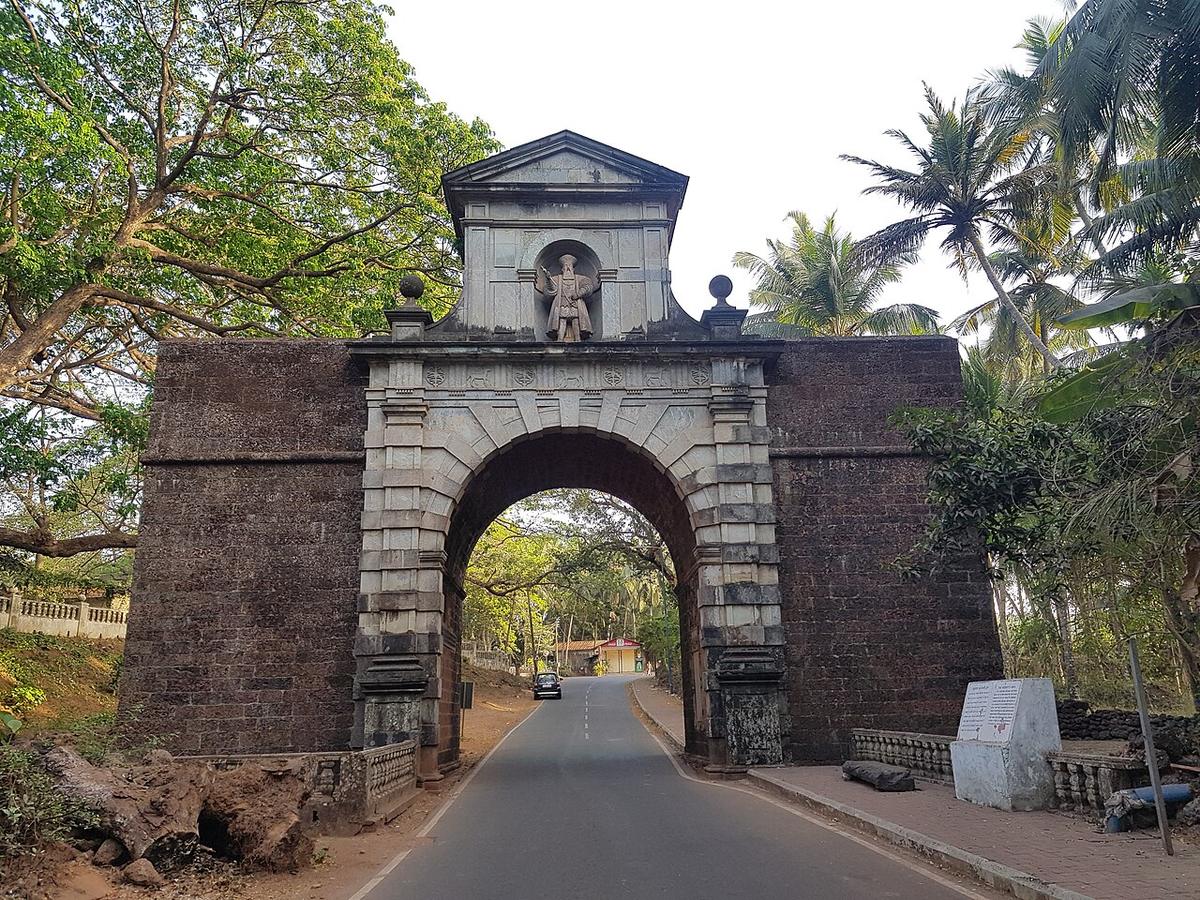
Raised in 1599 by Viceroy Francisco da Gama to honour his grandfather Vasco da Gama’s 1498 sea route to India, this laterite gate, faced in green granite toward the river, replaced an earlier arch from the city’s Adil Shahi rulers and stood as the ceremonial threshold every incoming Portuguese viceroy passed through on arrival. It collapsed in 1948, was rebuilt in 1954, and underwent further conservation by the Archaeological Survey of India as recently as 2022.
St. Cajetan Church
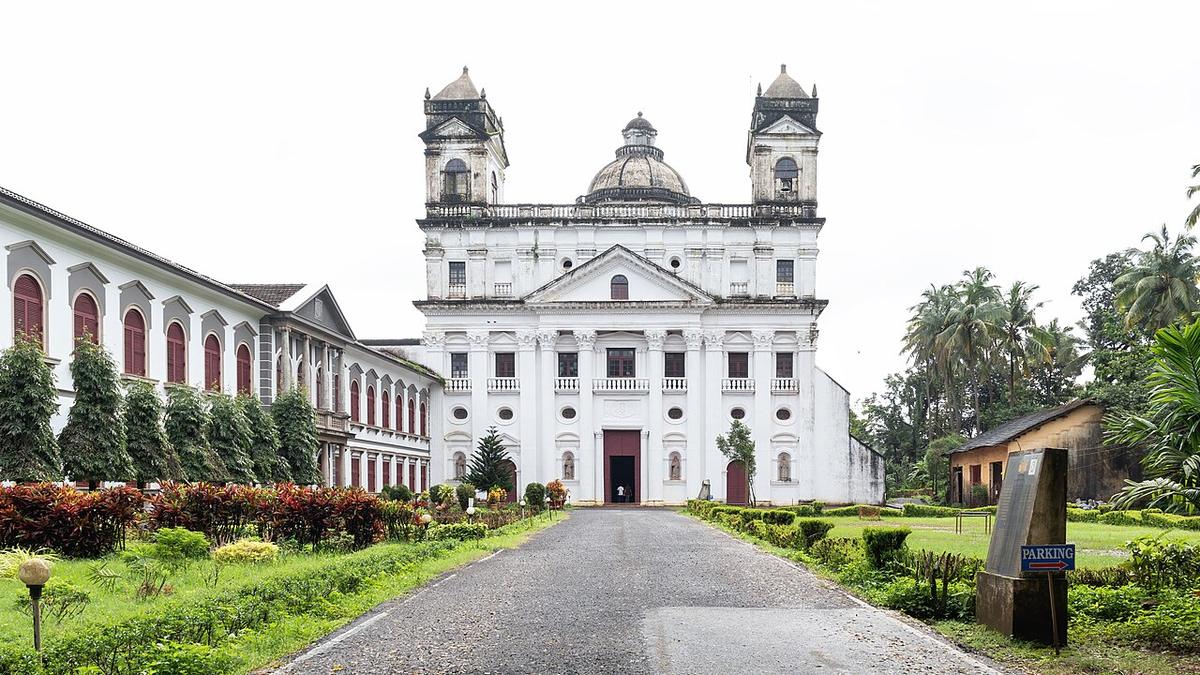
Three Italian Theatine friars arrived in Goa in 1639 and, with construction supervised by the Italian architects Carlo Ferrarini and Francesco Maria Milazzo, finished this Greek-cross church in 1661, its dome deliberately echoing St. Peter’s Basilica in the Vatican, the only building in Old Goa built in that specifically Italian style. Latin inscriptions from the Gospel of Matthew ring the inside of the dome, and a covered well sits directly beneath it on a raised platform, an odd, practical detail under all that borrowed grandeur.
St. Augustine’s Tower
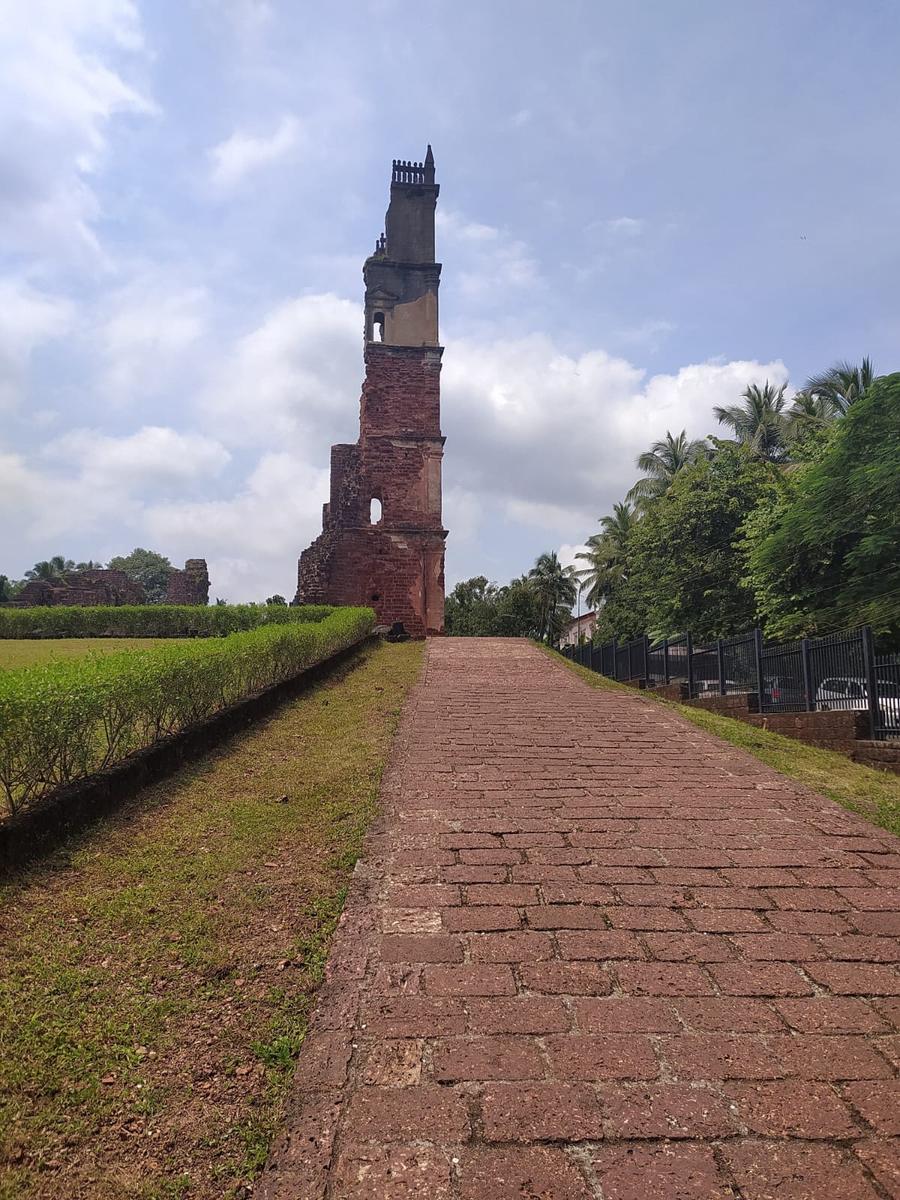
Augustinian friars who arrived in Goa in 1587 built this church between 1597 and 1602 on Monte Santo, the Holy Hill, with four towers, eight chapels and a full convent attached. The Portuguese government expelled the religious orders in 1835; the vault collapsed in 1842, the facade and half the last tower came down in 1931, and by 1938 almost nothing was left standing except the single 46-metre laterite tower still visible today. Archaeological Survey of India excavations here in 2005 uncovered bone fragments believed to belong to Saint Ketevan, a Georgian queen martyred in 1624.