Hampi: The Ruined Empire
The Hampi Safarnama runs 10.1 km across 8 monuments, from Elephant Stables to Matanga Hill, part of The Temple Trail. Hampi is known as the ruined empire, here is the story the route tells, one stop at a time.
Elephant Stables
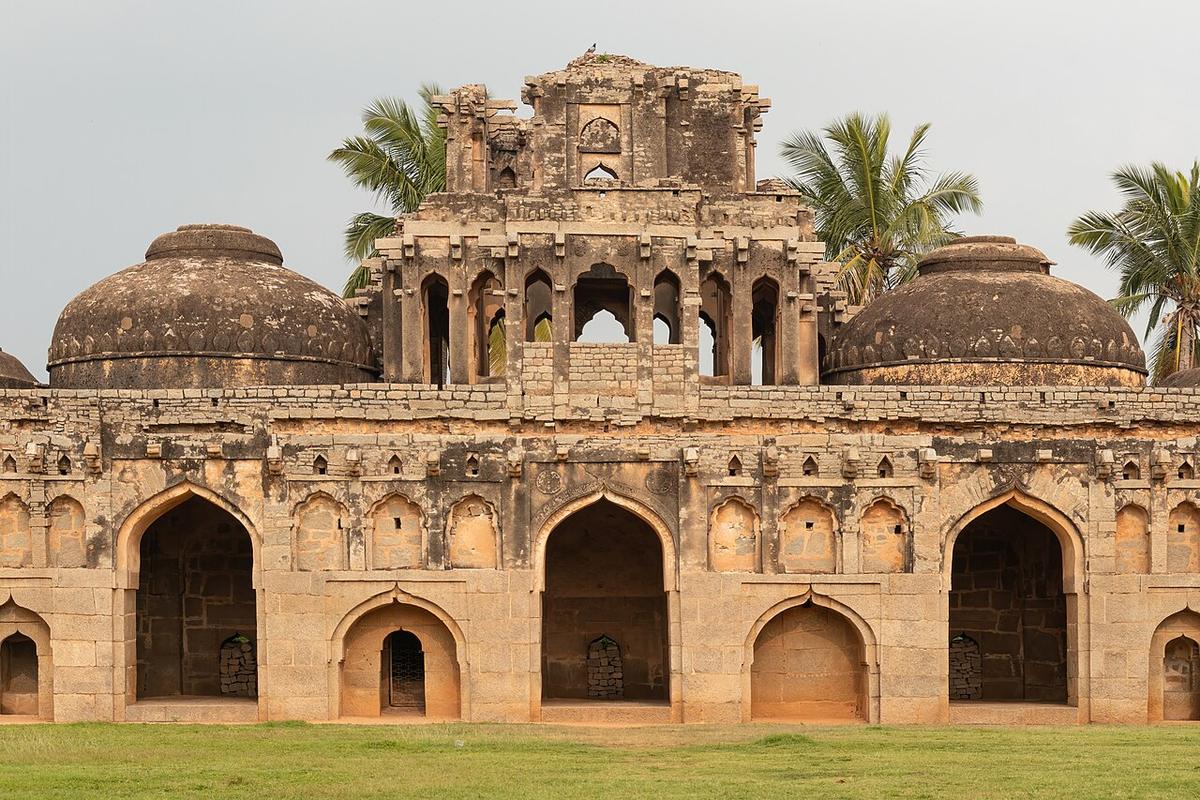
Built for the Vijayanagara Empire’s ceremonial war elephants, this long hall of eleven connected domed chambers is one of the few secular, non-religious, buildings to survive from the empire largely intact. Each chamber housed a single elephant, and the domes alternate in style along the row: plain, ridged and lotus-fluted, a small architectural flourish on a working stable. A raised platform behind it is thought to have been a bandstand for royal musicians.
Lotus Mahal
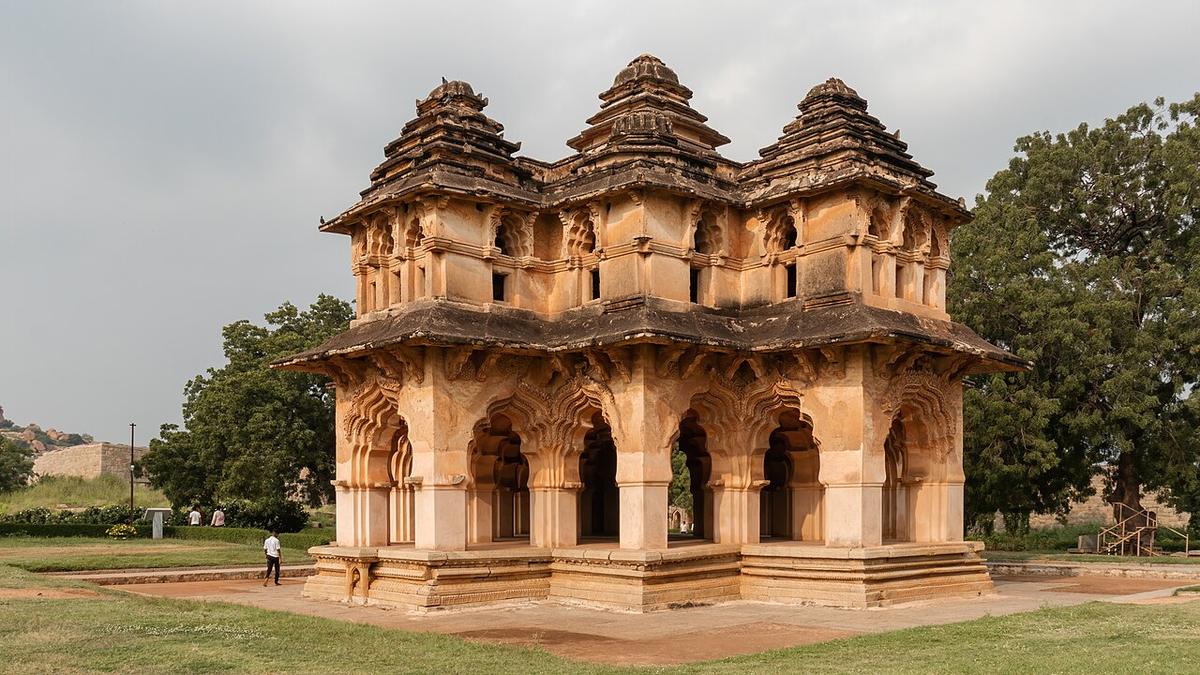
A two-storey pavilion in the Zenana, the royal women’s enclosure, built with pointed Islamic-style arches below and stepped Hindu-style pyramidal towers above, a deliberate architectural blend, common in Vijayanagara’s later secular buildings, of a Hindu kingdom’s own style with the Deccan sultanates it traded and fought with in equal measure. Its lotus-bud arches give the building its name. No inscription confirms its exact original use; a recreation hall and a diplomatic reception space are both proposed.
Achyutaraya Temple
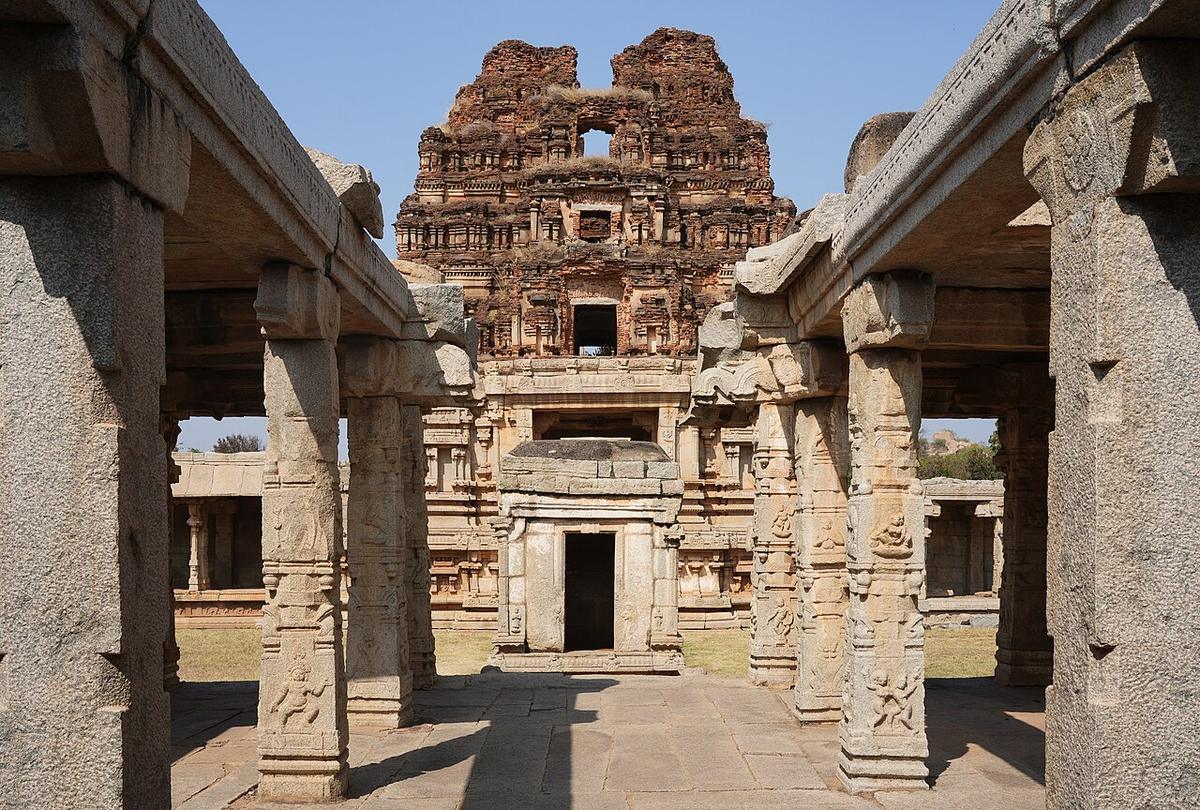
Built in 1534 by Hiriya Tirumalaraya, a merchant, and dedicated to Tiruvengalanatha, a form of Vishnu, this temple is named for the reigning king Achyutaraya even though he had no direct hand in commissioning it. A long, wide ceremonial street stretches in front of the main shrine, once lined with market stalls run by traders come to sell to pilgrims. It is one of the last major temples completed before the Vijayanagara Empire’s fall in 1565, just three decades later.
Krishna Temple
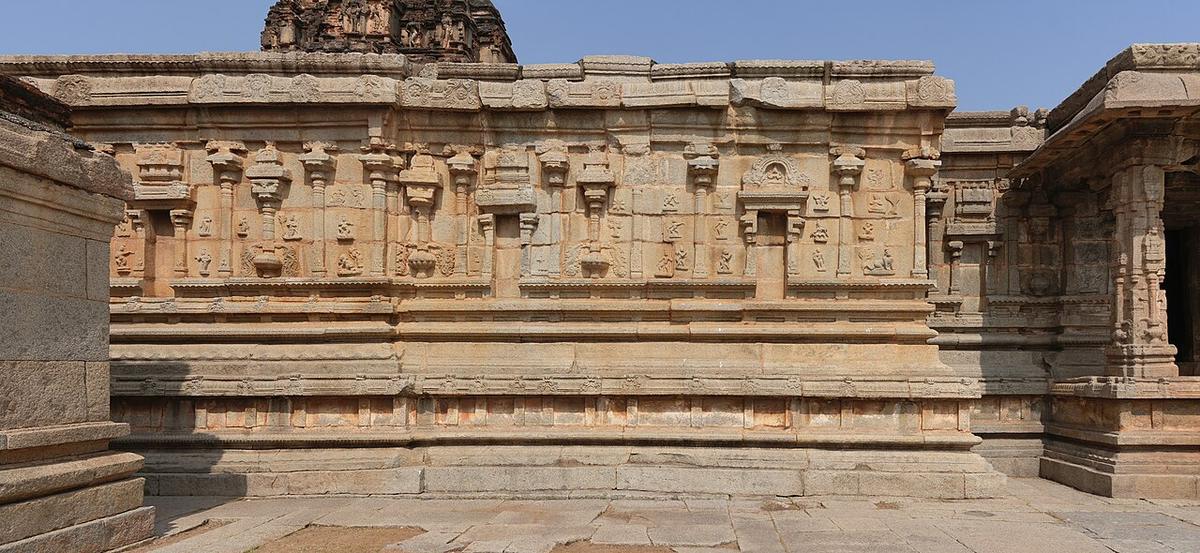
Commissioned in 1513 by Krishnadevaraya, Vijayanagara’s most powerful ruler, to house an image of Balakrishna he brought back as a war trophy after conquering the Gajapati kingdom of Odisha. A long ceremonial bazaar street runs in front of the shrine, and the large stepped tank beside it, Krishna Pushkarani, once supplied water for temple rituals. The Balakrishna idol itself was later moved to a museum in Chennai; only the empty sanctum remains here.
Vittala Temple
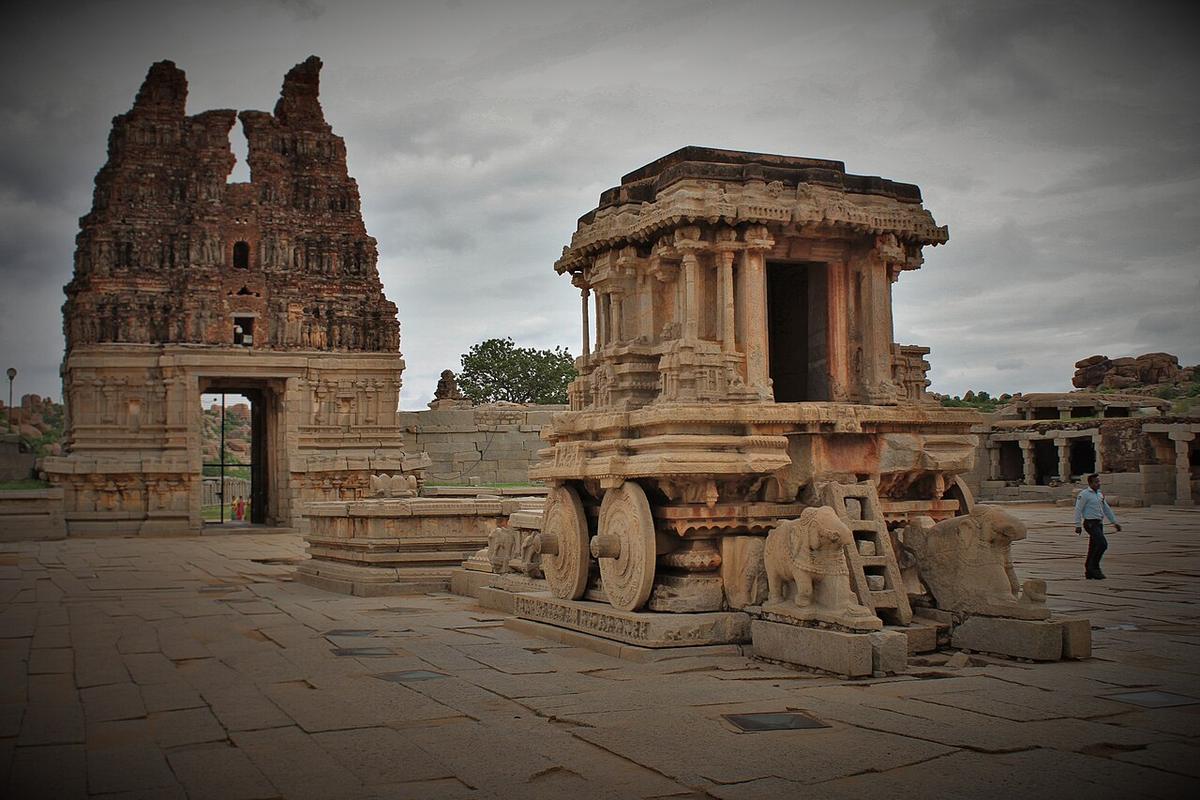
The most architecturally ambitious temple complex in Hampi, built up over the 15th and 16th centuries and dedicated to Vitthala, a form of Vishnu worshipped in Maharashtra and Karnataka, though the deity itself was reportedly never installed, perhaps because construction was still underway when the empire fell in 1565. Its stone chariot, a shrine to Garuda carved to resemble a full-size temple cart down to its stone wheels, appears on the Indian fifty-rupee note. Fifty-six musical pillars in the main hall are said to ring with different notes when struck, a claim tour guides still demonstrate to visitors, and archaeologists still debate.
Hemakuta Hill
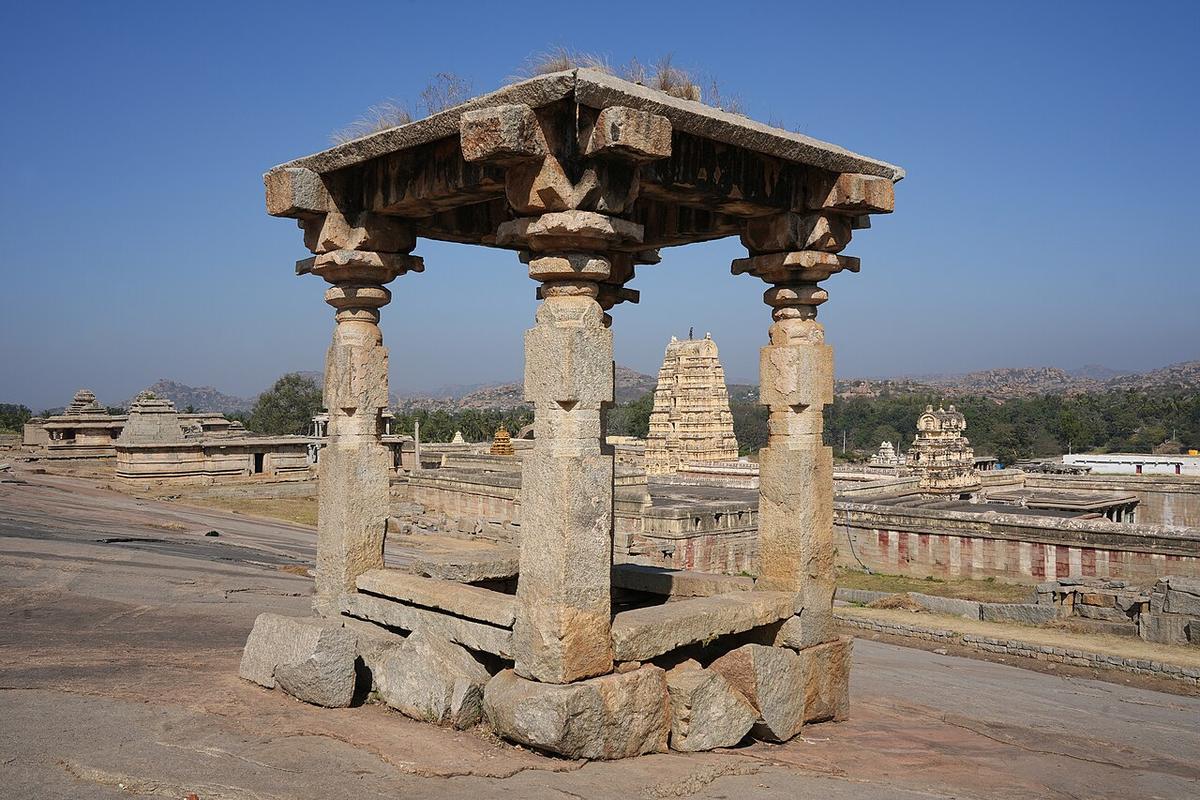
A low rocky hill scattered with more than thirty small shrines, many built in a pre-Vijayanagara Kadamba-Nagara style that predates the empire’s founding in 1336 by several centuries, the oldest religious architecture in Hampi, older than the city that grew up around it. It sits directly between Virupaksha Temple to the north and Krishna Temple to the south, and its bare granite slopes have made it one of Hampi’s most popular sunset points.
Virupaksha Temple
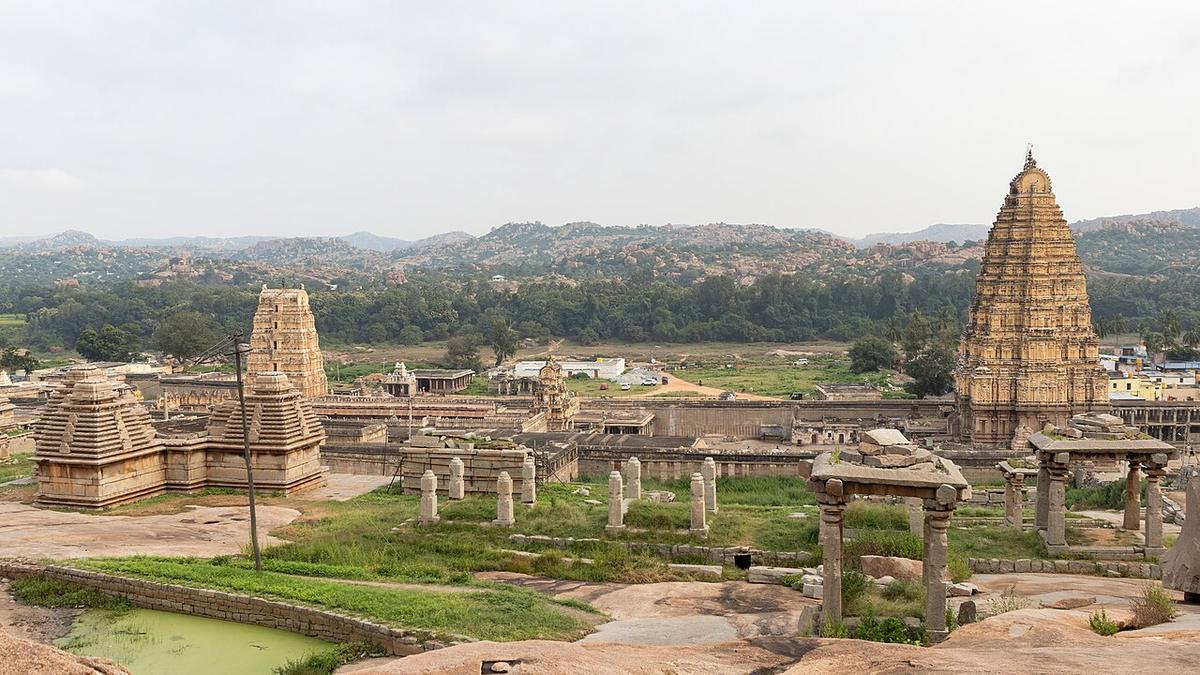
Hampi’s principal temple and one of the oldest continuously functioning temples in India, with worship at this site documented back to at least the 7th century, centuries before the Vijayanagara Empire adopted the area as its capital and built the fifty-metre gopuram that now marks the entrance. Dedicated to Virupaksha, a form of Shiva, and his consort Pampa, it survived the 1565 sack of Hampi that destroyed most of the empire’s other temples, and remains an active place of worship today, not a ruin.
Matanga Hill
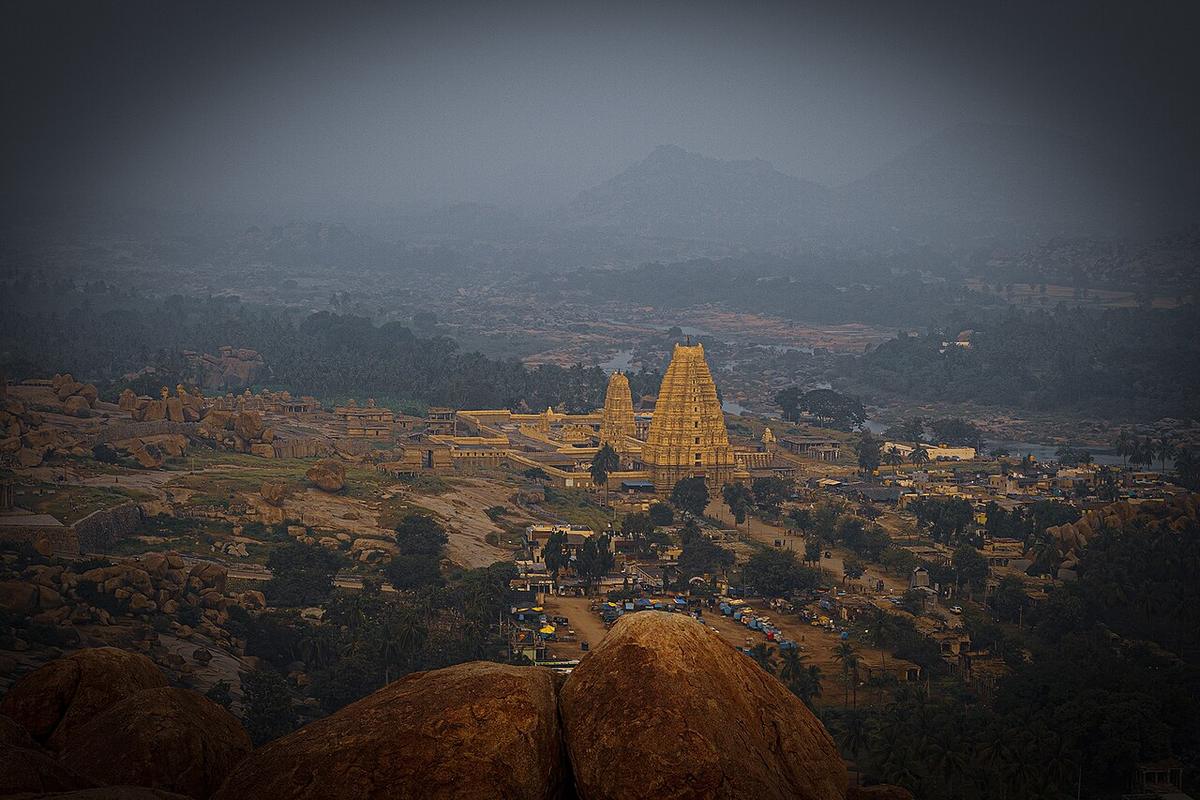
The highest point in central Hampi, its granite summit crowned by the ruined Veerabhadra Temple and reached by a stone stairway climbing roughly a hundred metres from the bazaar below. Named for the sage Matanga of the Ramayana, whose hermitage local tradition places on this hill, it has been Hampi’s sunrise and sunset viewpoint for as long as anyone has bothered to climb it, a 360-degree view over the temple, the river, and the entire boulder-strewn valley this route has spent the day crossing.