Jaipur: The Pink City
The Jaipur Safarnama runs 34.7 km across 10 monuments, from Sisodia Rani Garden to Nahargarh Fort, part of The Fort & Palace Trail. Jaipur is known as the pink city, here is the story the route tells, one stop at a time.
Sisodia Rani Garden
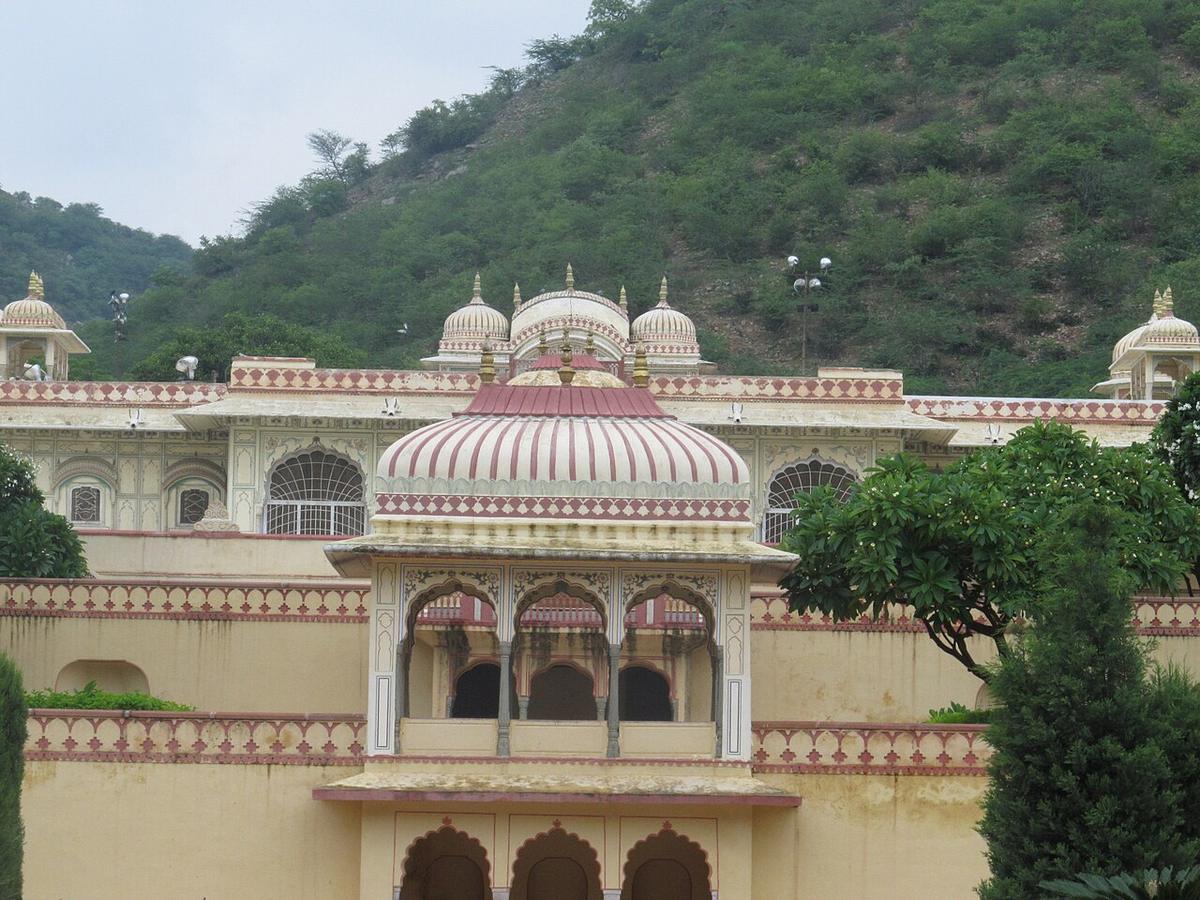
A tiered Mughal-style pleasure garden laid out in 1728 by Maharaja Sawai Jai Singh II for his second queen, a Sisodia Rajput princess of Udaipur. It combines a Mughal charbagh plan, terraces, water channels, fountains, with Rajput painted pavilions, and a small palace on the top terrace whose walls carry frescoes of the Radha–Krishna story. It was built as a private retreat, away from the politics of the City Palace.
Galtaji Temple
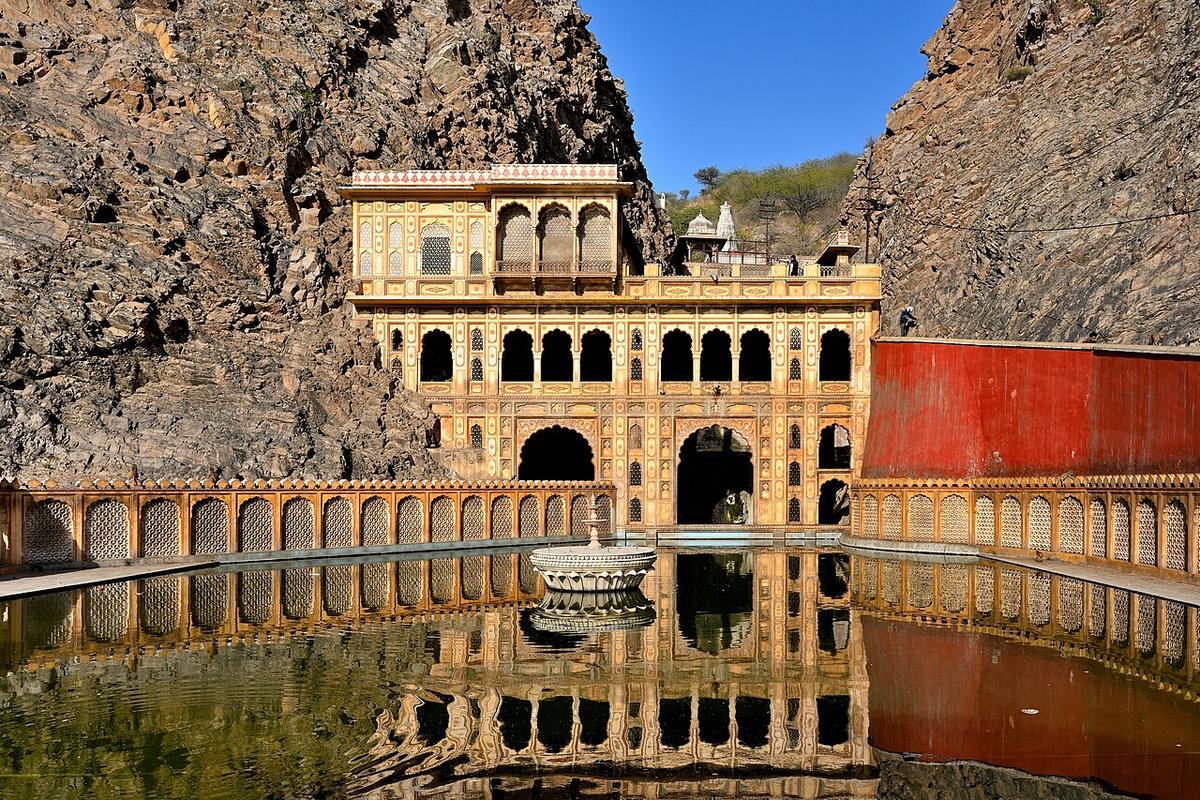
An ancient pilgrimage site set in a narrow cleft of the Aravalli hills east of Jaipur. A natural spring feeds seven sacred kunds; the main Galta Kund is said never to run dry. Named for the sage Galav, it has been a centre of the Ramanandi Vaishnava order since the 15th century; the pink-sandstone temple in the gorge was built in the 18th century under Rao Kriparam. Troops of rhesus macaques around the tanks give it its popular name.
Albert Hall Museum
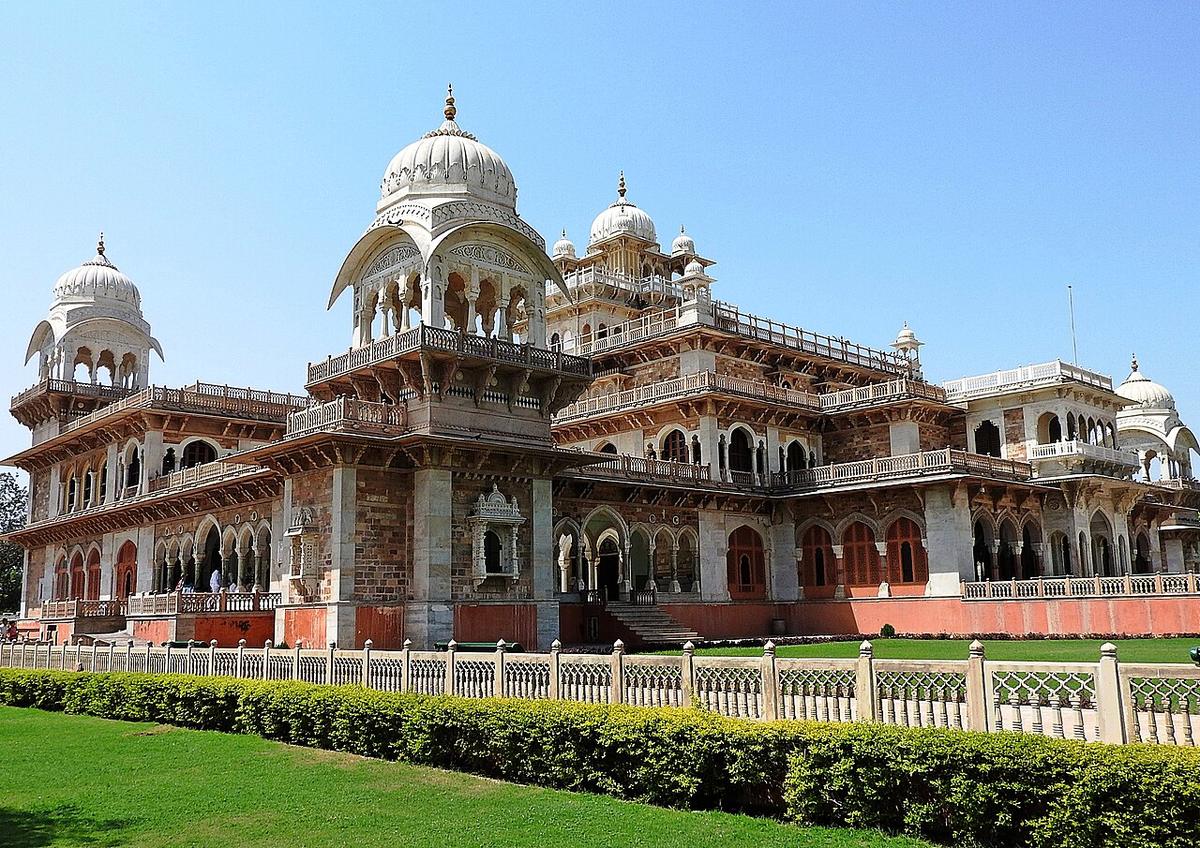
The oldest museum in Rajasthan, in Ram Niwas Garden. Its foundation stone was laid in 1876 by Albert Edward, Prince of Wales, hence the name, and it opened in 1887. Designed by Sir Samuel Swinton Jacob in the Indo-Saracenic style, it blends Rajput, Mughal and Gothic-revival elements. The collection runs to some 19,000 objects, including a celebrated 17th-century Persian garden carpet and an Egyptian mummy.
Birla Mandir
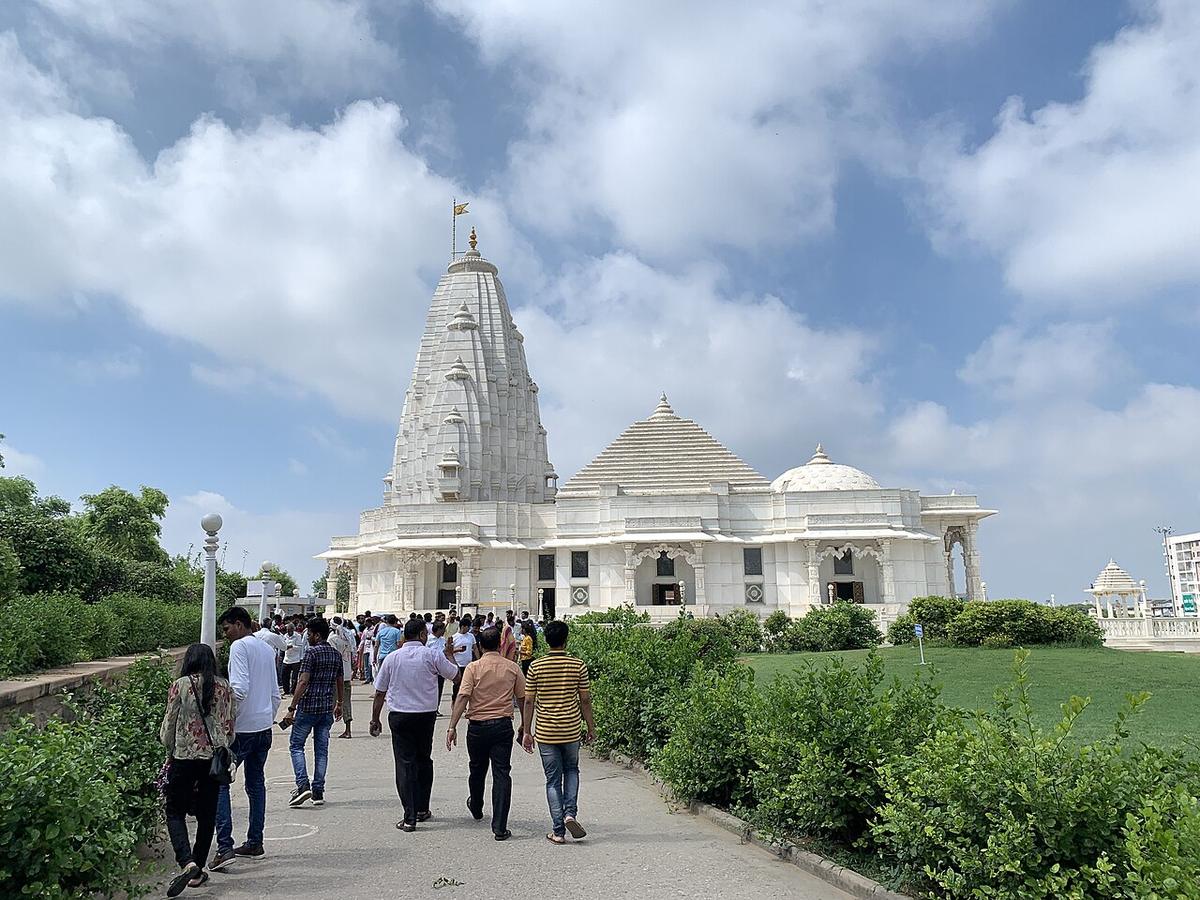
A modern temple of white Makrana marble, the same quarry that supplied the Taj Mahal, at the foot of Moti Dungri hill. Commissioned by the Birla family through the B. M. Birla Foundation; work began in 1977 and it opened in 1988. Dedicated to Lakshmi and Vishnu (Narayan), it is deliberately open to visitors of every faith, with stained-glass panels of scenes from Hindu scripture inside.
Jantar Mantar
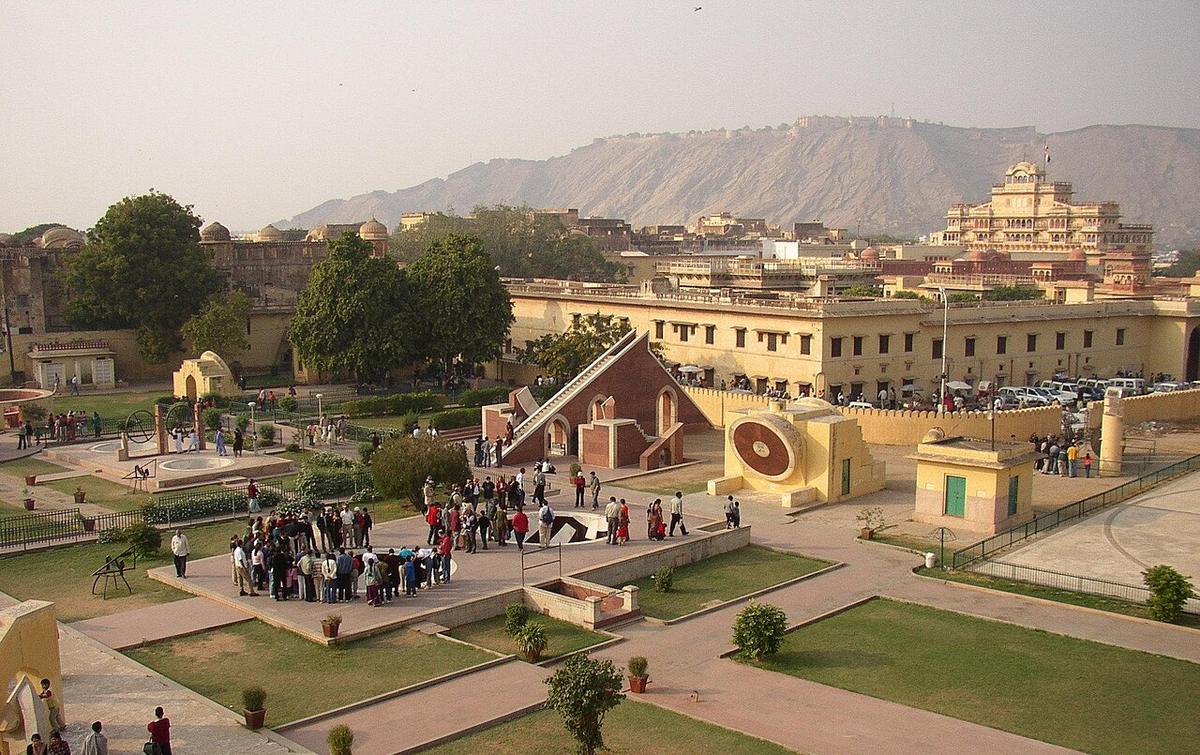
The largest of five stone observatories built by the astronomer-king Sawai Jai Singh II; instruments were in place by 1728 and work continued to about 1738. It holds 19 fixed instruments for naked-eye astronomy. The Vrihat Samrat Yantra is the world's largest stone sundial, about 27 m high, and reads local time to roughly two seconds. It was inscribed as a UNESCO World Heritage Site in 2010.
City Palace
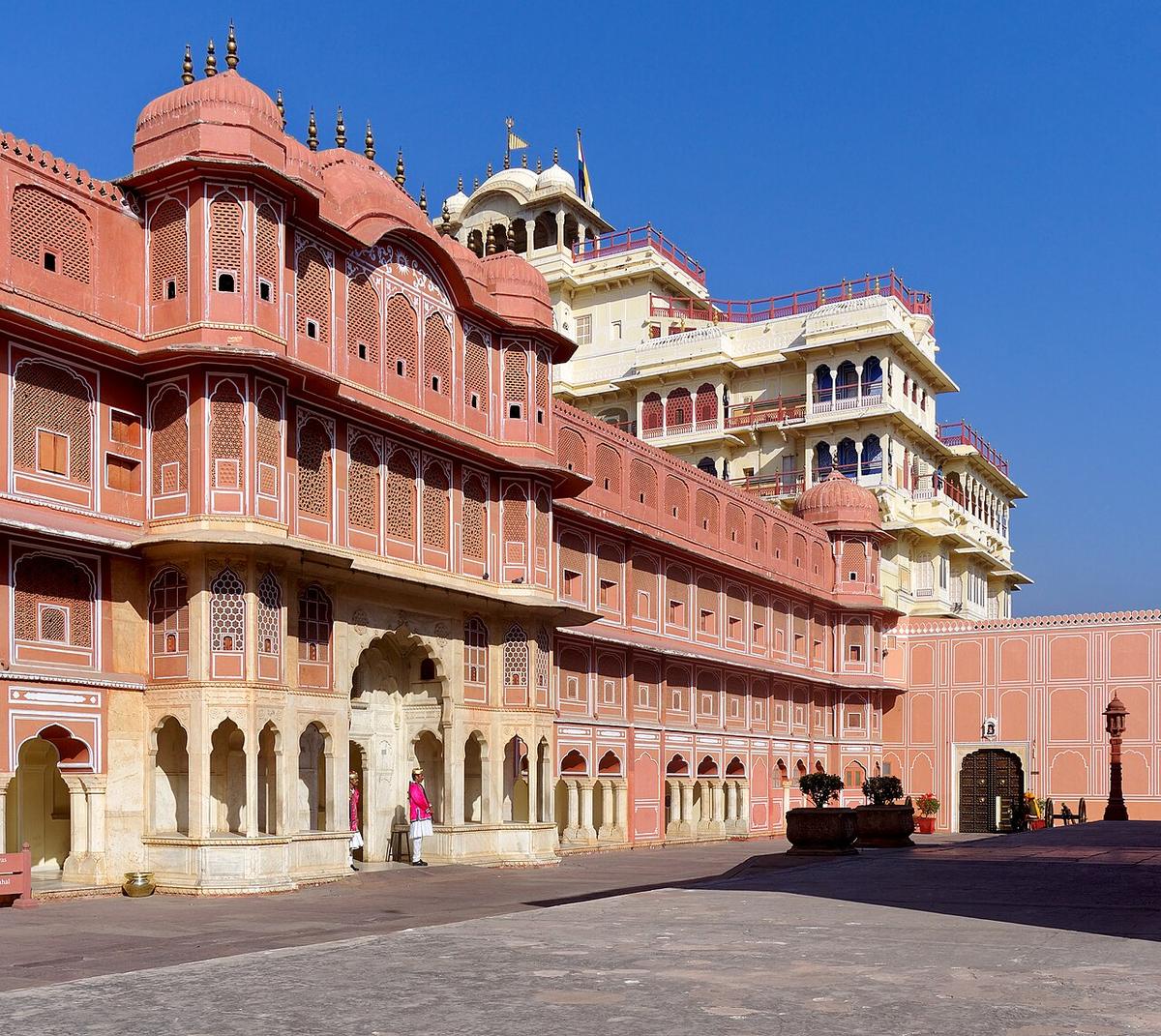
The ceremonial and administrative heart of Jaipur, begun by Sawai Jai Singh II around 1729–32 when he moved the capital down from Amber. Laid out by the architect Vidyadhar Bhattacharya in a blend of Rajput, Mughal and European styles, its buildings include the seven-storey Chandra Mahal, still the royal family's residence, the Mubarak Mahal, and the Pritam Niwas Chowk with its four painted seasonal gates.
Hawa Mahal
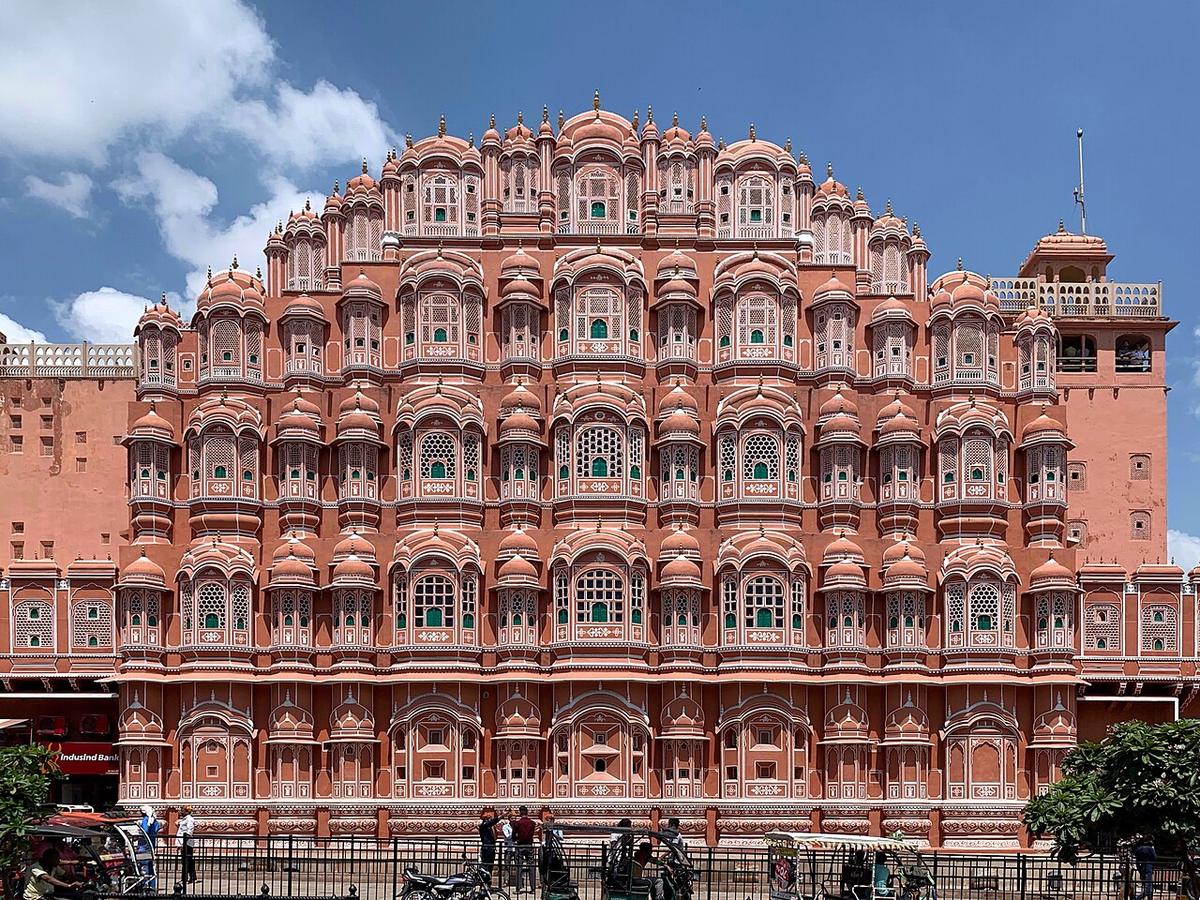
The five-storey screen wall on Jaipur's main bazaar, built in 1799 by Maharaja Sawai Pratap Singh and designed by Lal Chand Ustad. Its street facade is a honeycomb of 953 small windows (jharokhas), which let the women of the court watch processions unseen and drew cooling air through the building. It rises about 15 m but is only one room deep for much of its height.
Jal Mahal
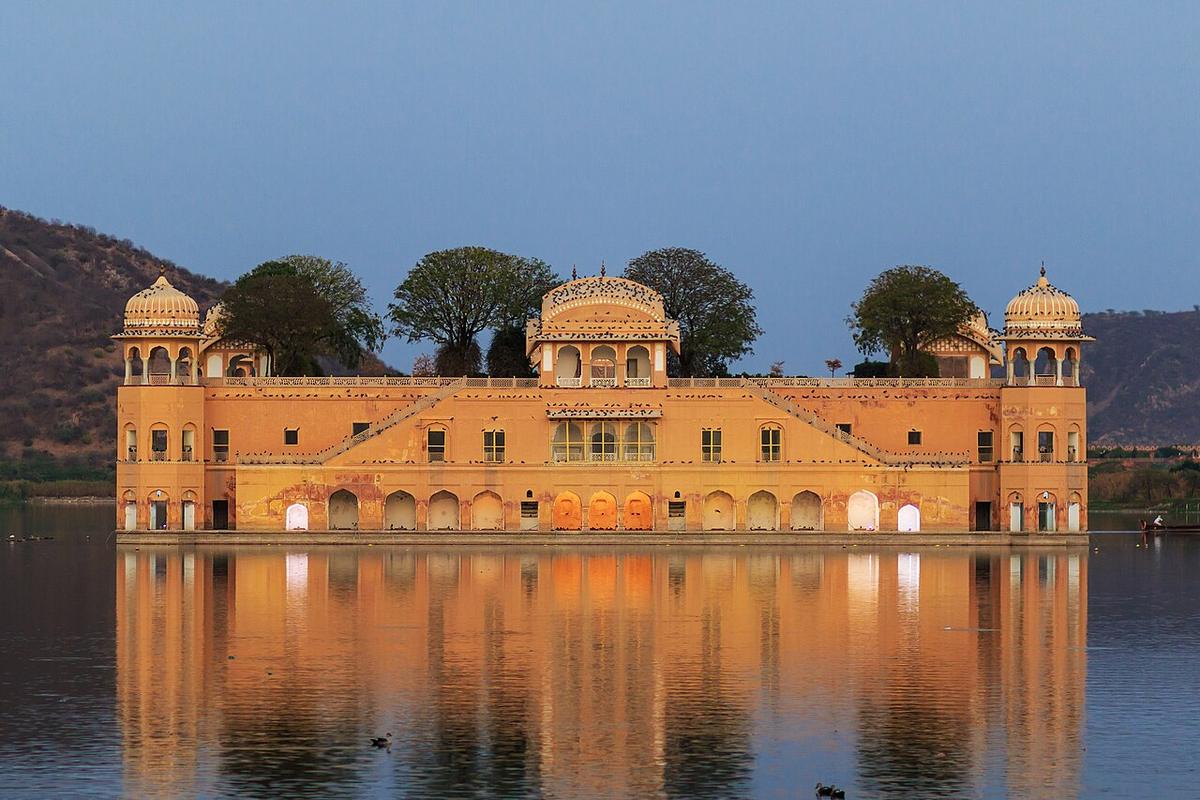
A pink-and-red sandstone palace that appears to float in the middle of Man Sagar Lake. First built around 1699 by Sawai Jai Singh and enlarged in the mid-18th century under Madho Singh I, originally as a duck-shooting lodge. Of its five storeys, the lower four sit underwater when the lake is full; a garden with four octagonal chhatris crowns the top terrace. The lake was ecologically restored from 2005.
Amer Fort
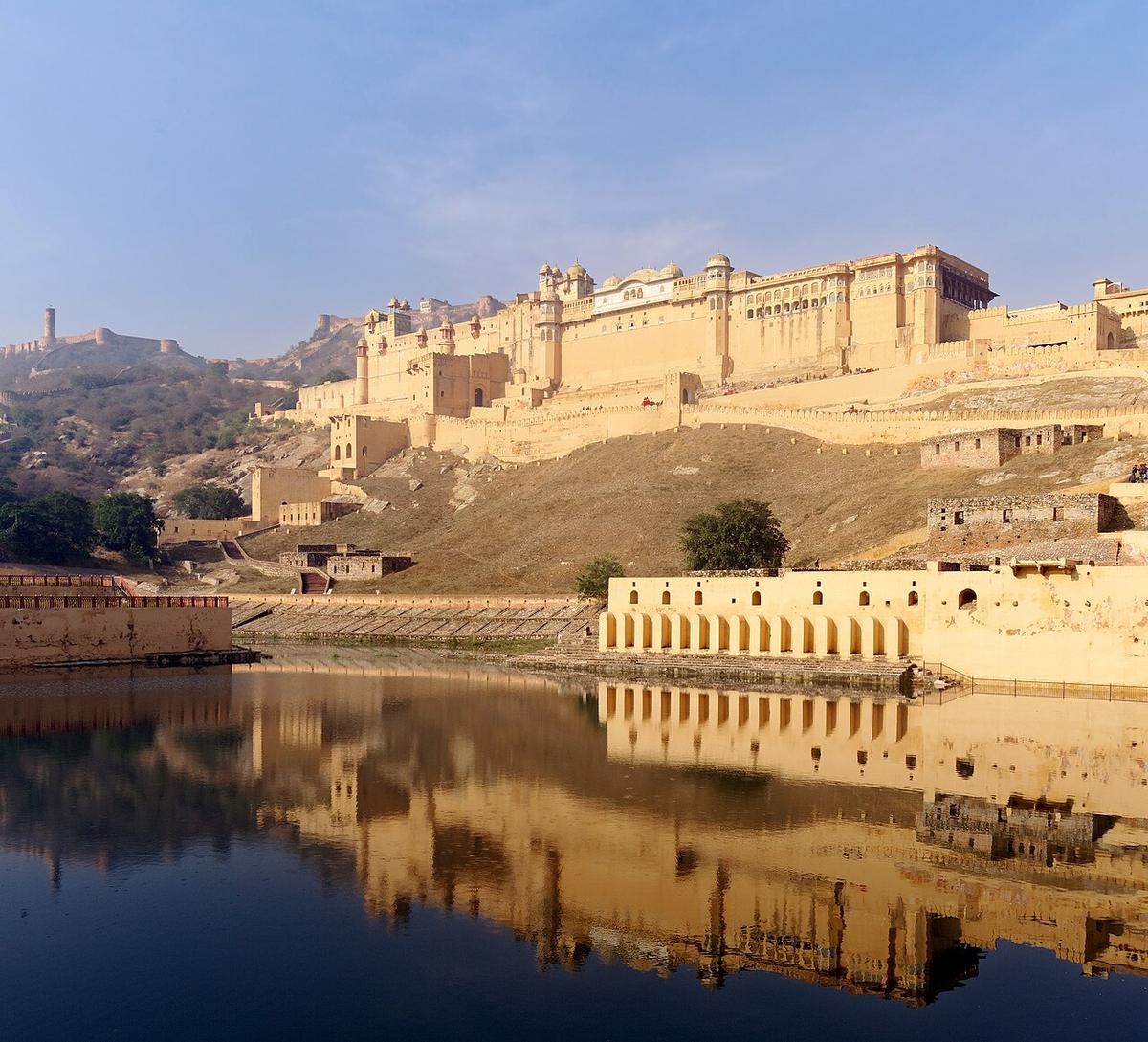
The former seat of the Kachhwaha Rajputs, on a hill above Maota Lake. Raised by Raja Man Singh I (completed around 1599) and extended by Jai Singh I and later rulers over roughly 150 years, in red sandstone and marble fusing Rajput and Mughal design. Its set pieces are the Diwan-i-Aam, the Ganesh Pol gateway and the mirror-work Sheesh Mahal. UNESCO-inscribed in 2013 as part of the Hill Forts of Rajasthan.
Nahargarh Fort
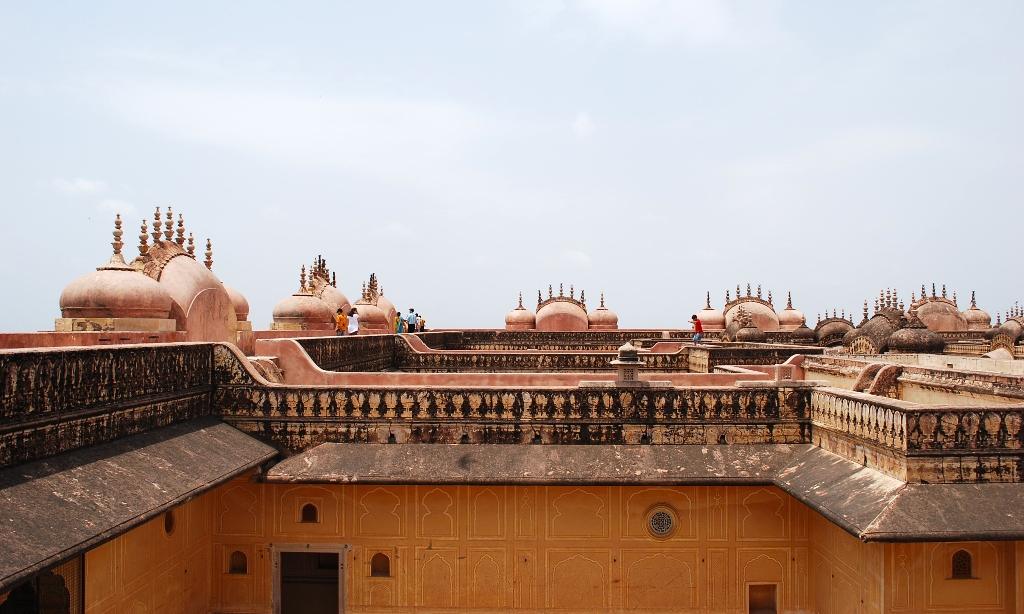
A retreat-fort on the crest of the Aravalli ridge, about 700 ft above Jaipur, built mainly in 1734 by Sawai Jai Singh II. Its name, "abode of tigers", is tied to a legend that the spirit of Nahar Singh Bhomia disrupted the work until a shrine was raised to him inside the walls. Sawai Madho Singh added the Madhavendra Bhawan, nine identical apartments for the queens, in 1883–92. It was never taken in battle.