Jaisalmer: The Golden City
The Jaisalmer Safarnama runs 86.1 km across 10 monuments, from Gadisar Lake to Jaisalmer Fort, part of The Fort & Palace Trail. Jaisalmer is known as the golden city, here is the story the route tells, one stop at a time.
Gadisar Lake
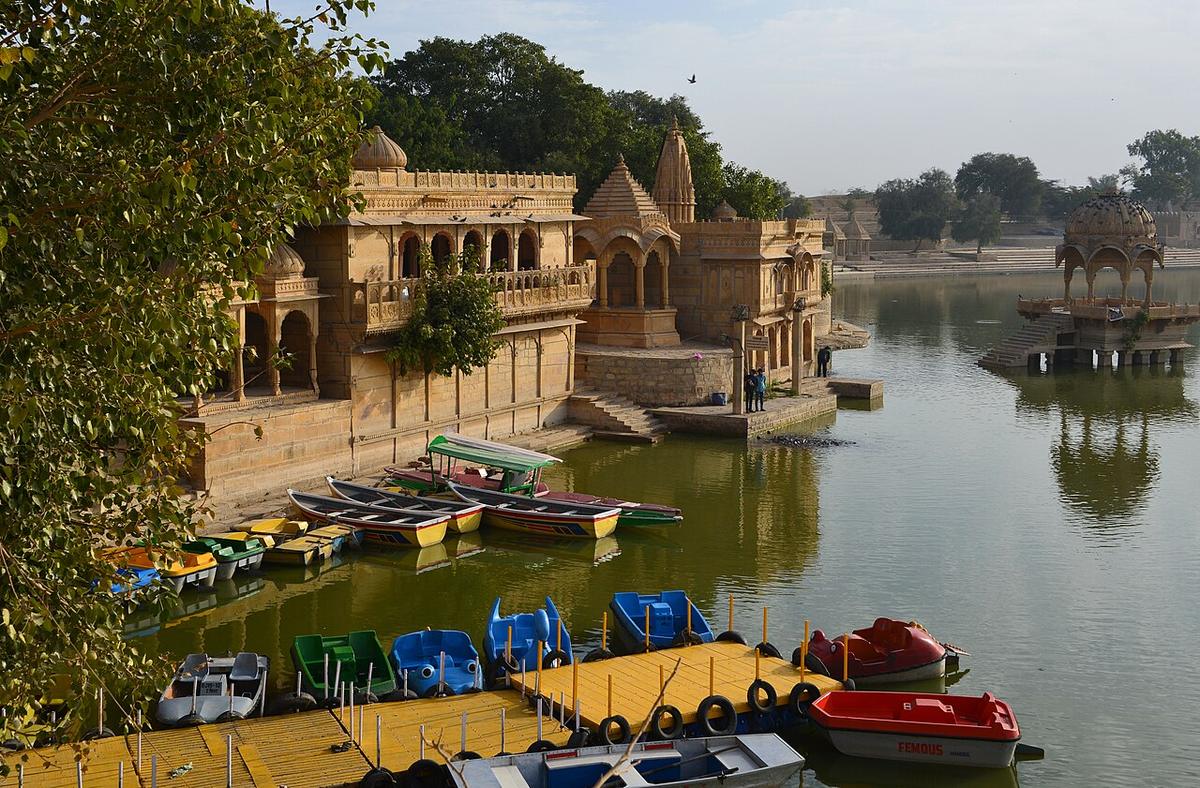
A rainwater tank dug on the south-east edge of town, in the open desert. A first lake here is credited to Rawal Jaisal in the 12th century; it was rebuilt and enlarged in 1367 by Maharawal Gadsi Singh, whose name it carries. For most of Jaisalmer’s history this was the only drinking water the city had, and it was engineered so that when Gadisar filled, the overflow ran down to fill a chain of lower tanks: nothing wasted. Its banks are lined with ghats, chhatris and small shrines, and the carved gateway on the approach road, Tilon-ki-Pol, is said to have been raised by a courtesan and topped with a Krishna shrine so the king could not tear it down.
Vyas Chhatri
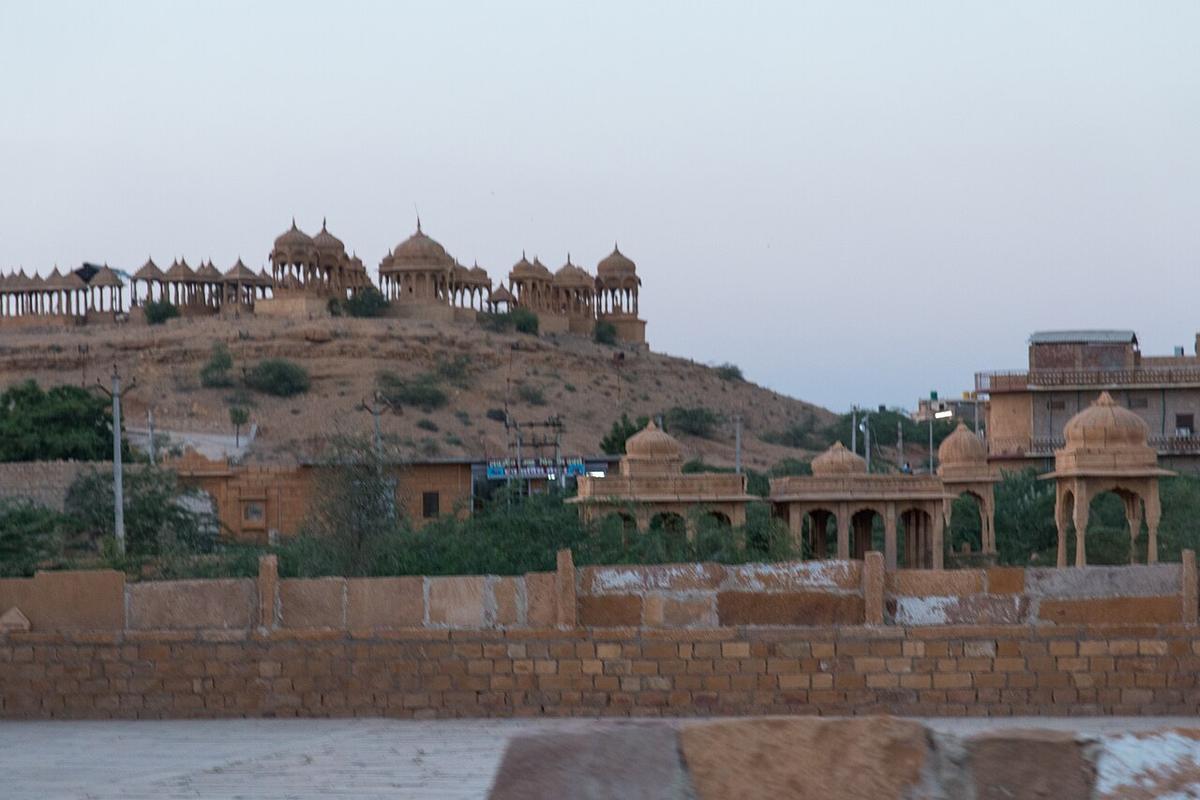
A scatter of yellow-sandstone cenotaphs on a low rise at the western edge of the city, standing in a Brahmin cremation ground and named for Ved Vyas, the sage traditionally held to have compiled the Mahabharata. Each domed chhatri, raised on carved pillars, marks a life. It is also the spot the whole city walks out to at dusk, because from here the fort catches the last of the sun and turns pure gold.
Patwon Ki Haveli
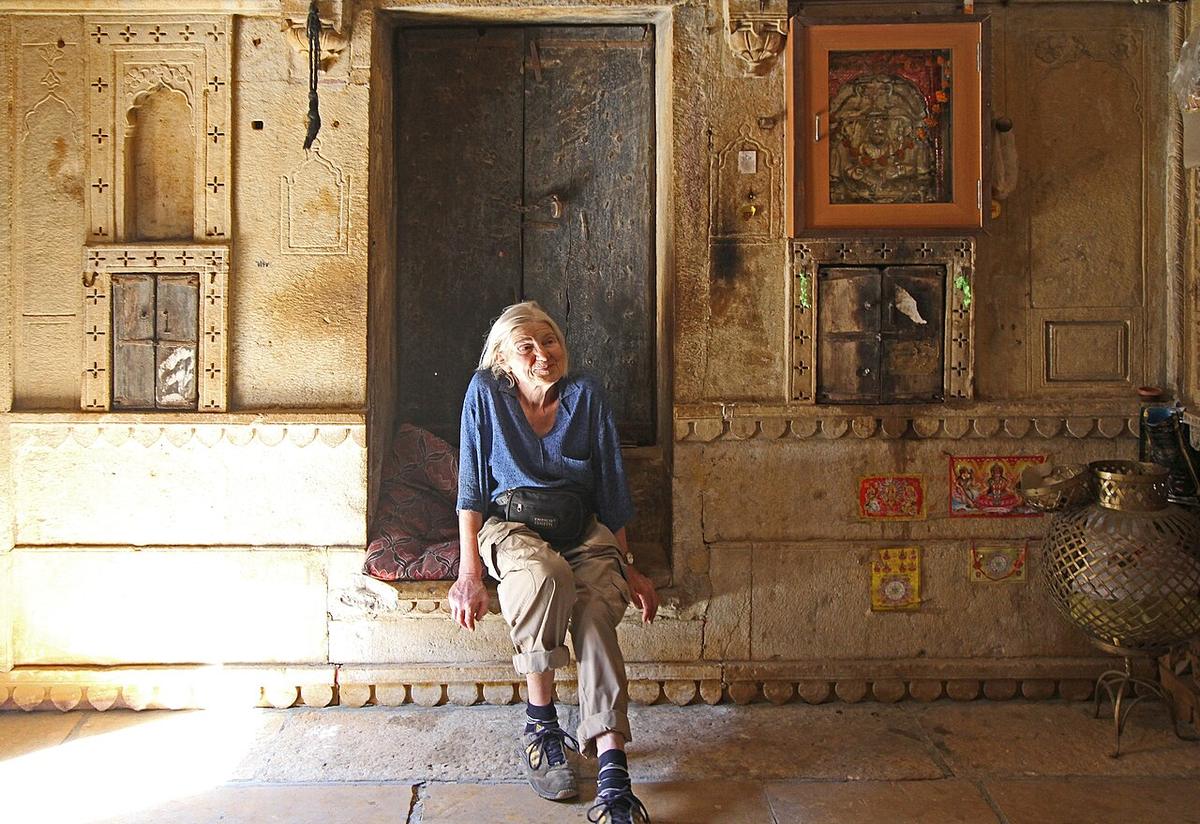
The first and largest of Jaisalmer’s great merchant havelis, five connected mansions in the old city, begun in 1805 by Guman Chand Patwa, a Jain trader who dealt in gold and silver thread, brocade and opium along the desert caravan routes. He built one wing for each of his five sons, and the whole complex took around 55 years to complete, every façade and bracket and screen worked into fret-fine stone. The family’s fortune later faded; the Archaeological Survey took the buildings on in 1974.
Nathmal Ki Haveli
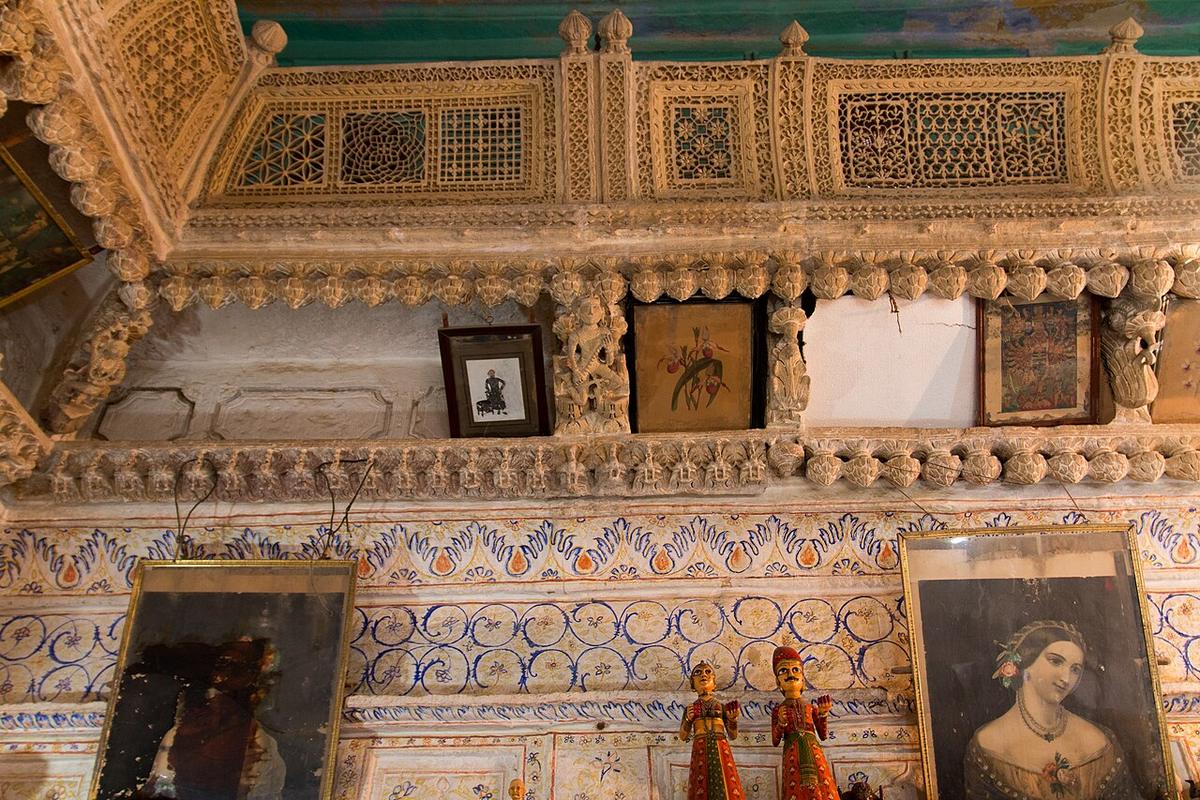
Built in 1885 as the residence of Diwan Mohata Nathmal, prime minister to Maharawal Beri Sal. The commission went to two architect brothers, Hathi and Lulu, who, the story goes, each took one side of the front and built it independently, without comparing notes as they worked. The result is a façade that is almost, but not quite, symmetrical: the two halves rhyme rather than match. Two life-size sandstone elephants stand guard at the door.
Salim Singh Ki Haveli
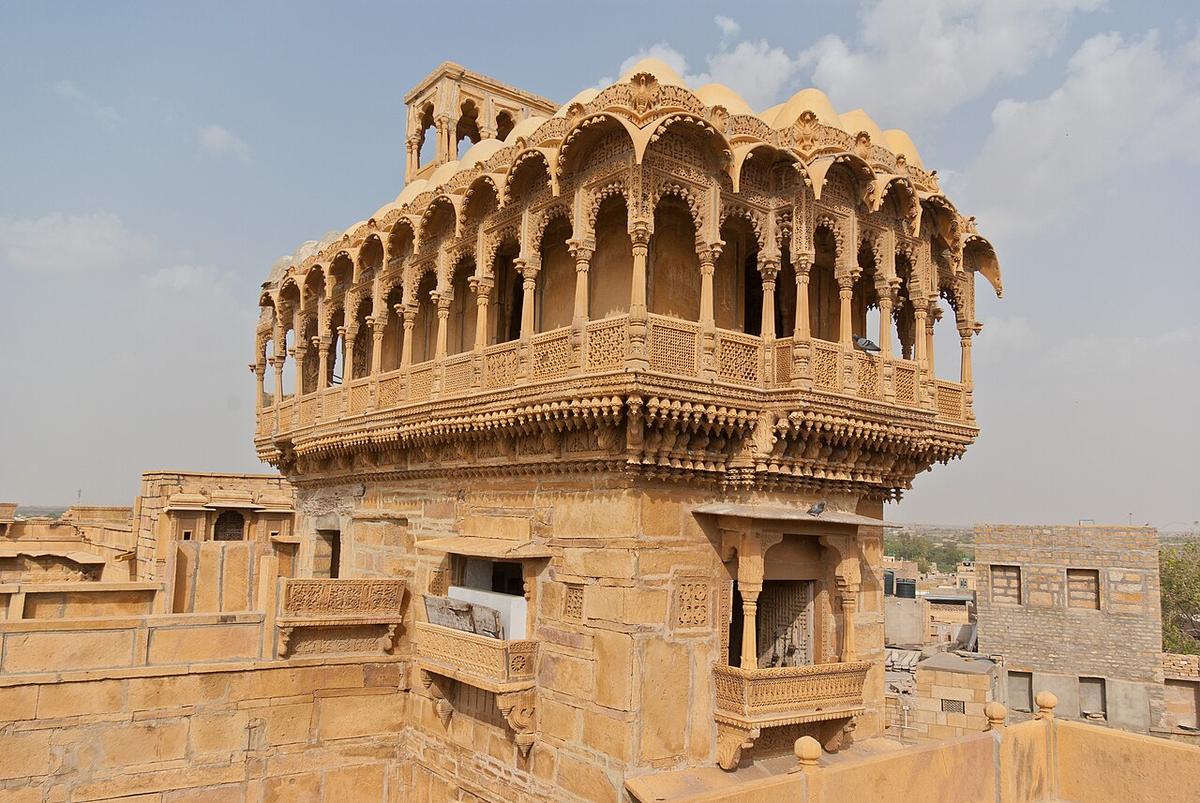
Built around 1815 on the base of an older family house by Salim Singh Mehta, the Diwan of Jaisalmer, an administrator remembered as brilliant, ruthless and widely feared, his grip on the state’s revenue near-total. The mansion’s upper storeys corbel outward over the narrow lane in a run of 38 balconies, each carved a little differently, so the whole thing seems to swell as it rises. That flared top is why it is called Jahaz Mahal, the ship palace, and also Moti Mahal, the pearl palace.
Amar Sagar
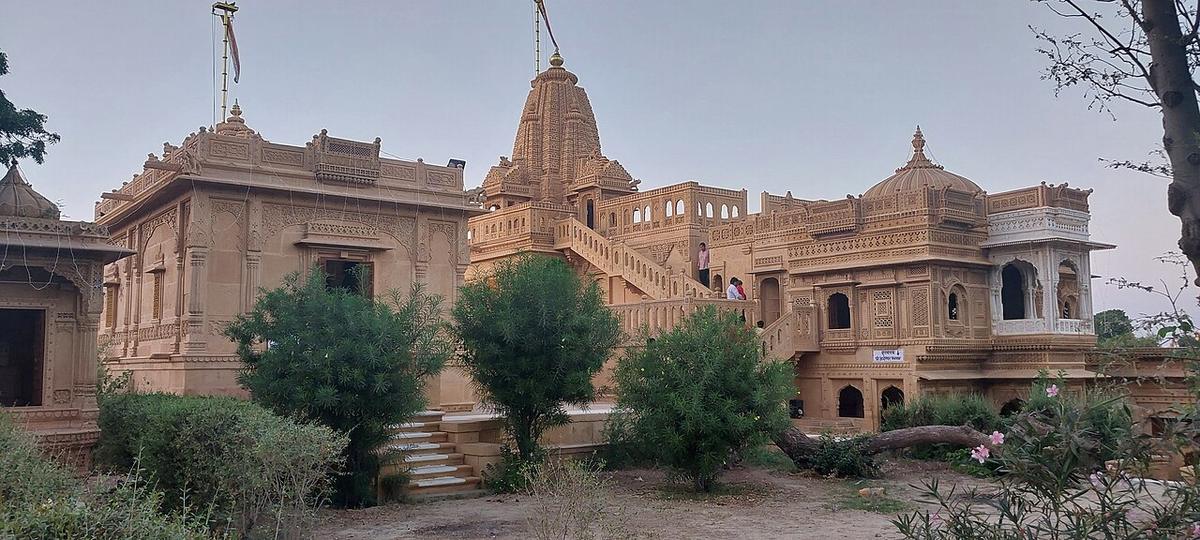
A walled lake and garden about seven kilometres north-west of the city, laid out beside the palace of Maharawal Amar Singh, who ruled in the late 1600s, and named for him. It is a seasonal tank: it draws down through the dry months and refills with the monsoon, year after year. Beside it stands a Jain temple to Adinatha, the first Tirthankara, built by the Bafna branch of the Patwa family and finished in 1928, its yellow stone carved in the dense Dilwara manner and slowly restored over decades.
Lodhruva
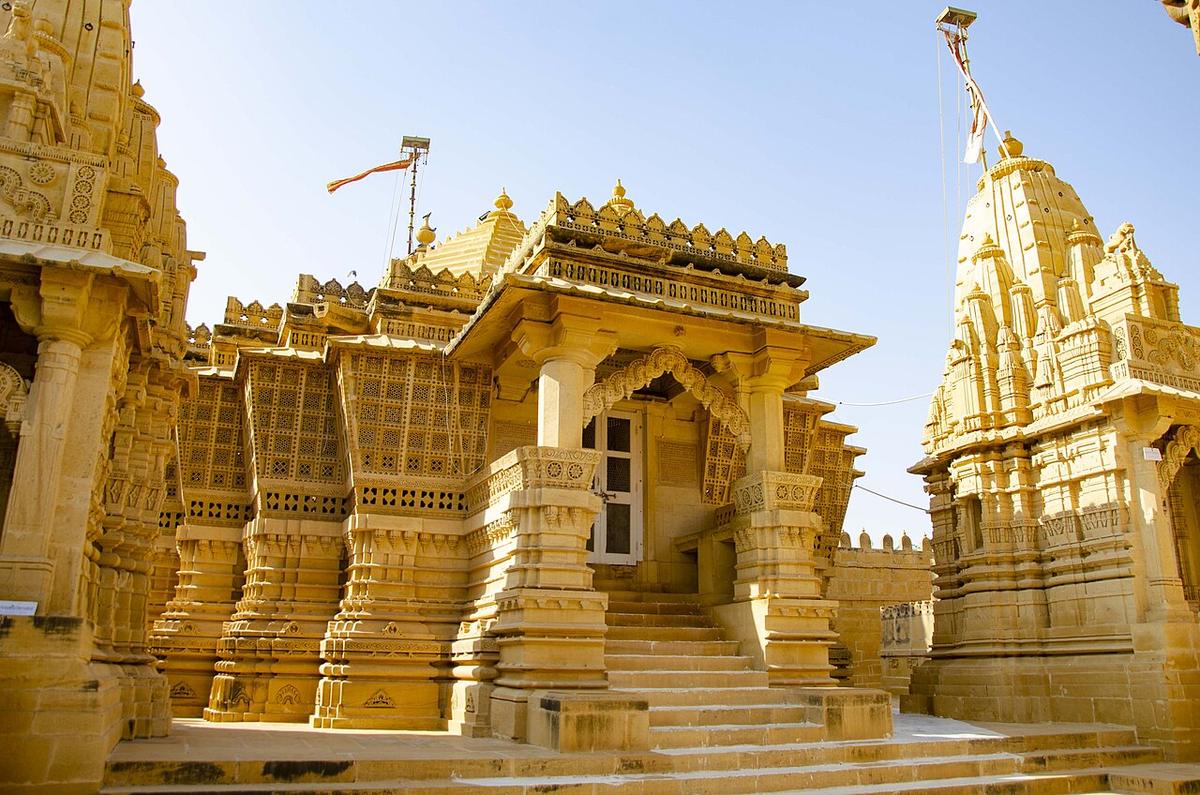
The seat of the Bhati Rajputs long before Jaisalmer, founded by Rawal Deoraj around the 8th or 9th century, on a caravan route, and rich because of it. That same exposure made it a target: it was raided and sacked repeatedly until Rawal Jaisal gave up on it in 1156 and moved his people to a hill that could be defended. The Parshvanath Jain temple that stands here now, rebuilt in the 17th century on older foundations, is known for a carved metal kalpavriksha, a wish-tree, and for a black cobra said to live in the shrine and show itself only to the sincere.
Bada Bagh
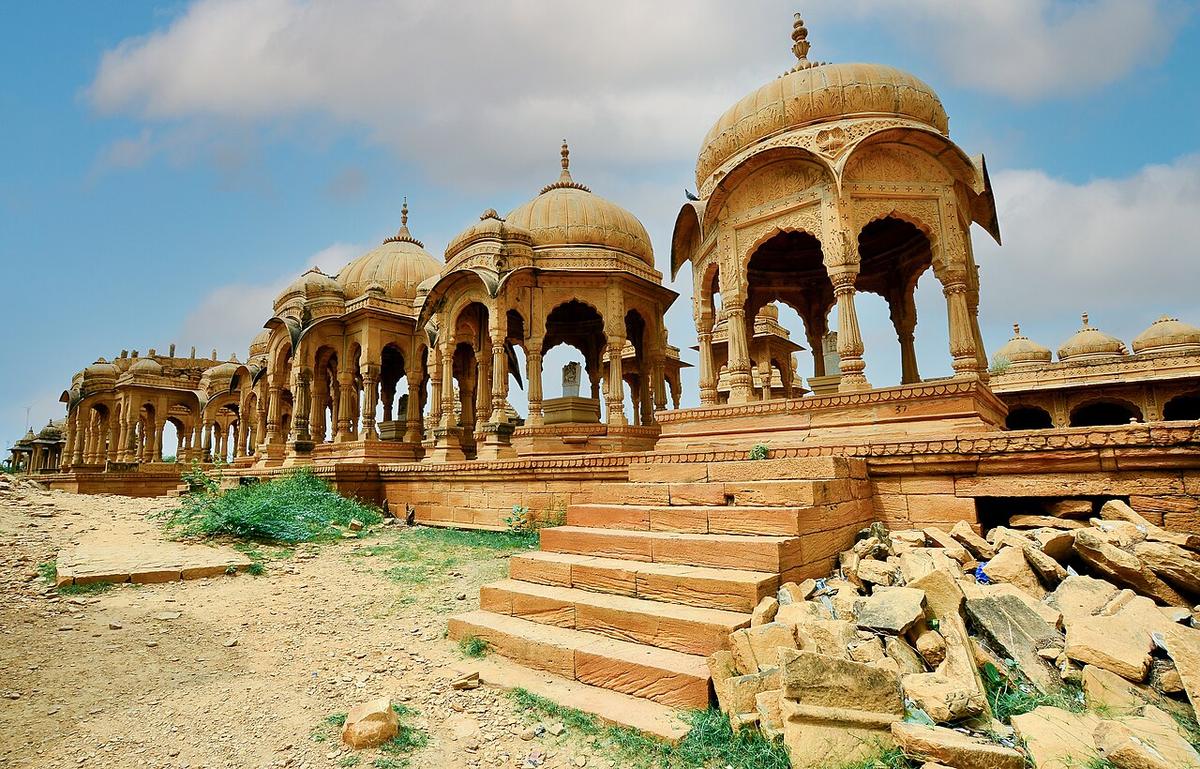
"The big garden", a mango orchard and tank made possible by a dam built in the 16th century under Jait Singh II, a rare patch of green in the desert. On the ridge above it stand the chhatris of the Bhati Maharawals, one raised for nearly every ruler from the 16th century into the 20th. The last of them, begun for Maharawal Jawahir Singh, was never finished: he died, and soon after, in 1947, the kingdoms that built such things ceased to exist. A wind farm now turns on the same ridge.
Kuldhara
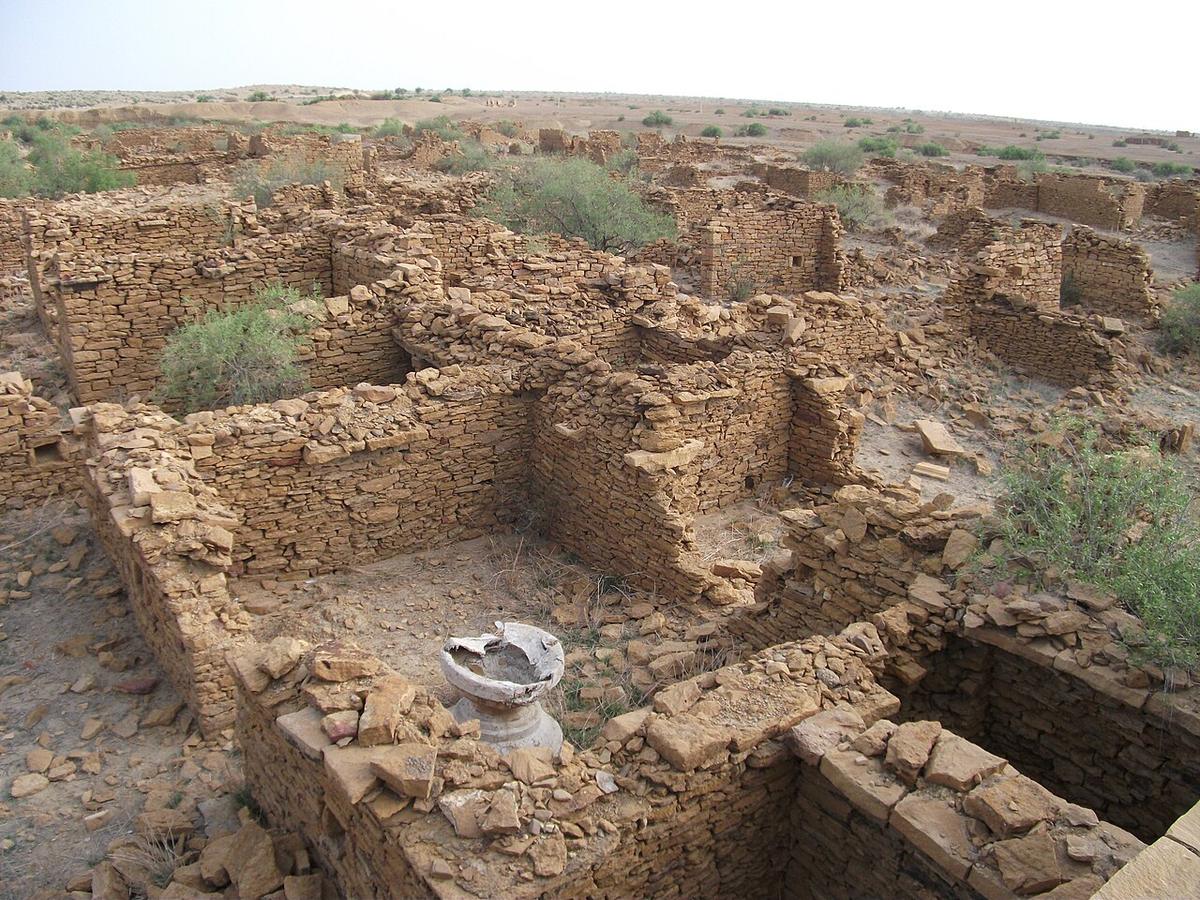
A village about twenty kilometres south-west of Jaisalmer, founded around 1291 by Paliwal Brahmins, skilled desert farmers who worked out how to raise crops on almost no water. By tradition, one night in or around 1825, the people of Kuldhara and dozens of surrounding Paliwal villages packed what they could carry and left together, all at once, rather than submit to the demands of Diwan Salim Singh. They are said to have cursed the ground so that no one could ever live there again. Two centuries on, the roofless stone houses still stand empty.
Jaisalmer Fort
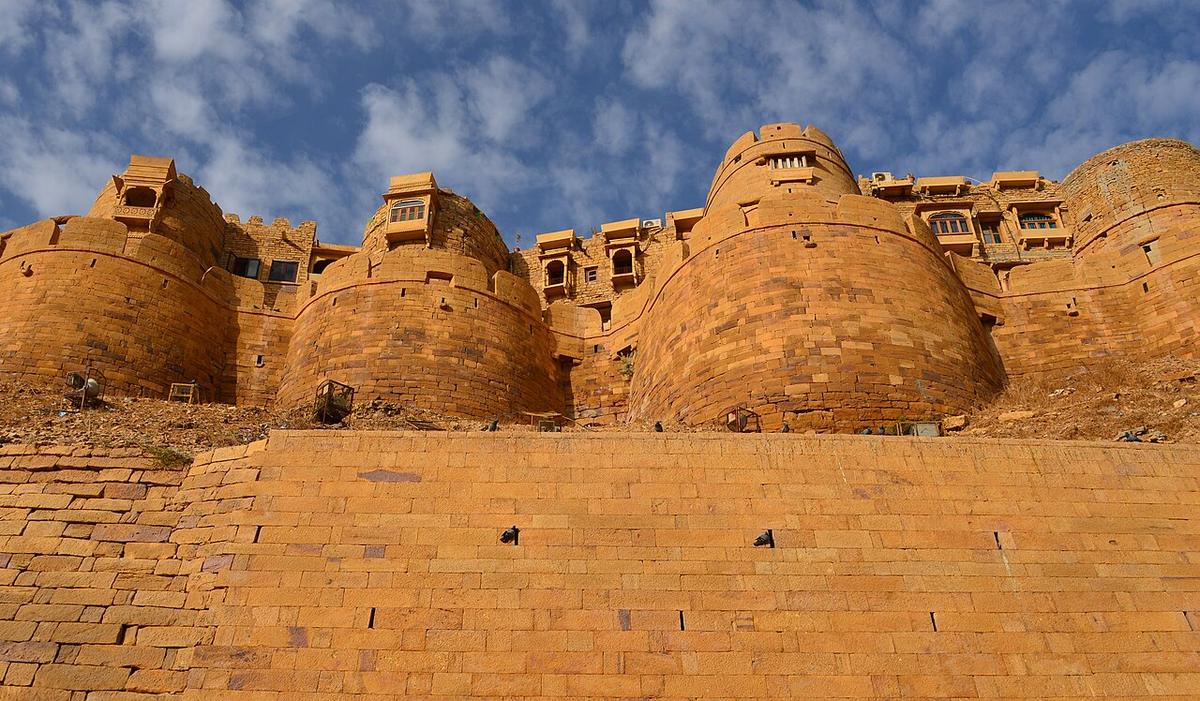
Founded by Rawal Jaisal in 1156 on Trikuta Hill, about 76 metres above the plain, the defensible ground he had been looking for when he left Lodhruva. Its yellow sandstone reads as honey by day and pure gold at dawn and dusk, which is the whole city’s nickname. It is one of the last living forts on earth: roughly a quarter of the old city, some thousands of people, still live inside the walls, among 99 bastions, four gates climbing to the Raj Mahal palace, and seven medieval Jain temples. It withstood a siege by Alauddin Khalji around 1299 that ended in jauhar, and a later sack in the 14th century. Today its worst enemy is water, modern plumbing has raised seepage that keeps bringing down sections of the old stone.