Jodhpur: The Blue City
The Jodhpur Safarnama runs 33.4 km across 10 monuments, from Mandore Gardens to Mehrangarh Fort, part of The Fort & Palace Trail. Jodhpur is known as the blue city, here is the story the route tells, one stop at a time.
Mandore Gardens
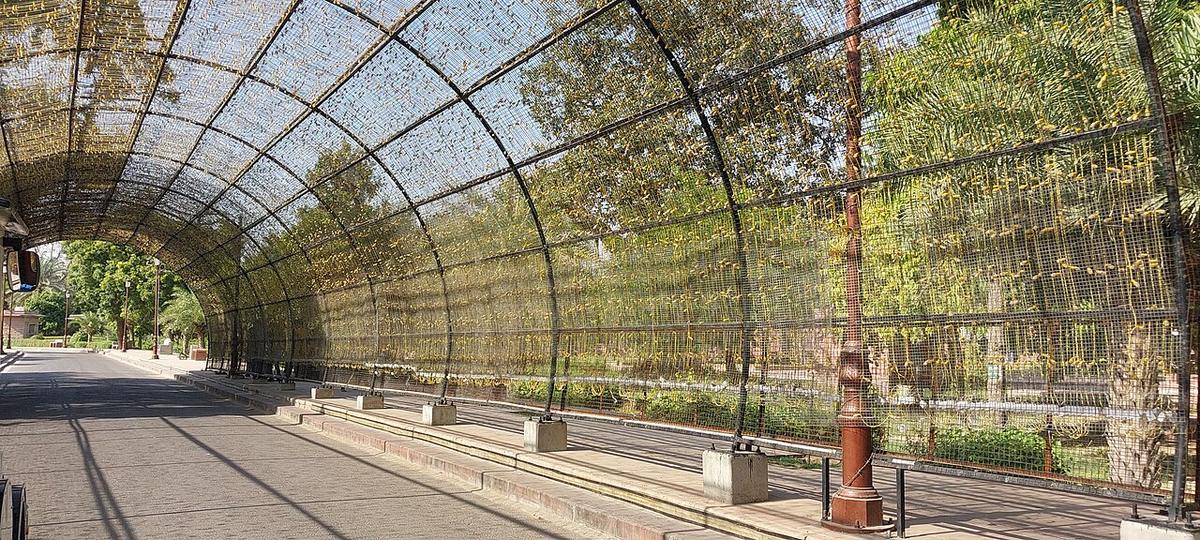
The capital of Marwar for centuries before Jodhpur existed. The Pratiharas ruled from here in the 6th century; the Rathores took Mandore as a dowry under Rao Chunda around 1395, and in 1459 Rao Jodha moved the seat to his new hill-fort a few miles south, leaving Mandore to become a royal necropolis. Its gardens now hold the towering red-sandstone devals (cenotaphs) of the Marwar kings, the grandest for Maharaja Ajit Singh, and the Hall of Heroes, sixteen figures cut from a single rock face.
Mahamandir Temple
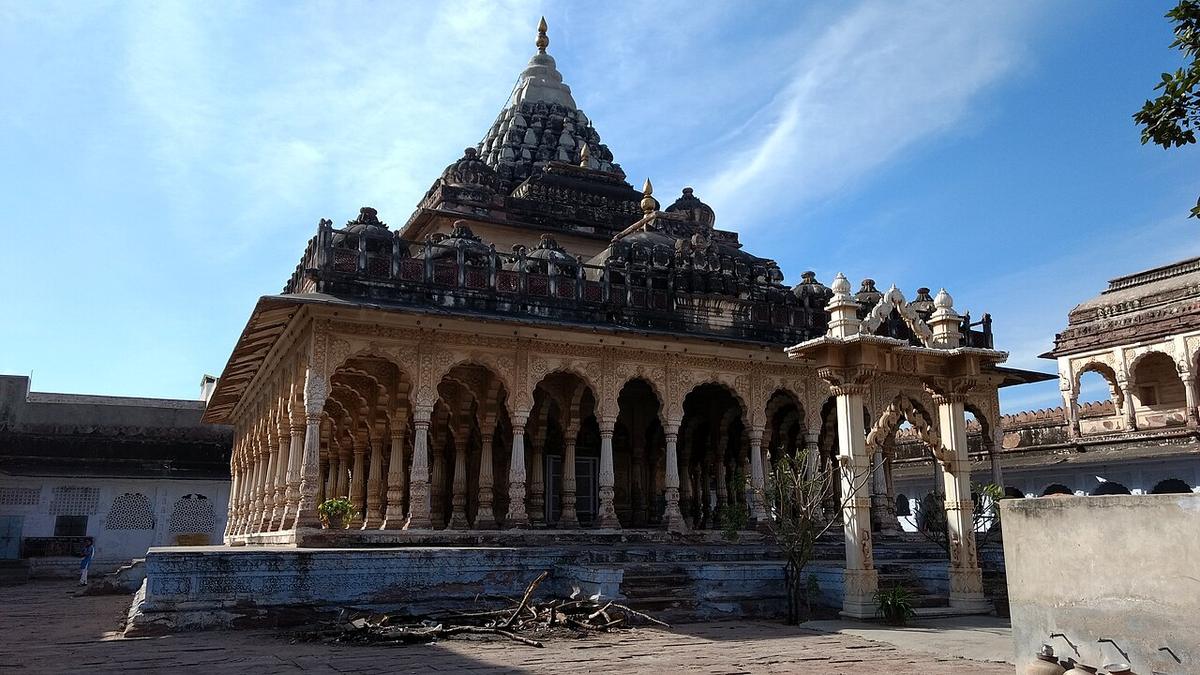
The "Great Temple", built in 1812 during the reign of Maharaja Man Singh, a ruler so devoted to the Nath yogis that he credited them with putting him on the throne. It stands on 84 carved pillars: the number the Nath tradition gives for its perfected masters: and its walls are covered with figures holding yoga postures. It remains an active seat of the Nath Panth, and the hall is still used for practice.
Kaylana Lake
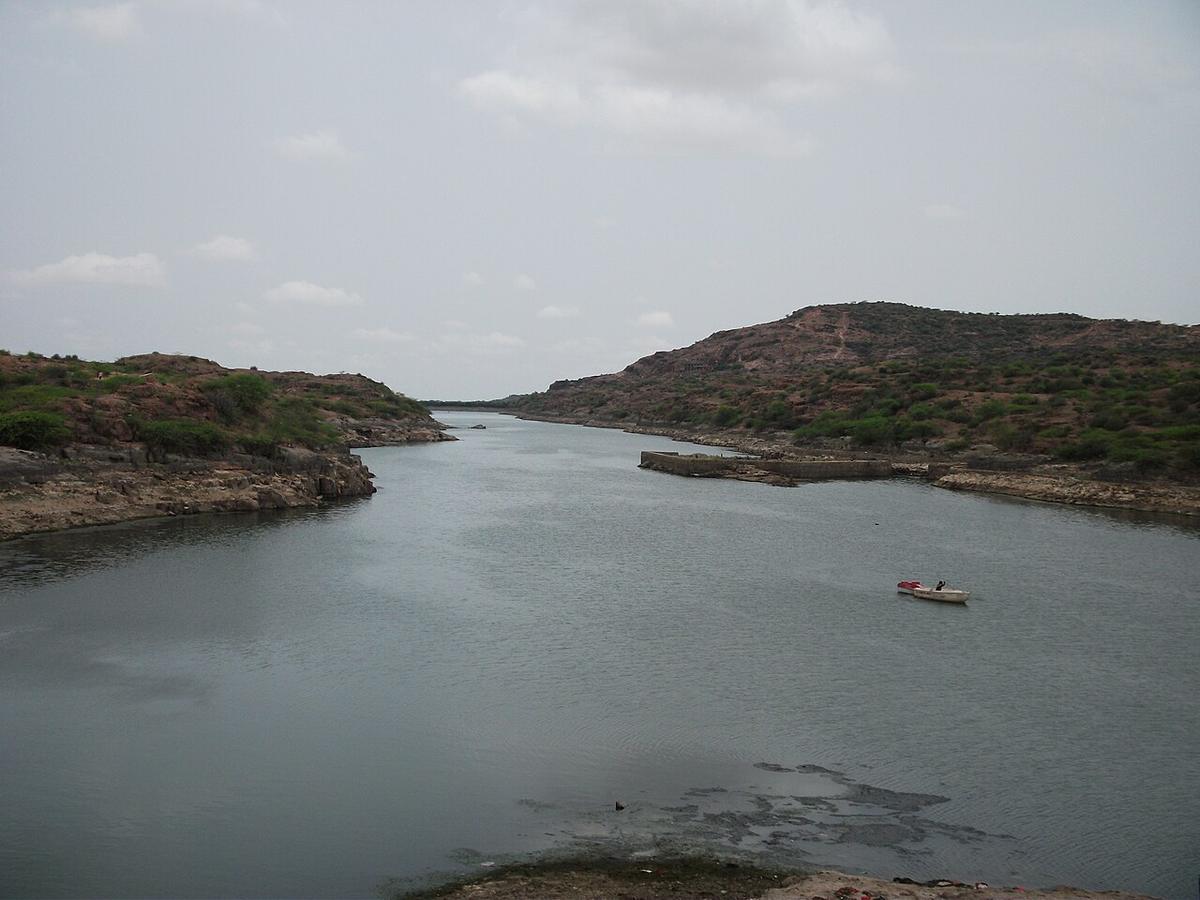
An artificial lake spread over some 84 square kilometres, made in 1872 by Pratap Singh, then in charge of Jodhpur's administration, by damming a valley in the rocky hills west of the city. It was built to catch the monsoon and supply Jodhpur with drinking water, which it still does. The dam flooded the remains of two older royal palaces and garden pavilions.
Umaid Bhawan Palace
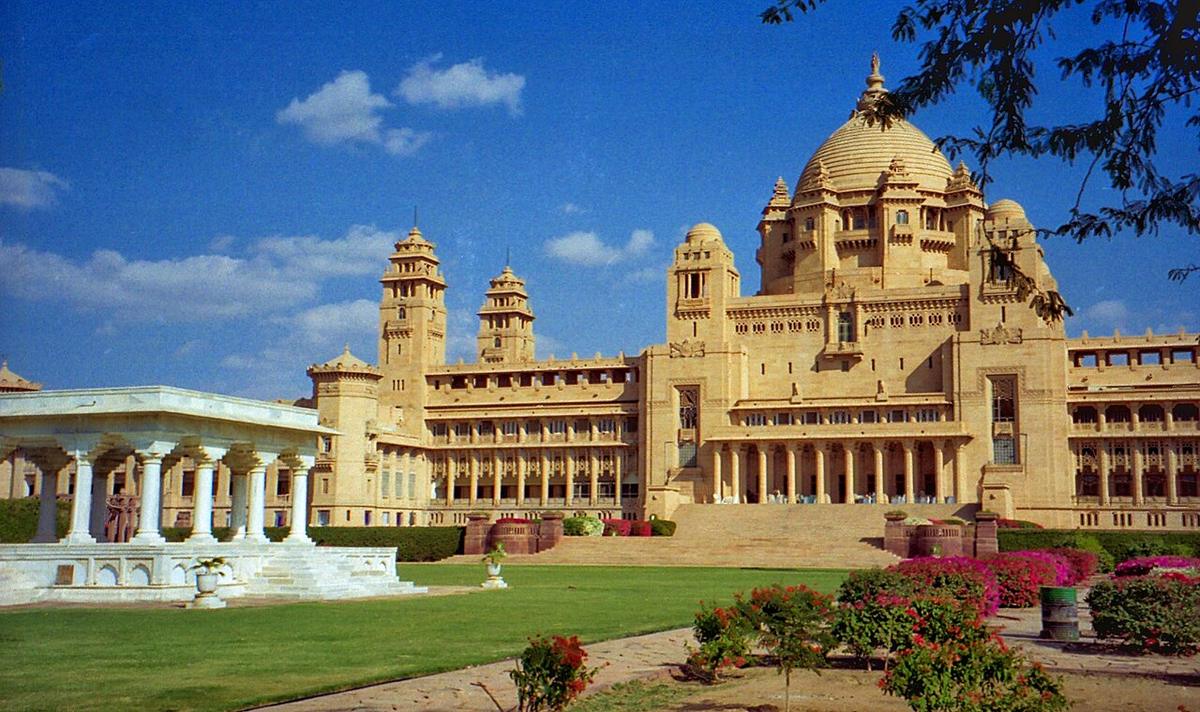
One of the largest private residences on earth, 347 rooms of golden Chittar sandstone, the blocks interlocked without mortar. Maharaja Umaid Singh commissioned it in 1929, in the middle of a long drought and famine, largely to give thousands of farmers paid work through the lean years; it took until 1943 to finish. The family still lives in one wing; the rest is a hotel and a museum.
The Blue City
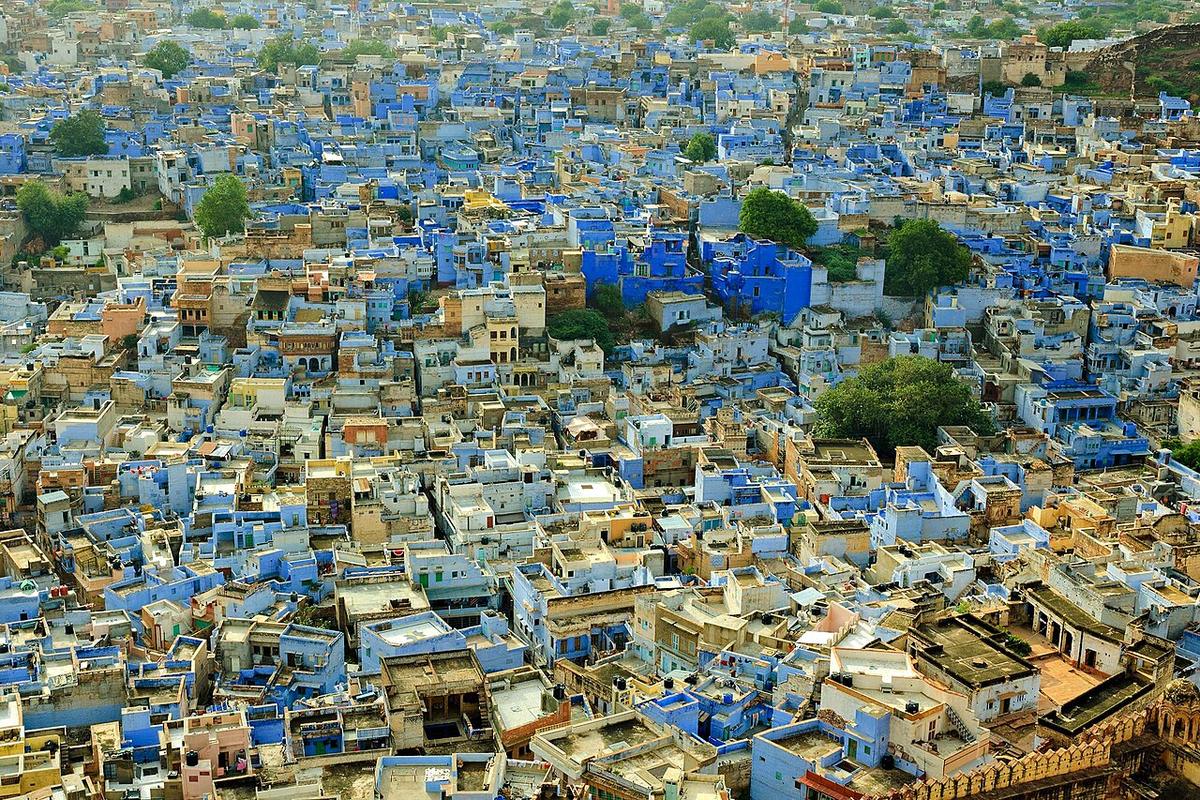
From the ridge of Masuria Hill, the highest point in Jodhpur, topped by a garden and a memorial to the Rathore hero Veer Durgadas, the old town below reads as one field of blue. The indigo wash began on Brahmin houses and spread; it is said variously to cool the walls, deter termites and mark the old quarters. Whatever the reason, it is why Jodhpur is called the Blue City.
Ghanta Ghar
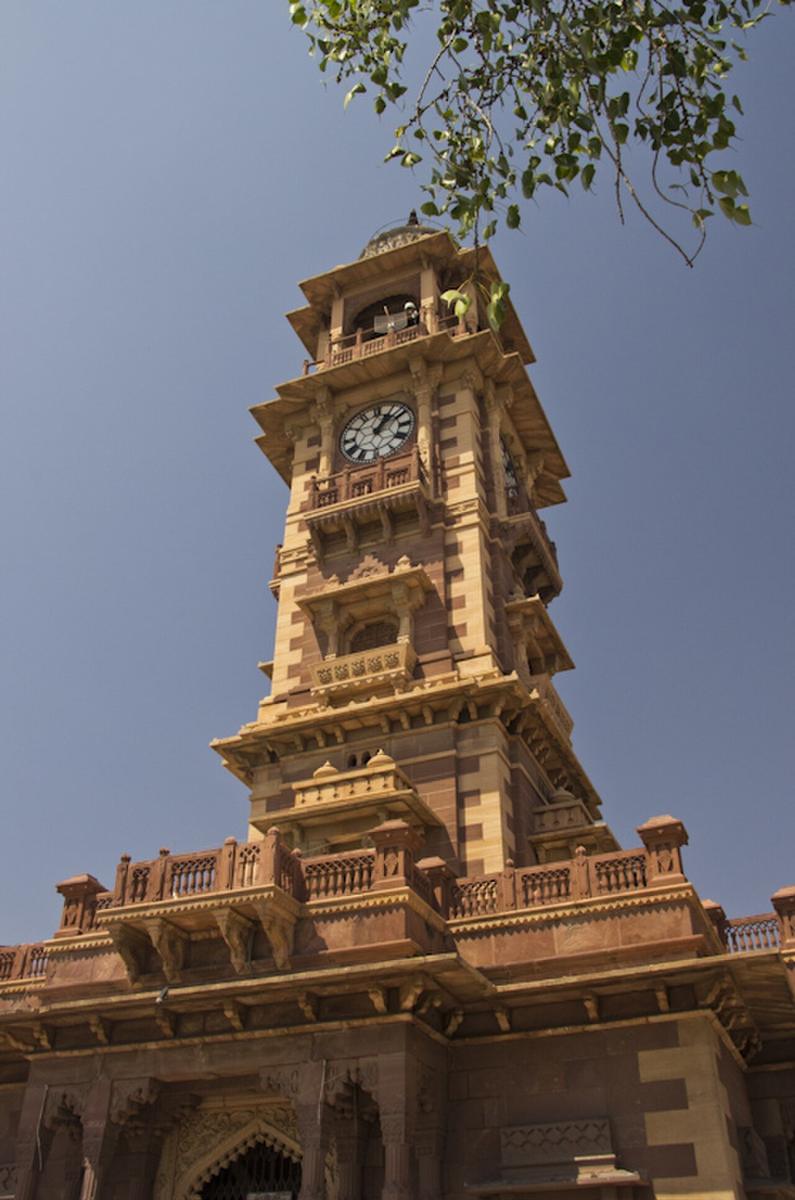
The clock tower at the centre of the old city, raised by Maharaja Sardar Singh (r. 1880–1911), with the walled Sardar Market spread around its base. The bazaar still runs on the old trades, textiles, spices, silverwork, sweets, tie-dye, through the same lanes and the same set of gates.
Toorji ka Jhalra
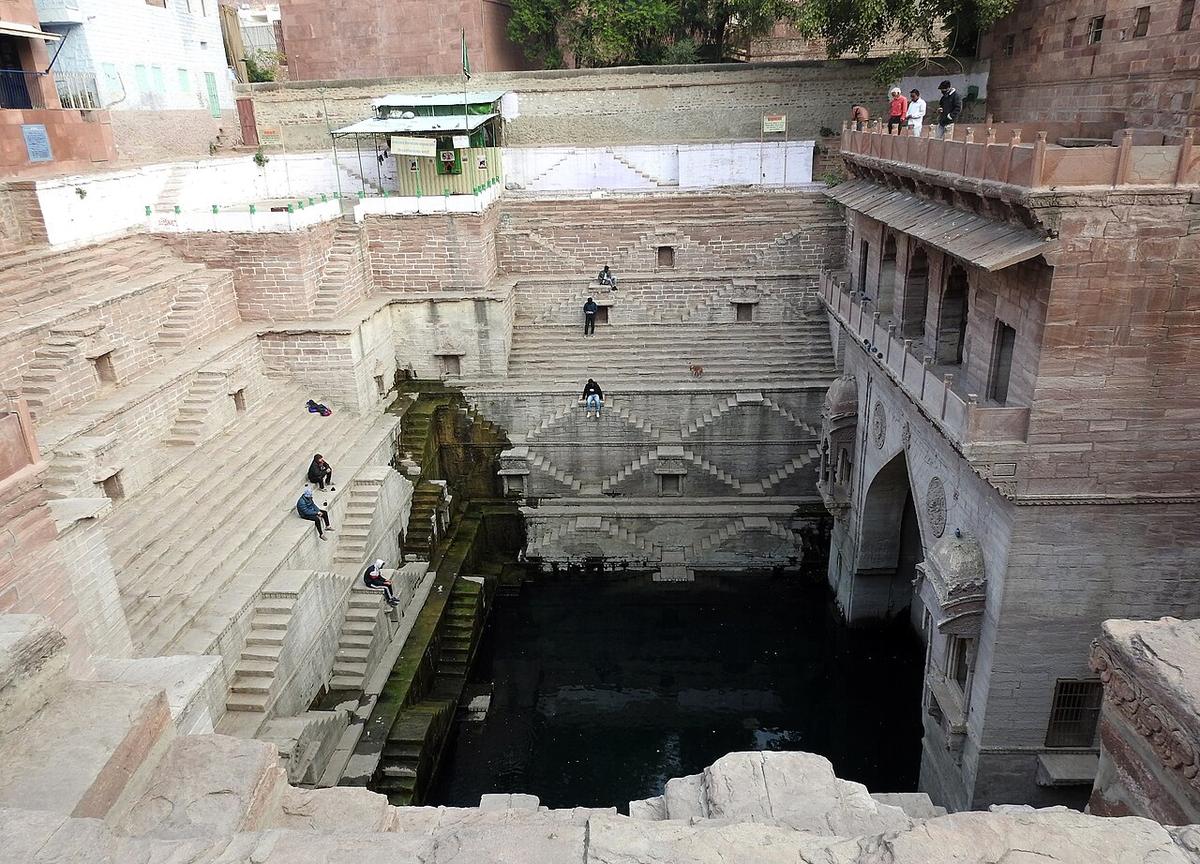
A stepwell more than 200 feet deep, cut into Jodhpur's rose-red sandstone in 1740 by the queen consort of Maharaja Abhaya Singh, part of a long tradition of the region's royal women overseeing public waterworks. Carved with elephants, lions and deity niches, it silted up and was effectively lost for close to a century until a clean-out in the 2010s brought the full descent back to light.
Jaswant Thada
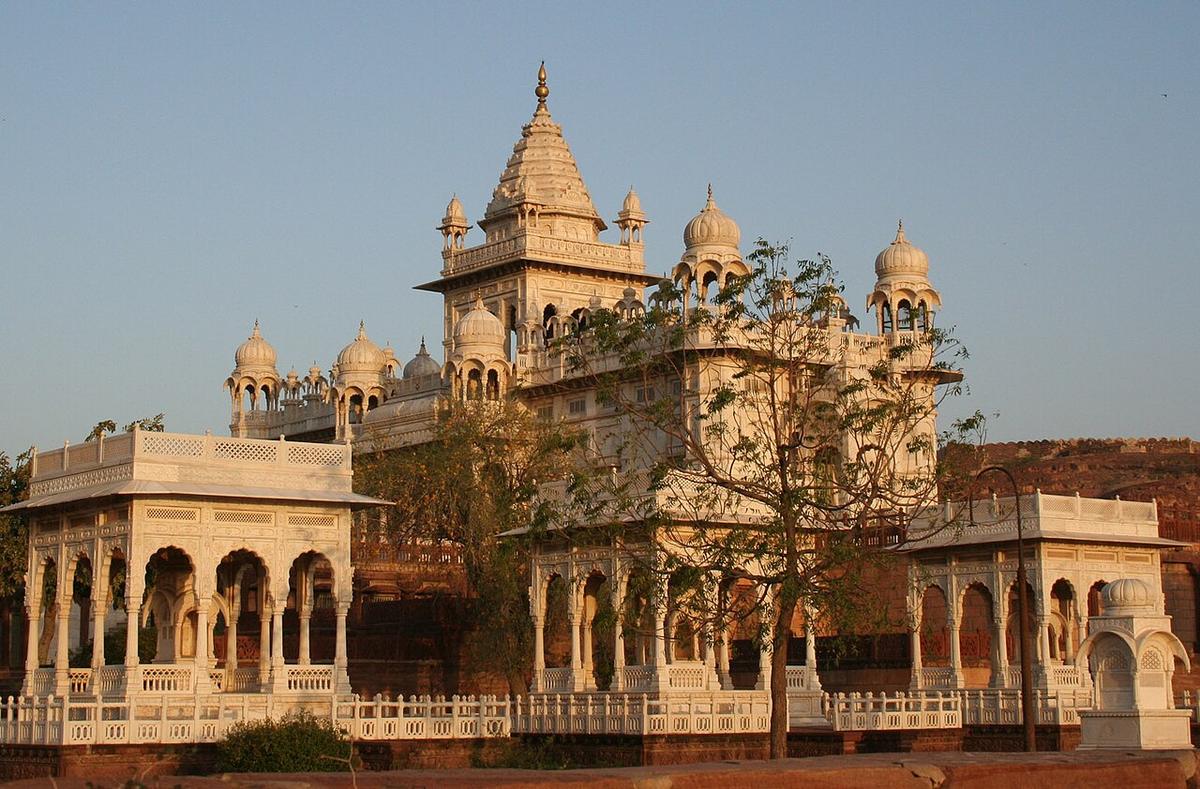
A cenotaph of white Makrana marble, begun by Maharaja Sardar Singh in 1899 in memory of his father Jaswant Singh II and finished in 1906. The marble is worked so thin that the whole structure glows warm in low sun. It stands above a small lake and also serves as the cremation ground of the Rathore rulers of Marwar.
Rao Jodha Desert Rock Park
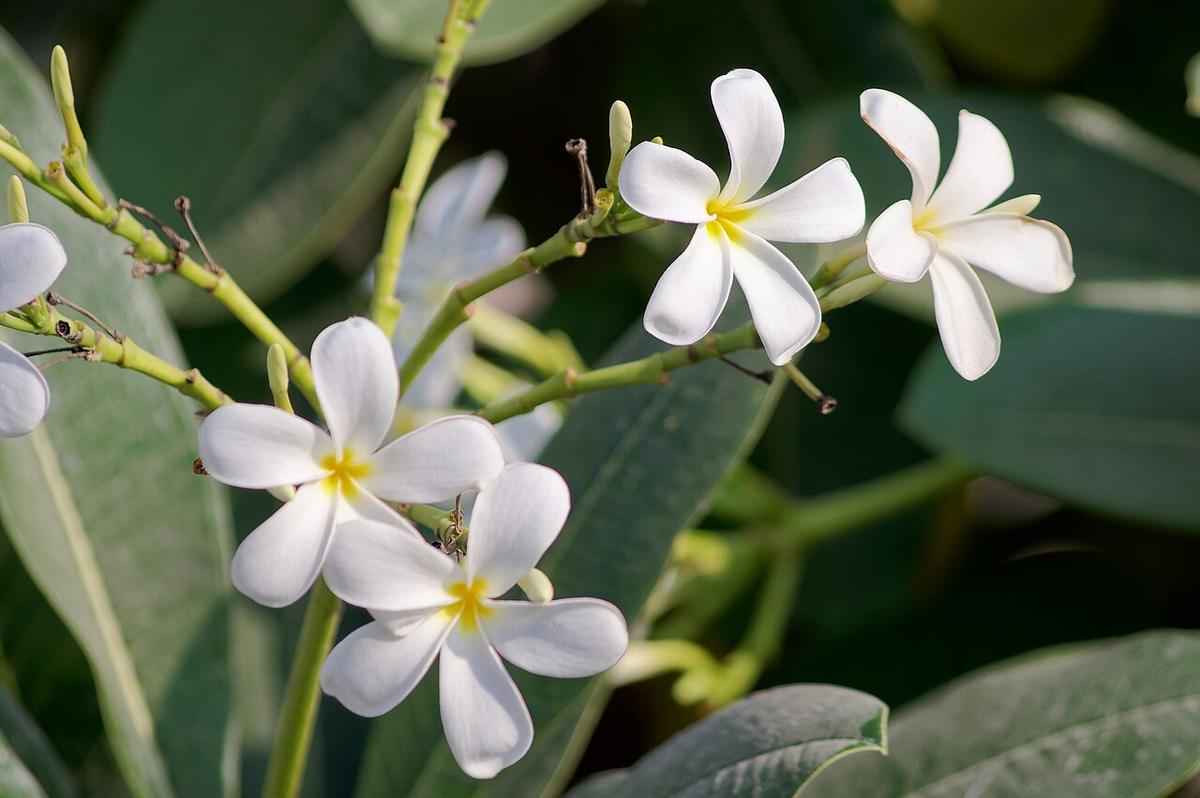
Seventy-two hectares of volcanic rock at the foot of Mehrangarh, opened in 2006. The ground had been overrun by an invasive weed and stripped bare; a team spent years hand-clearing the rock, re-seeding it with native desert plants and rebuilding the old rain channels. It is now walked for the trails that thread the ridge up to the fort walls.
Mehrangarh Fort
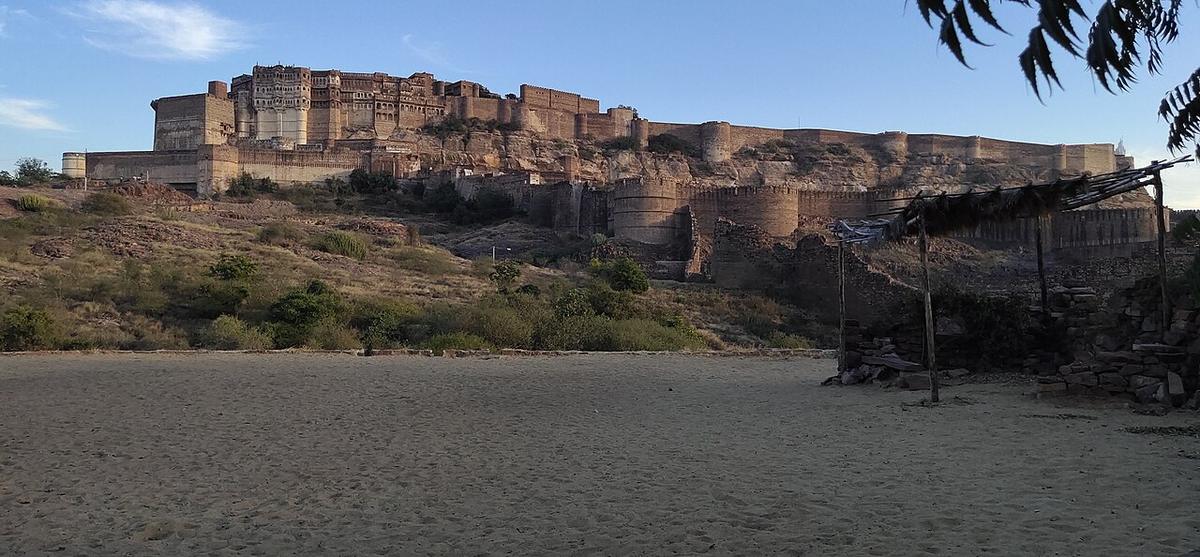
Founded by Rao Jodha on 12 May 1459 on a 400-foot rock the local birds had mostly to themselves; the hermit he evicted is said to have cursed the hill with lasting thirst. Most of what stands is Maharaja Jaswant Singh's (1638–78): walls up to 120 feet high and 70 feet thick, seven gates, and the Moti, Phool and Sheesh Mahals within. In five and a half centuries it has never been taken by force.