Khajuraho: The Temple City
The Khajuraho Safarnama runs 0.8 km across 4 monuments, from Matangeshwara & Lakshmana Temple to Chitragupta Temple, part of The Ancient Heartland. Khajuraho is known as the temple city, here is the story the route tells, one stop at a time.
Matangeshwara & Lakshmana Temple
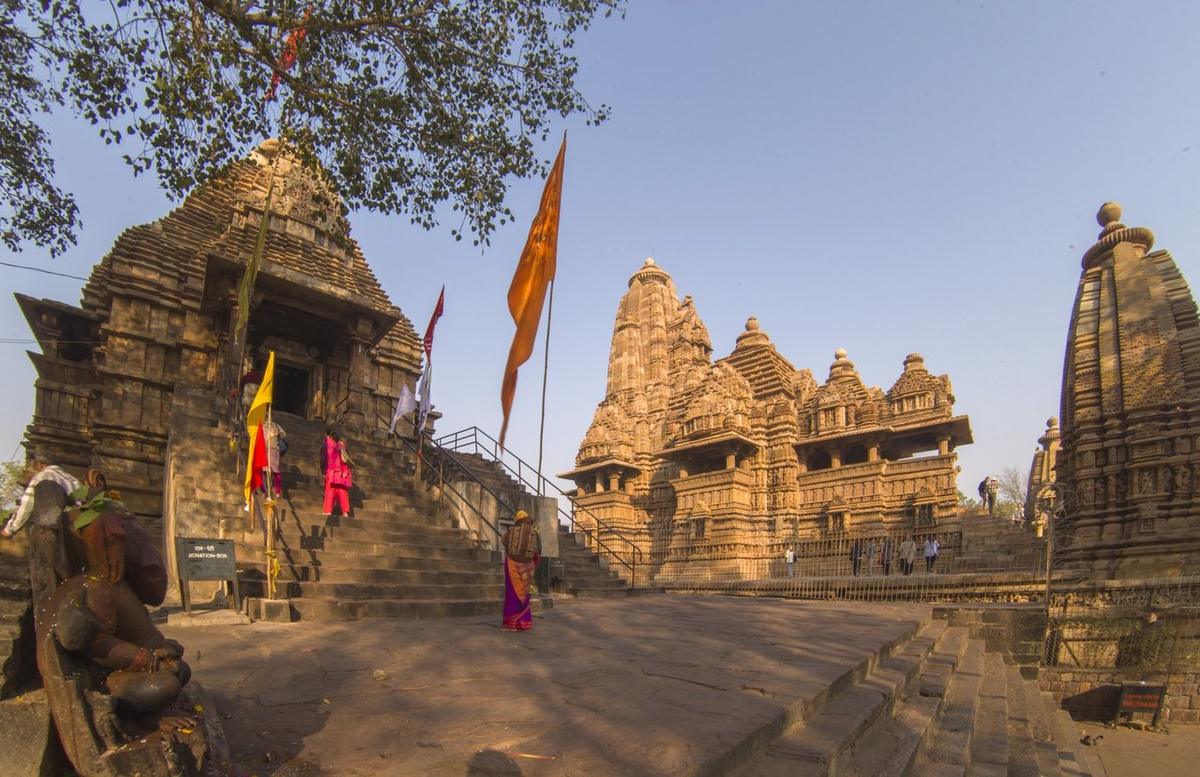
Dated by the Archaeological Survey of India to 900–925 CE, among the oldest temples on this site, Matangeshwara is the only Chandela-era temple at Khajuraho still in active worship; every other temple here is a preserved monument rather than a functioning shrine. Beside it stands Lakshmana Temple, one of the earliest and best-preserved examples of the elaborate carved style that would define every temple built here afterward.
Kandariya Mahadeva Temple
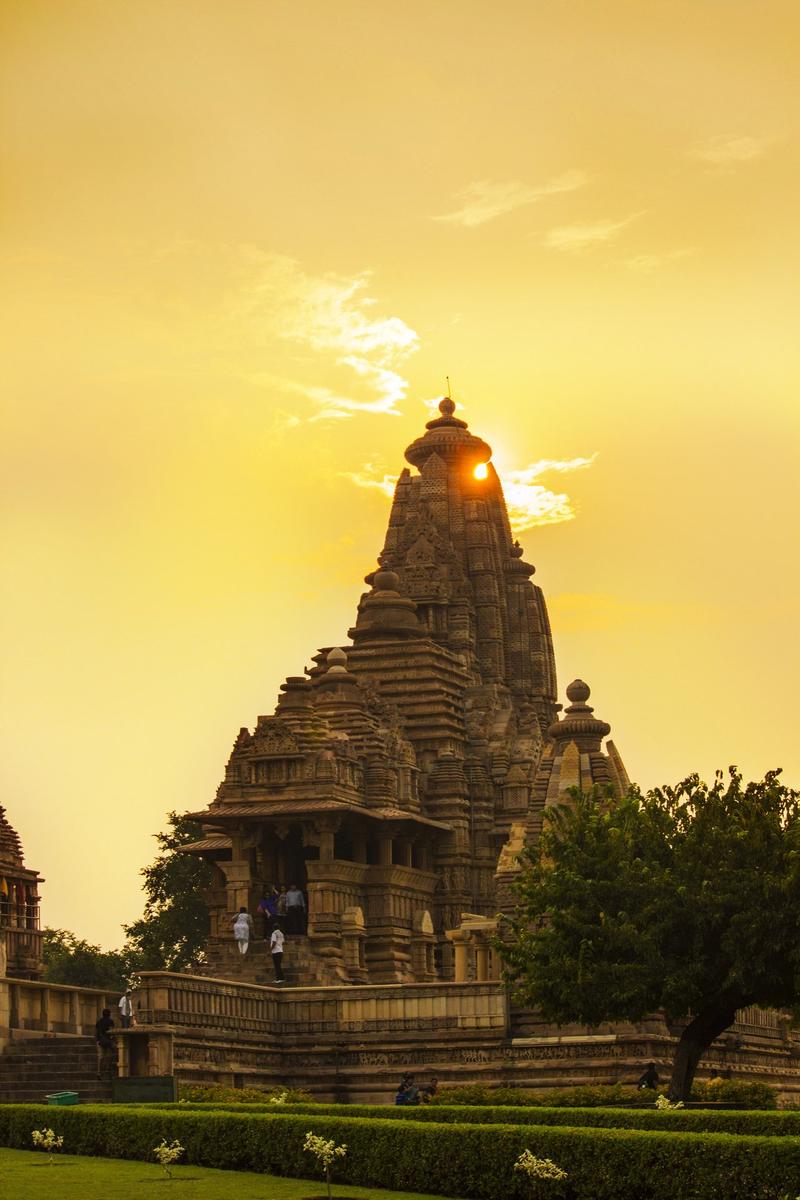
Built between roughly 1025 and 1050 CE under the Chandela king Vidyadhara, Kandariya Mahadeva is Khajuraho’s largest and tallest temple, 31 metres high, its tower rising through 84 miniature spires meant to evoke Mount Meru. Vidyadhara commissioned it to mark his own military successes, including turning back two invasions by Mahmud of Ghazni in 1019 and 1022.
Vishvanatha Temple
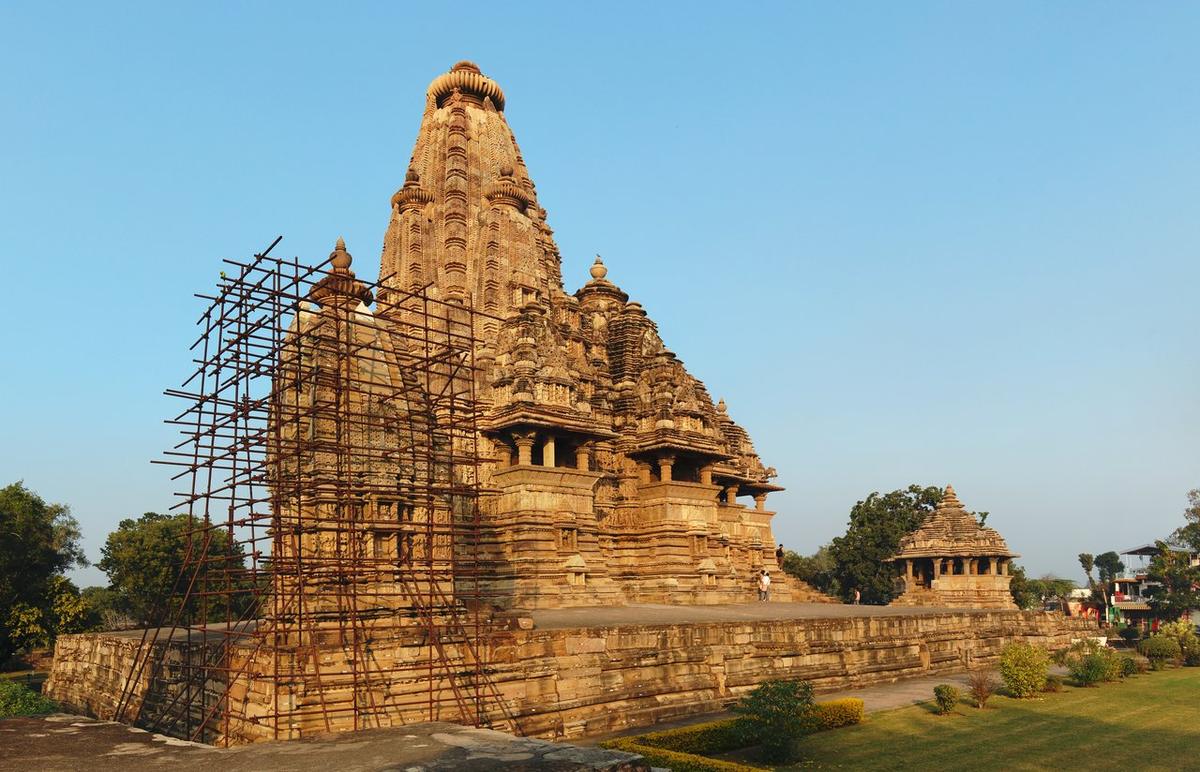
Standing at the north-eastern edge of the Western Group, Vishvanatha Temple is generally reckoned an architectural precursor to Kandariya Mahadeva, an earlier attempt at the same basic form the later, larger temple would perfect. Its sanctum still holds a shivalinga.
Chitragupta Temple
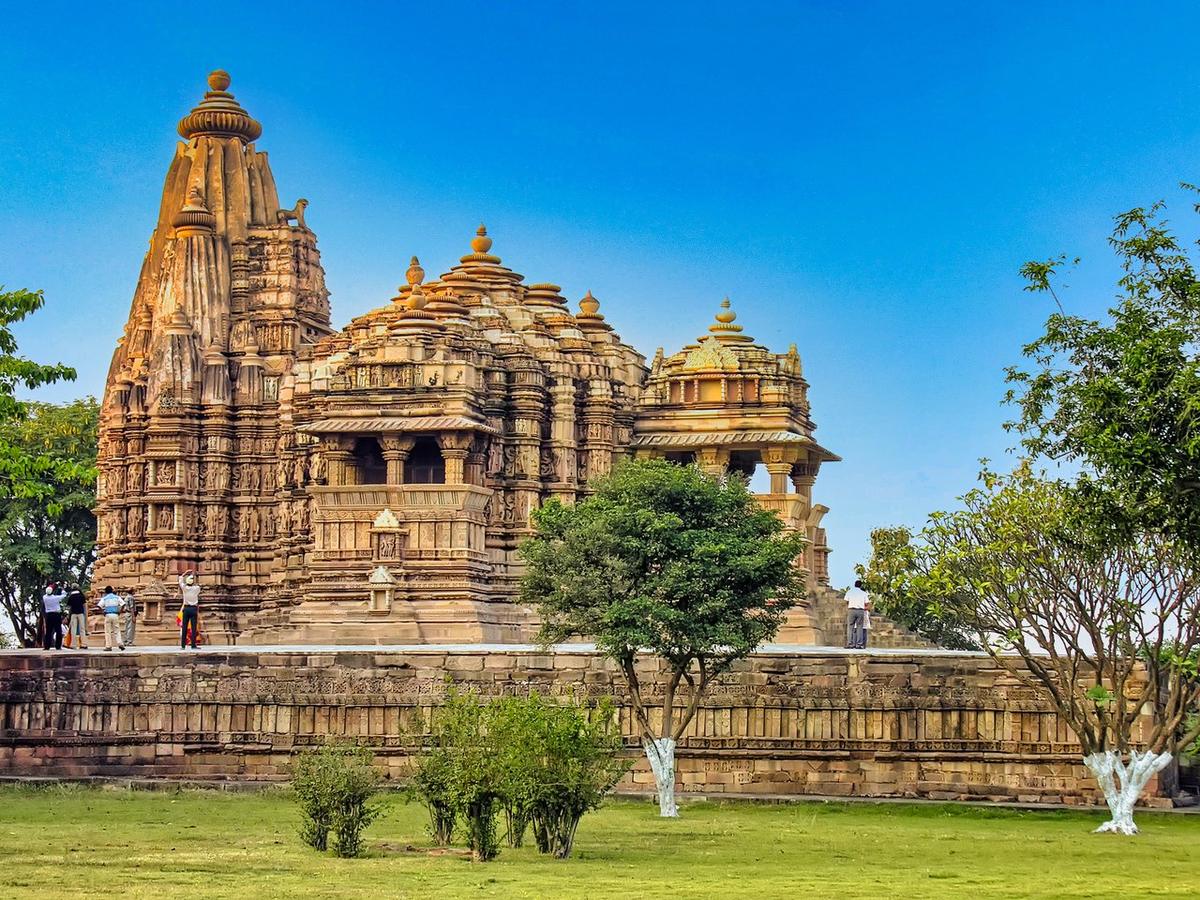
Unusual both for Khajuraho and for northern India generally, Chitragupta Temple is dedicated to Surya, the sun god, rather than to Shiva or Vishnu like almost everything around it. Its sanctum holds a seated sun-god image, driving a chariot pulled by seven horses, a single deliberate exception inside a complex otherwise built almost entirely for two gods.