Kochi: The Queen of the Arabian Sea
The Kochi Safarnama runs 3.5 km across 6 monuments, from Fort Kochi Beach to Paradesi Synagogue, part of The Temple Trail. Kochi is known as the queen of the arabian sea, here is the story the route tells, one stop at a time.
Fort Kochi Beach
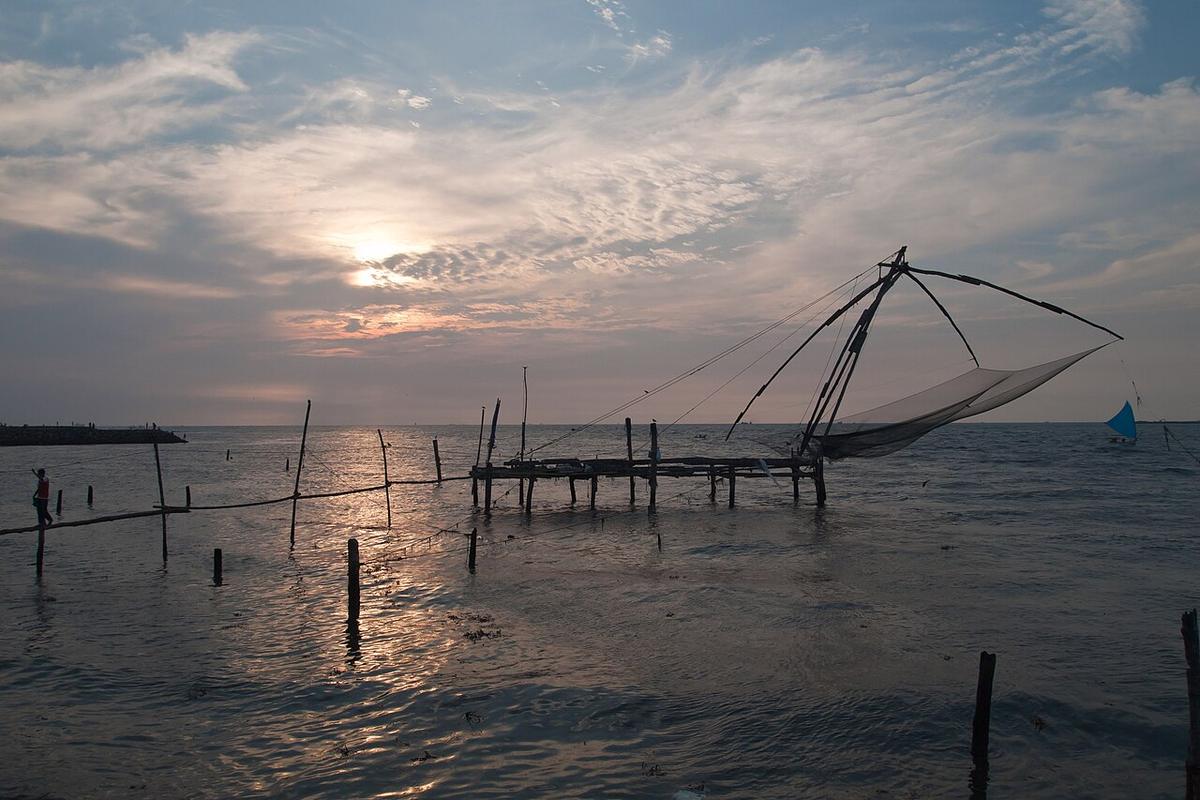
This stretch of shoreline is home to Kochi’s Chinese fishing nets, Cheena vala, shore-operated lift nets believed to have arrived with Chinese traders in the early 14th century. Each installation stands more than ten metres tall, with a cantilevered arm reaching twenty metres or further over the water and a team of up to six fishermen working the counterweighted stones on the landward end. They remain the single image most visitors associate with Kochi, still lowered and raised for a living catch every day.
Fort Emmanuel
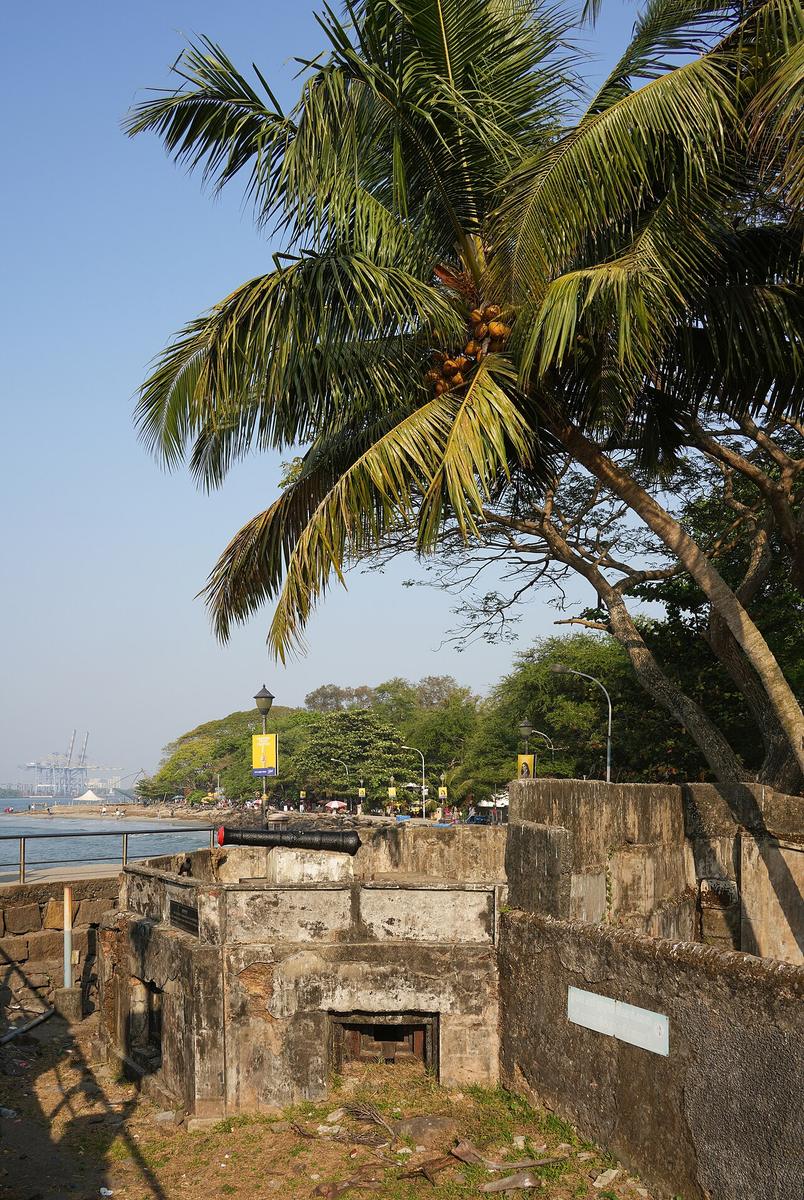
Construction began on 26 September 1503, after the Portuguese crown gave Afonso de Albuquerque permission to build a fort on this waterfront, walls of coconut-tree stems packed with rammed earth, in a square with corner bastions, named for King Manuel I and christened on 1 October 1503. It was the first European fort built anywhere in Asia, and the reason this entire district is still called Fort Kochi. The Dutch reinforced it after 1663; the British demolished most of it by 1806. A gun battery and stretches of rampart survive.
St. Francis Church
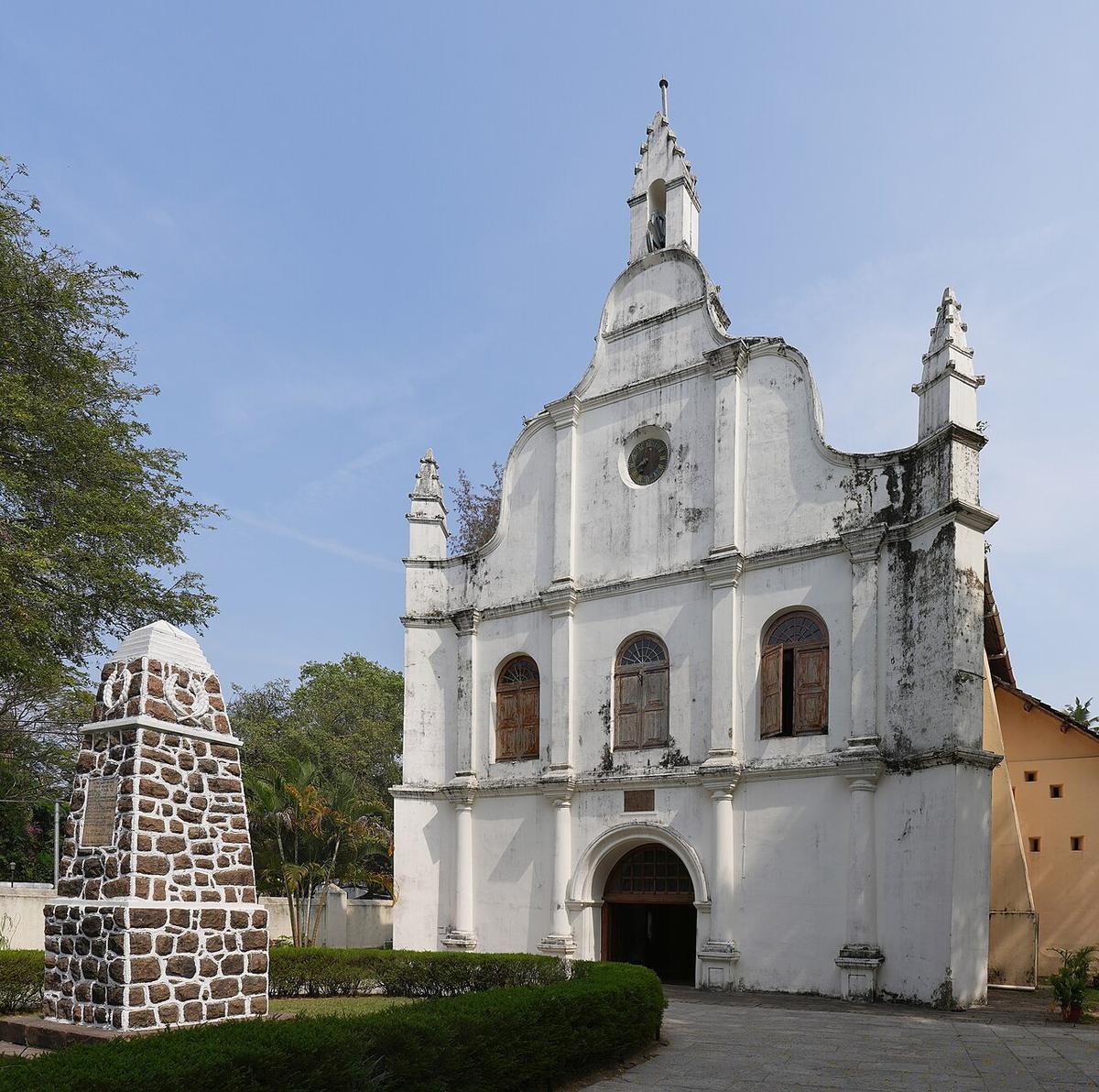
A wooden church stood here from around 1503; the Portuguese viceroy Francisco de Almeida authorised its rebuilding in stone in 1506, and the work was finished in 1516, making this the oldest European church in India. Vasco da Gama died in Kochi in 1524, on his third voyage there, and was buried inside this church; fourteen years later his remains were moved to Lisbon, where they still lie. The Dutch converted it to Protestant use after 1663; it is now run by the Church of South India.
Santa Cruz Basilica
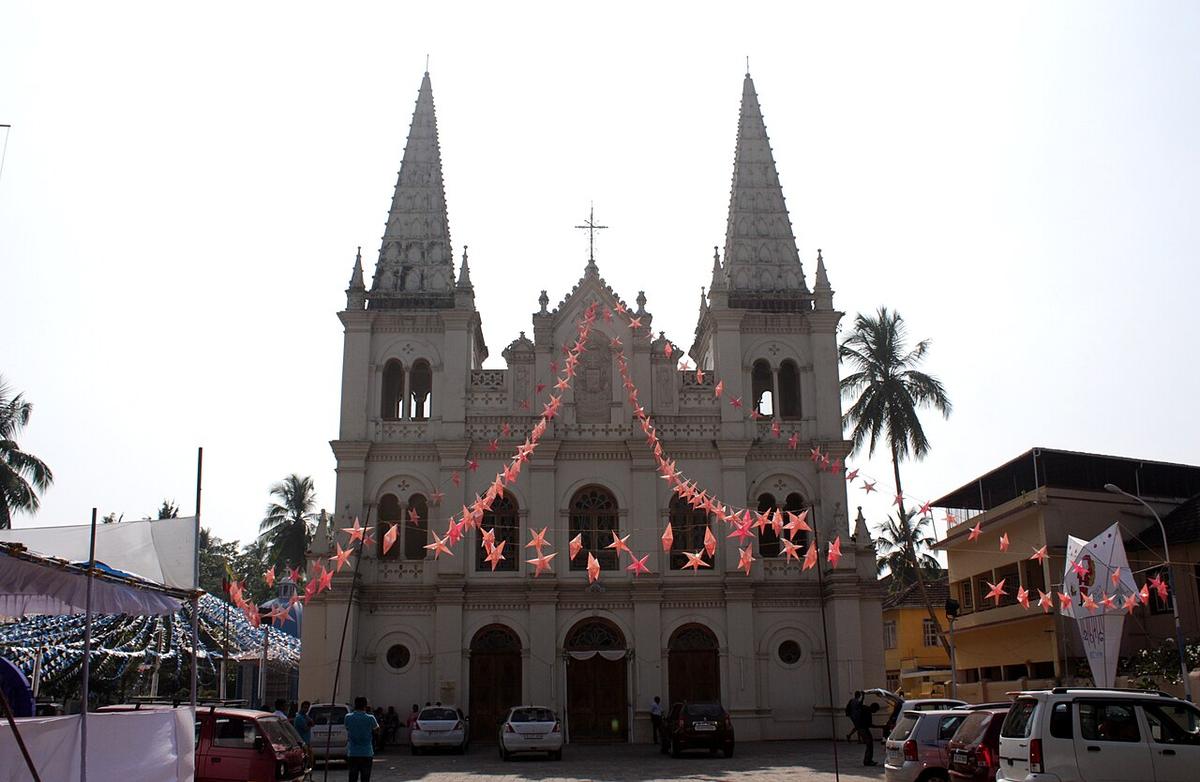
Founded in 1505 and raised to a cathedral by Pope Paul IV in 1558, this church survived the Dutch conquest of 1663, pressed into service as an armoury rather than destroyed, only for the British to demolish it outright in 1806, decades after they annexed the territory. The present Indo-European Gothic building was reconstructed between 1887 and 1905 and consecrated that November; Pope John Paul II elevated it to a basilica in 1984.
Mattancherry Palace
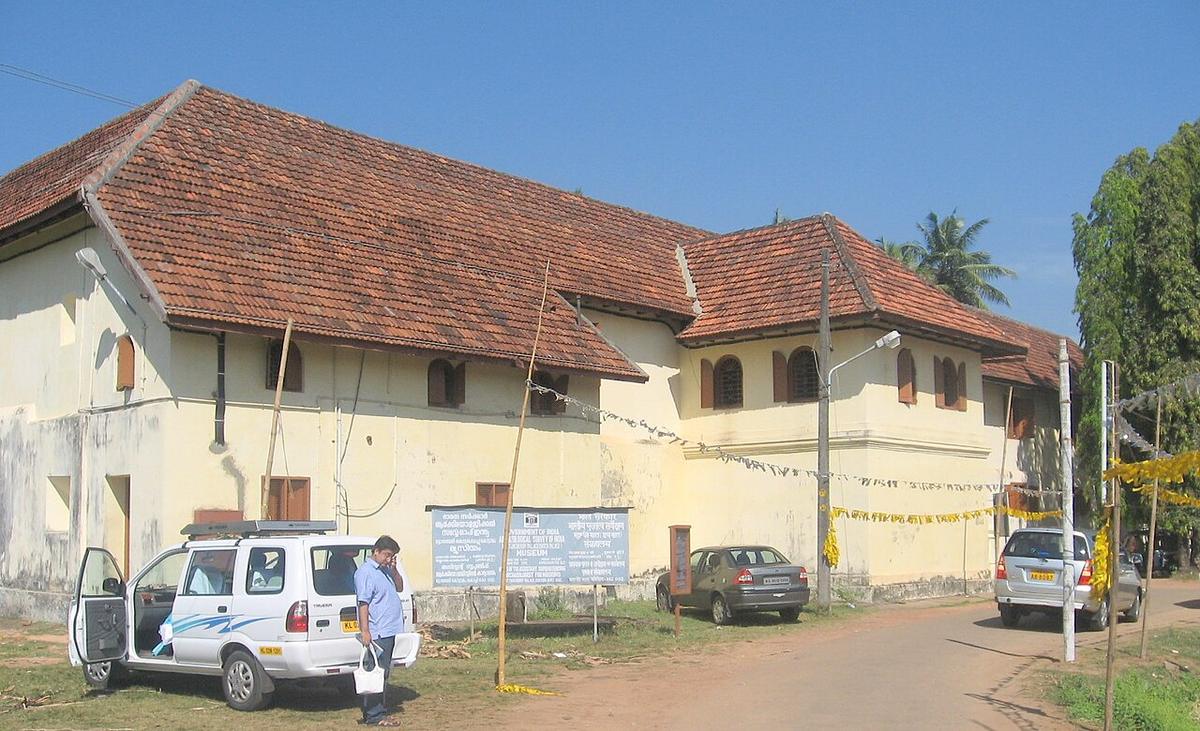
Built around 1545 by the Portuguese as a gift to the Raja of Kochi, reportedly to smooth things over after they had plundered a nearby temple, this palace only became known as the “Dutch Palace” after the Dutch renovated it following their arrival in 1663. Inside, its walls carry Kerala-style murals in warm tempera colours depicting Hindu religious scenes, alongside a later gallery of royal portraits painted from 1864 onward. It follows the traditional nalukettu courtyard plan, with European touches worked into an indigenous structure.
Paradesi Synagogue
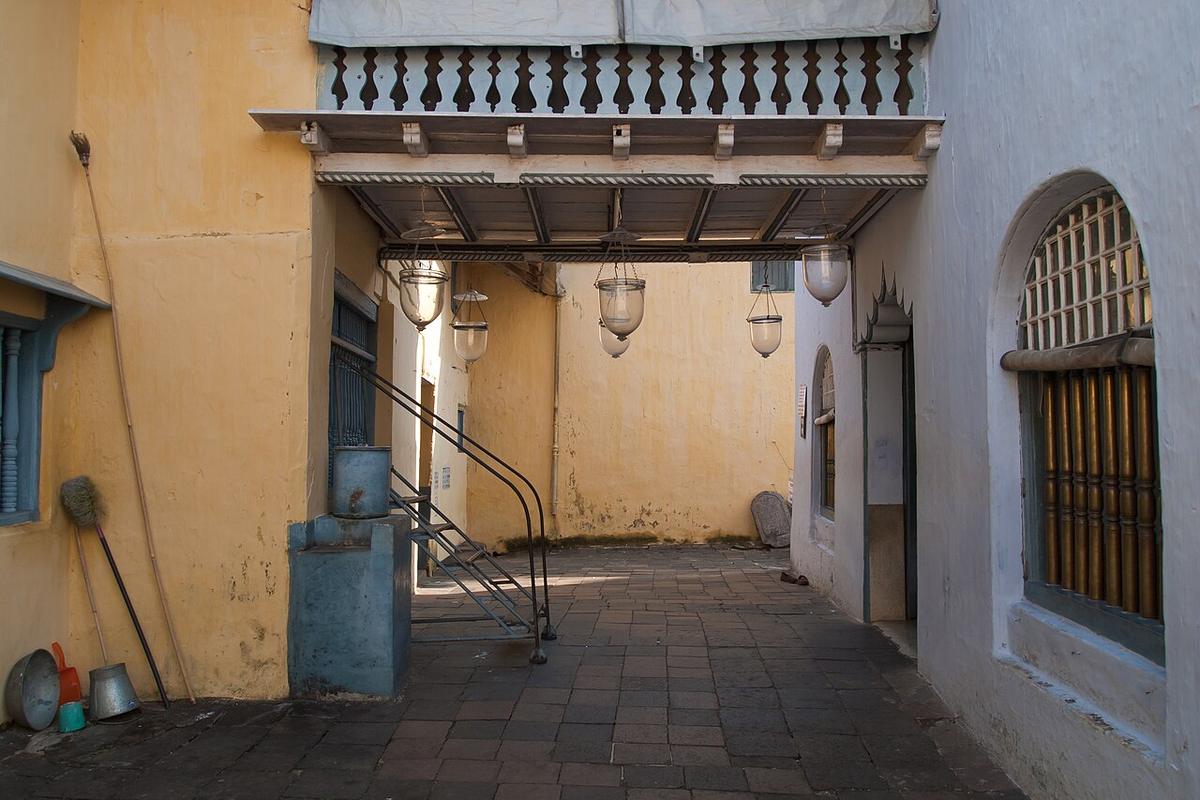
Built in 1568 by Samuel Castiel, David Belila and Joseph Levi for Kochi’s Paradesi Jewish community, Sephardic families, many with roots in Aleppo and Safed, whose Malayalam-speaking neighbours called them Paradesi, “foreigners”, this synagogue shares a common wall with Mattancherry Palace on land the Raja of Kochi granted them. It is reckoned the oldest active synagogue in the Commonwealth of Nations. Its floor is laid with hundreds of hand-painted 18th-century Chinese porcelain tiles, no two alike, beneath Belgian glass chandeliers and an 18th-century clock tower.