Lucknow: The City of Nawabs
The Lucknow Safarnama runs 17.2 km across 10 monuments, from Rumi Darwaza to La Martiniere, part of The Empire Trail. Lucknow is known as the city of nawabs, here is the story the route tells, one stop at a time.
Rumi Darwaza
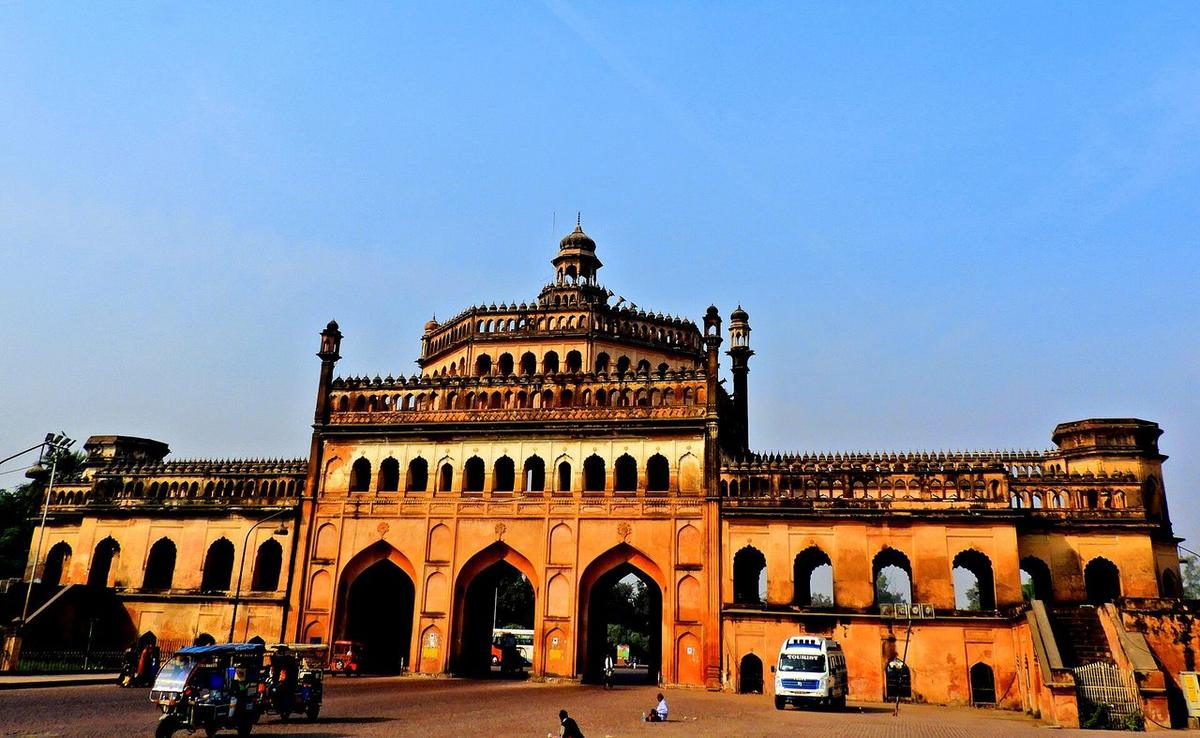
A gateway sixty feet high, built in 1784 by Nawab Asaf-ud-Daula as the entrance to his new quarter of the city. It is called the Turkish Gate, Rumi, "of Rome", meaning the eastern Roman empire, because its builders modelled it on a gate at Constantinople they had only heard described. There is a stair inside the arch, and lamps once burned along its top to light the road. It leads nowhere important now; the city grew straight past it.
Bara Imambara
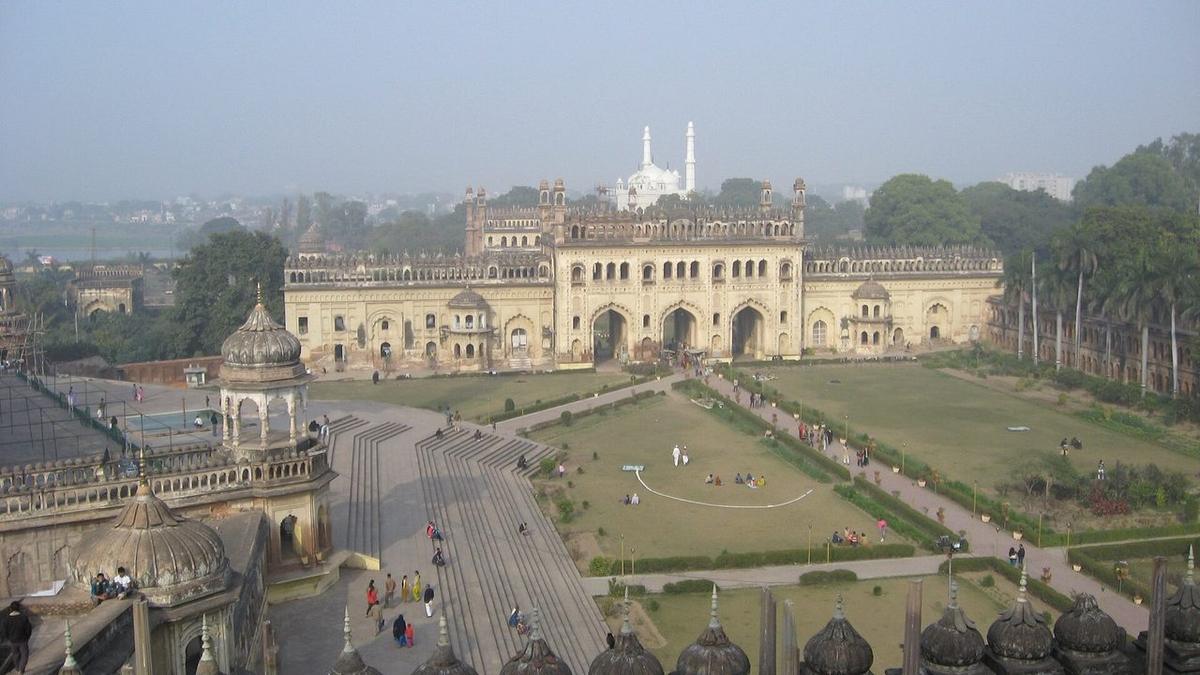
Asaf-ud-Daula raised this in 1784 during a famine, a public-works project that paid the whole population, nobles working by night so no one would see them take relief. The central hall is one of the largest vaulted spaces built without a single pillar or beam of iron or wood, its roof held up by the interlock of its own brick. Above it winds the Bhulbhulaiya, a maze of some thousand passages and blind stairs; below it a stepwell still holds water.
Chota Imambara
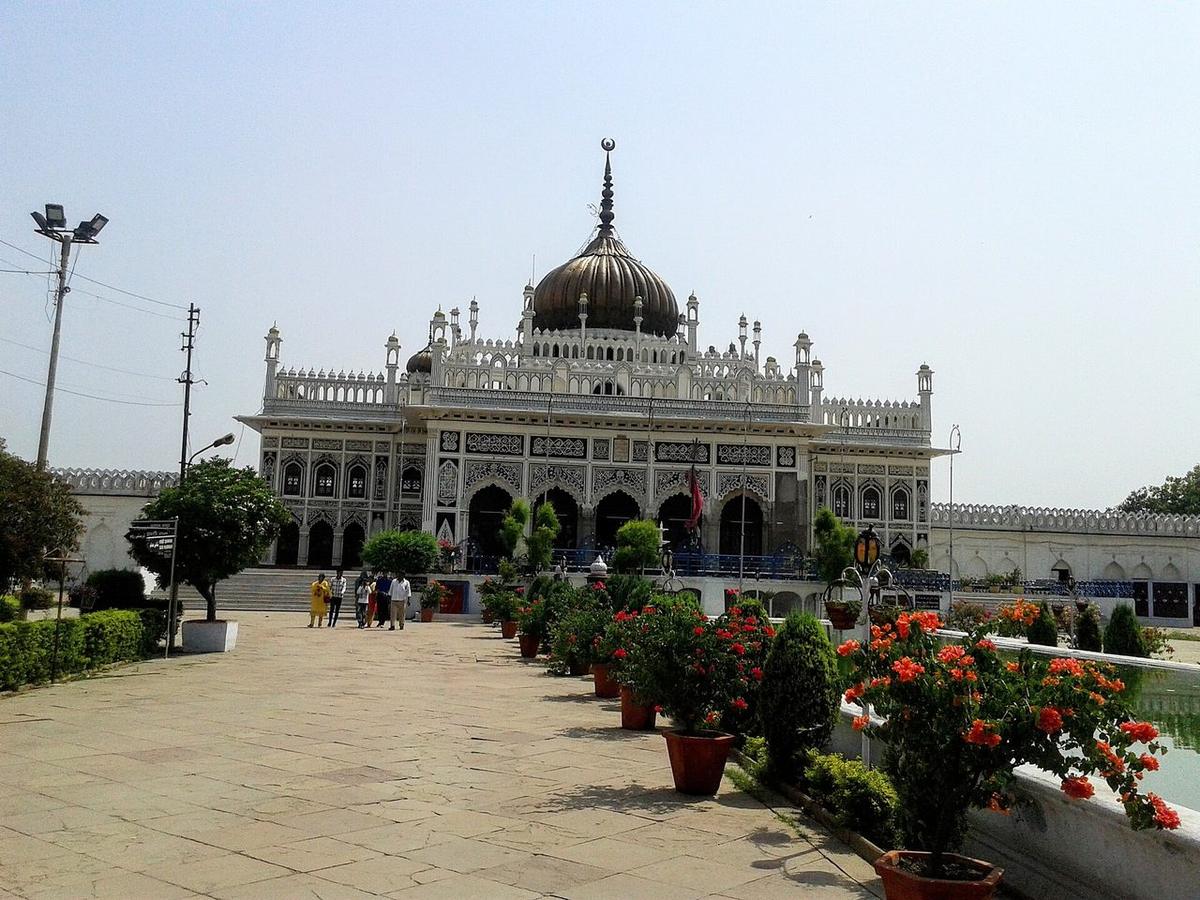
The Hussainabad Imambara, begun in 1838 by Muhammad Ali Shah as his own mausoleum and a hall for Muharram. Every surface is worked, Quranic verse in black across the white outside, a gilded dome, and inside a crowd of chandeliers, gilt mirrors and glass lamps brought from Belgium, so that lit up it is called the Palace of Lights. The Nawab, his mother and his daughter are buried inside.
Husainabad Clock Tower
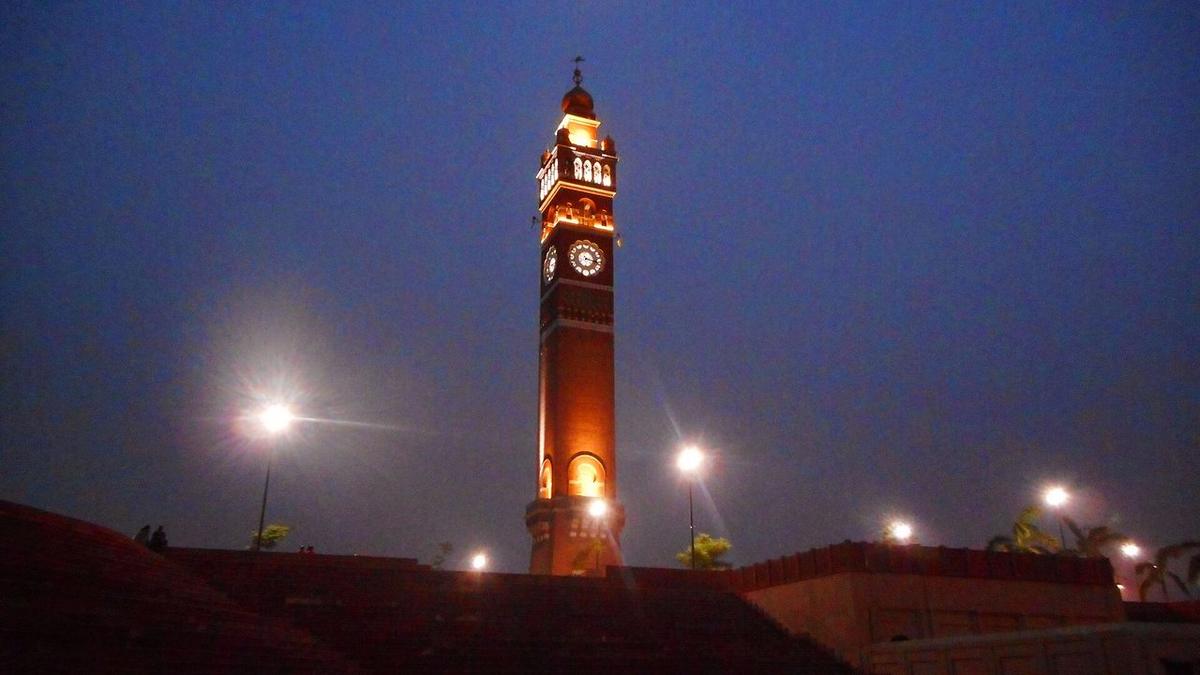
Sixty-seven metres of Gothic Revival cast iron and brick, finished in 1881, the tallest clock tower in India, built by the British to mark the first lieutenant-governor of the province. The mechanism and the six-metre pendulum were made in London; the dial is shaped like a twelve-petalled flower. It stands beside a tank, in the shadow of the Nawabi buildings it was meant to outshine.
The Residency
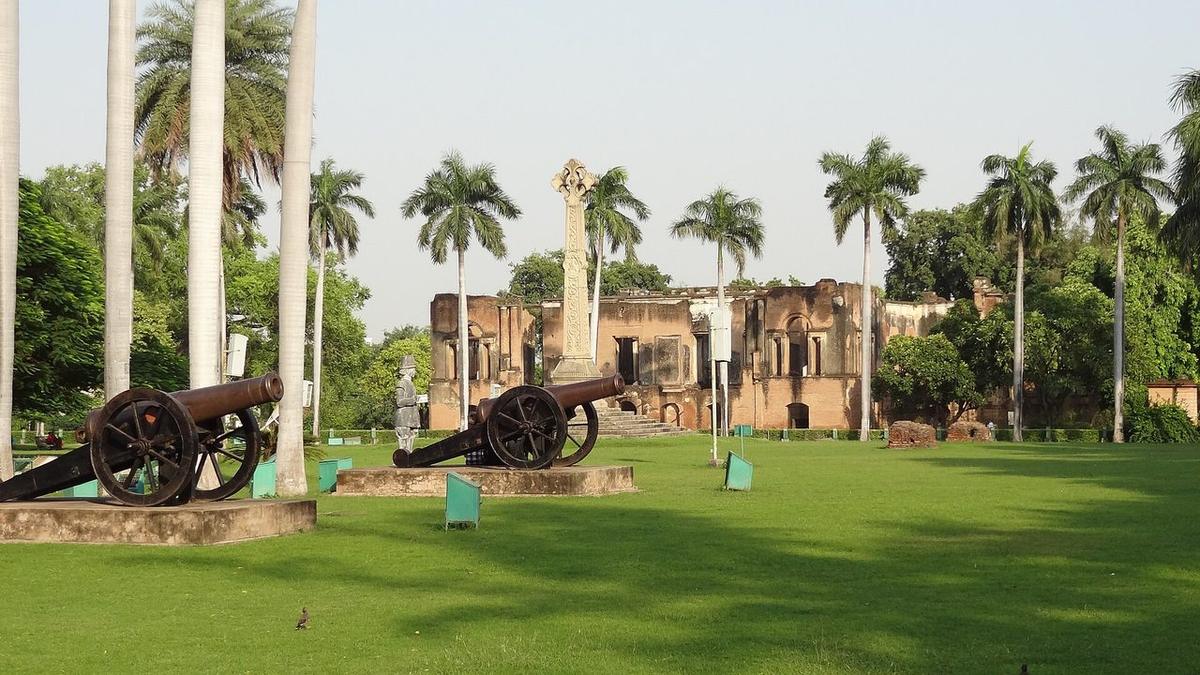
The compound where the British administrator of Awadh lived, and where in 1857 around three thousand people, soldiers, officials, their families, Indian staff, were besieged for nearly five months. When relief finally came, more than half were dead, most from disease and the heat. The buildings were left as the fighting ended: roofless, raked with cannon-fire, the flag flown day and night from the ruined tower until 1947. The graves fill the churchyard.
Shah Najaf Imambara
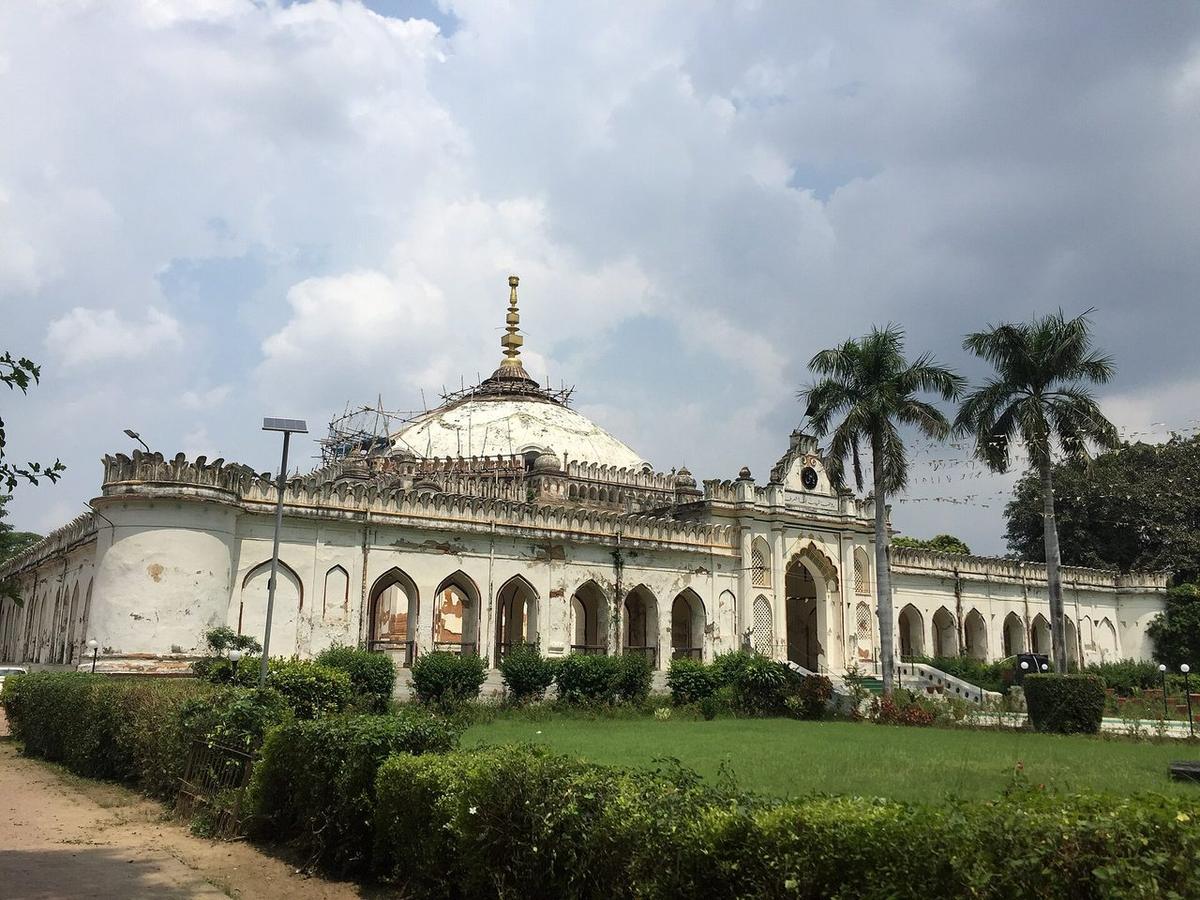
A low white domed building on the Gomti, built around 1816 by Nawab Ghazi-ud-din Haidar as a copy of the shrine of Ali at Najaf in Iraq, where he wished to be buried and could not be. He and three of his wives lie inside, under chandeliers and silver-work. In November 1857 it was a rebel strongpoint; the relieving force fought through the garden wall and the graves to take it.
Sikandar Bagh
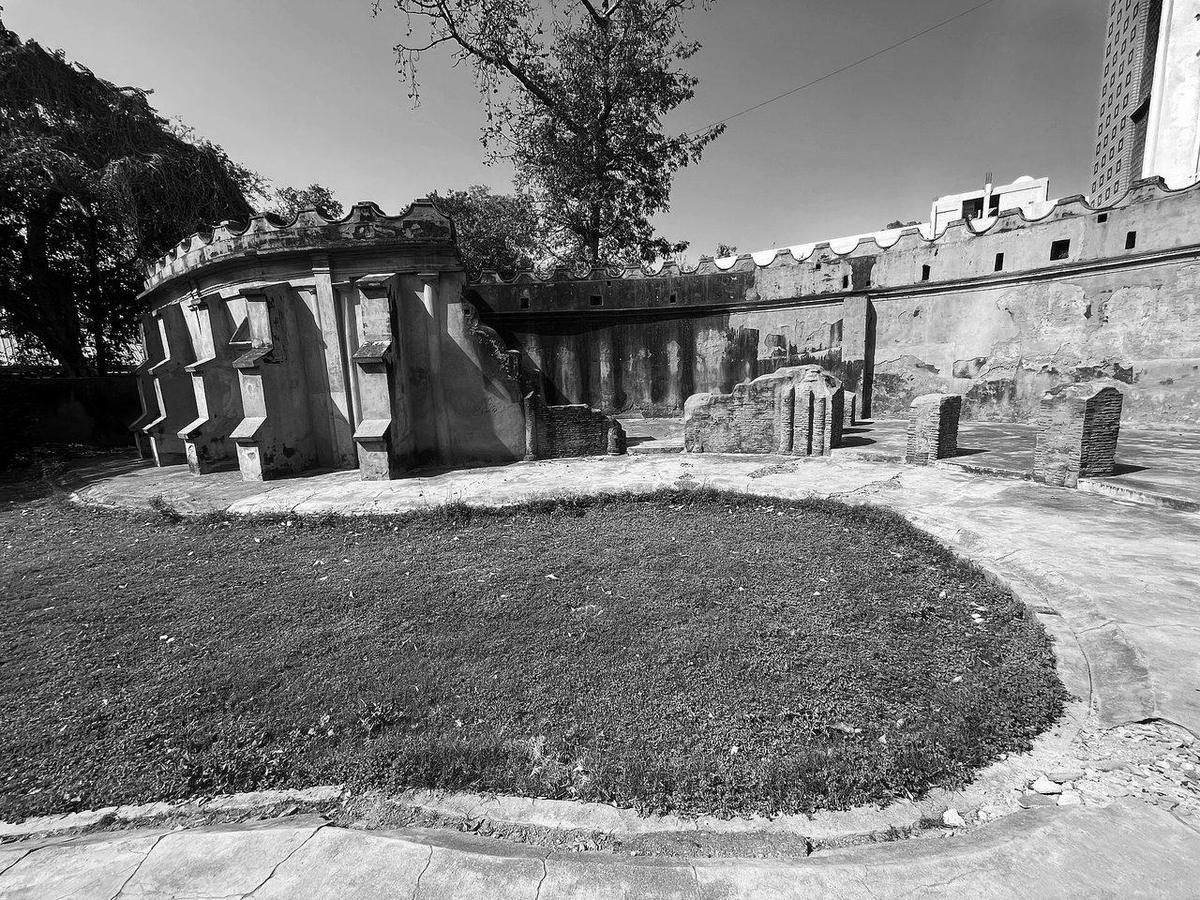
A walled pleasure garden with a summer house at its centre, laid out by the last Nawab, Wajid Ali Shah, and named for his wife Sikandar Mahal Begum. On 16 November 1857 some two thousand sepoys held it against a British assault; the fighting inside the walls was hand-to-hand and almost no one was taken alive. It is a quiet botanical garden now, with a plaque and an old gateway.
Chattar Manzil
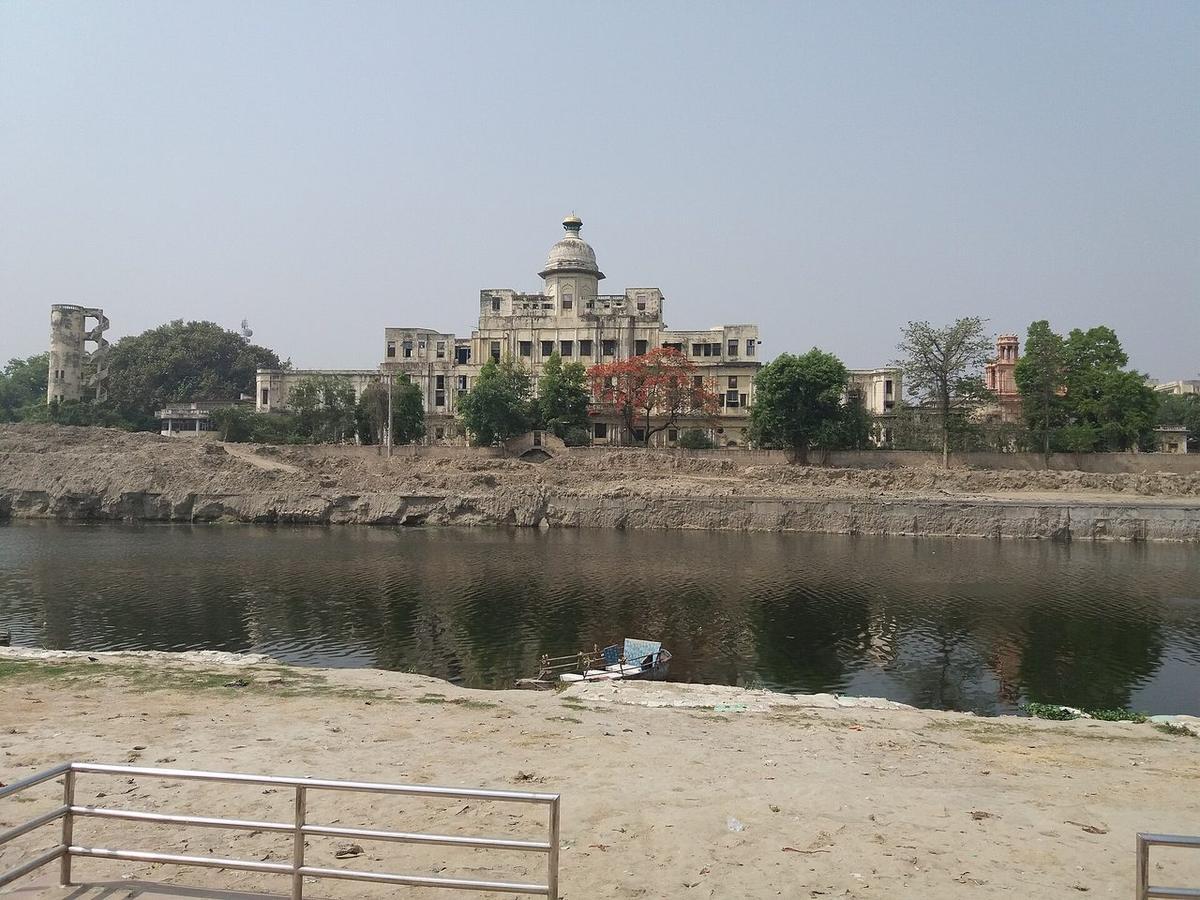
The Umbrella Palace, a Nawabi riverside palace on the Gomti, its dome topped with a gilt chattri shaped like an open parasol, the sign of royalty. Built in stages in the early 1800s, part of a chain of palaces that ran along the water, with underground rooms cooled by the river for the summer. The British took it after 1857 and it has been a government office and a laboratory ever since.
Dilkusha Kothi
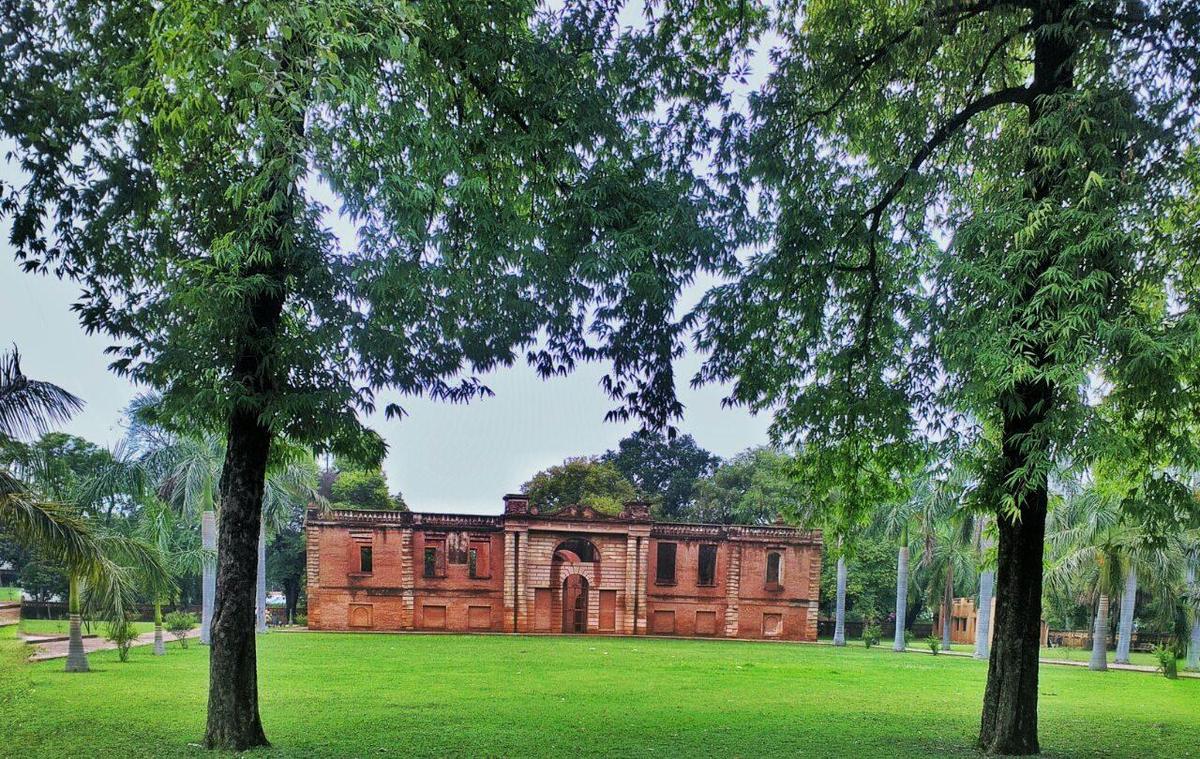
A hunting lodge built around 1800 for Nawab Saadat Ali Khan in the English Baroque style, on the model of Seaton Delaval Hall in Northumberland, a European country house dropped into a deer park on the edge of Lucknow. It was shelled in 1857 and never repaired. Six tall shells of wall and a few chimneys stand in a garden that is still full of birds; the deer are long gone.
La Martiniere
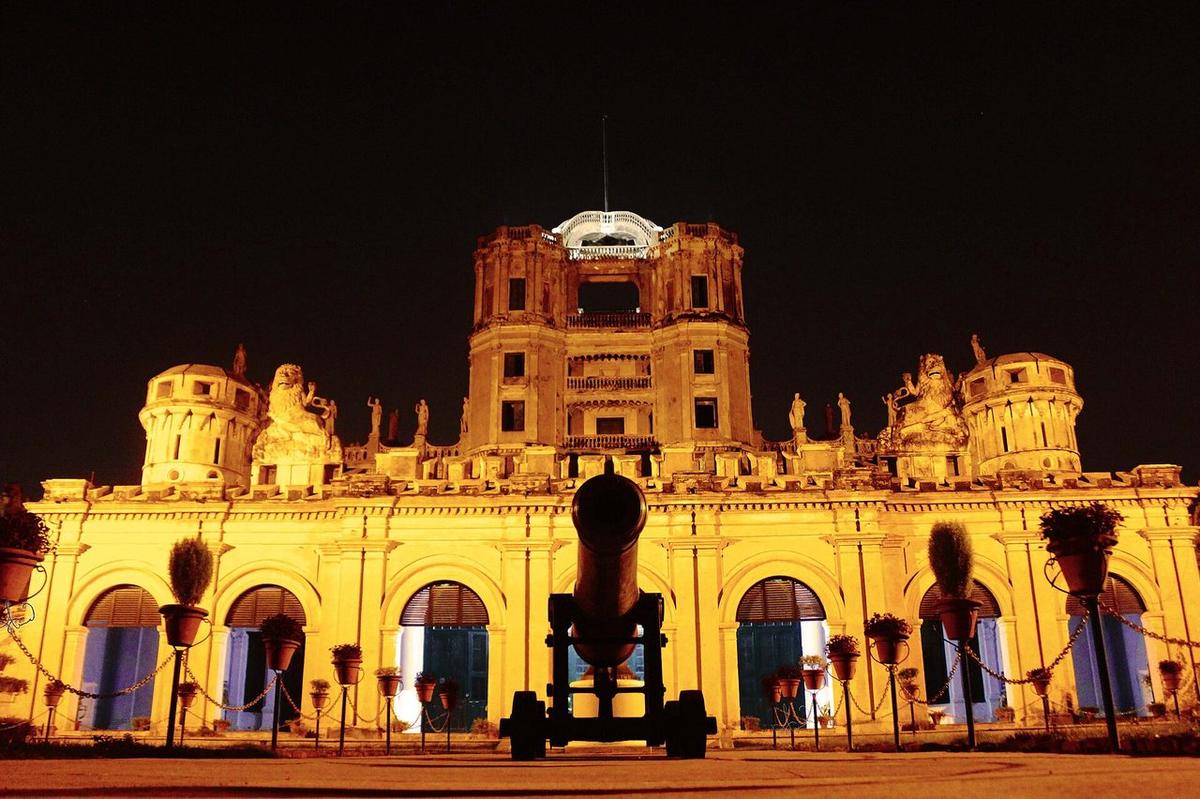
The palace Claude Martin built for himself, a French soldier who came to India with the army, made a fortune, and served the Nawab and the British at the same time. It is four storeys of everything at once: Italian, Gothic, Mughal, Chinese, with cannon on the roof, stone lions, and his own coffin in the basement, he had himself buried there in 1800 so the building could never be sold as anything but a tomb. He left it, and his money, to found a school, which still runs in the same halls.