Pushkar: The Lake Town
The Pushkar Safarnama runs 23.4 km across 10 monuments, from Pushkar Lake to Jagatpita Brahma Temple, part of The Fort & Palace Trail. Pushkar is known as the lake town, here is the story the route tells, one stop at a time.
Pushkar Lake
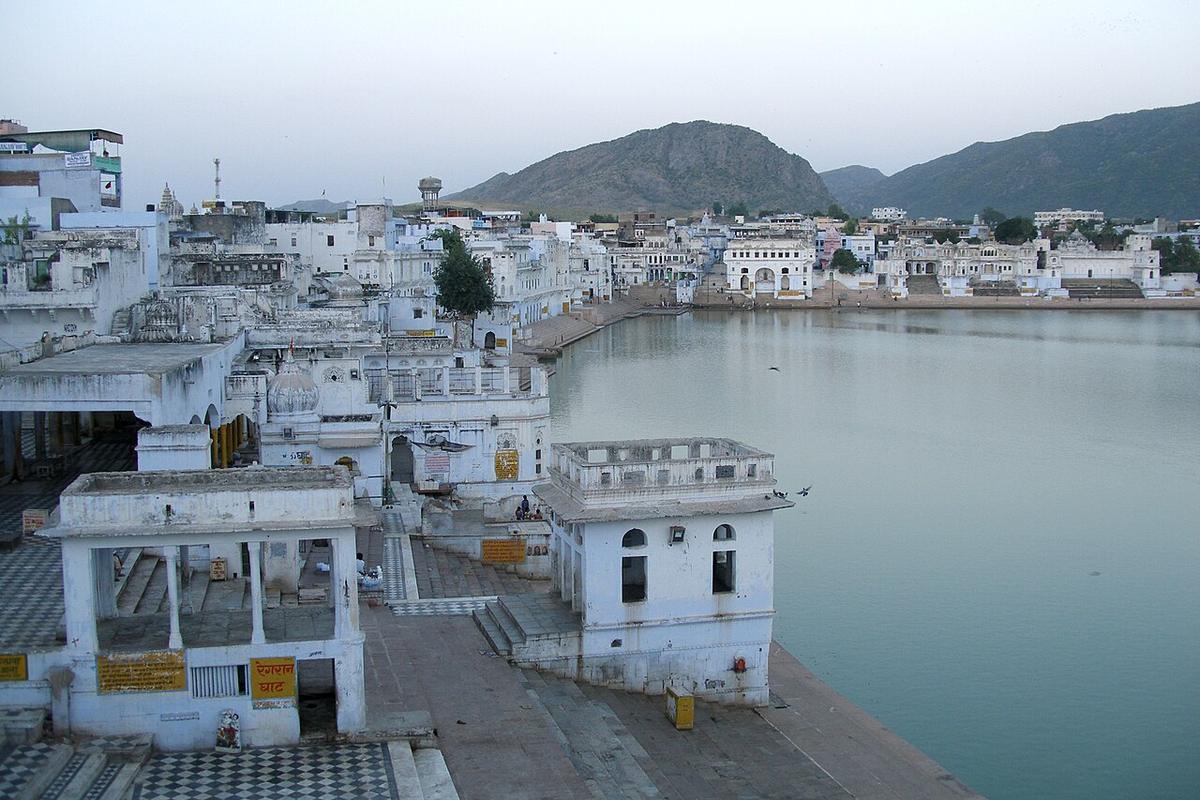
One of the holiest lakes in Hinduism, sitting in a bowl of the Thar desert. The old story is that Brahma, searching for a place to hold a great fire sacrifice, let a lotus fall from his hand; where the petals touched the ground, water welled up, and he performed the rite on the new lake’s shore. The site is named in the Mahabharata and the Puranas. Most of what you see, the stone embankment, the ghats, the ring of small temples, was built and rebuilt by Rajput rulers from the 1600s on, and the lake itself was dug clean and refilled in a major restoration in the 2000s.
The Ghats
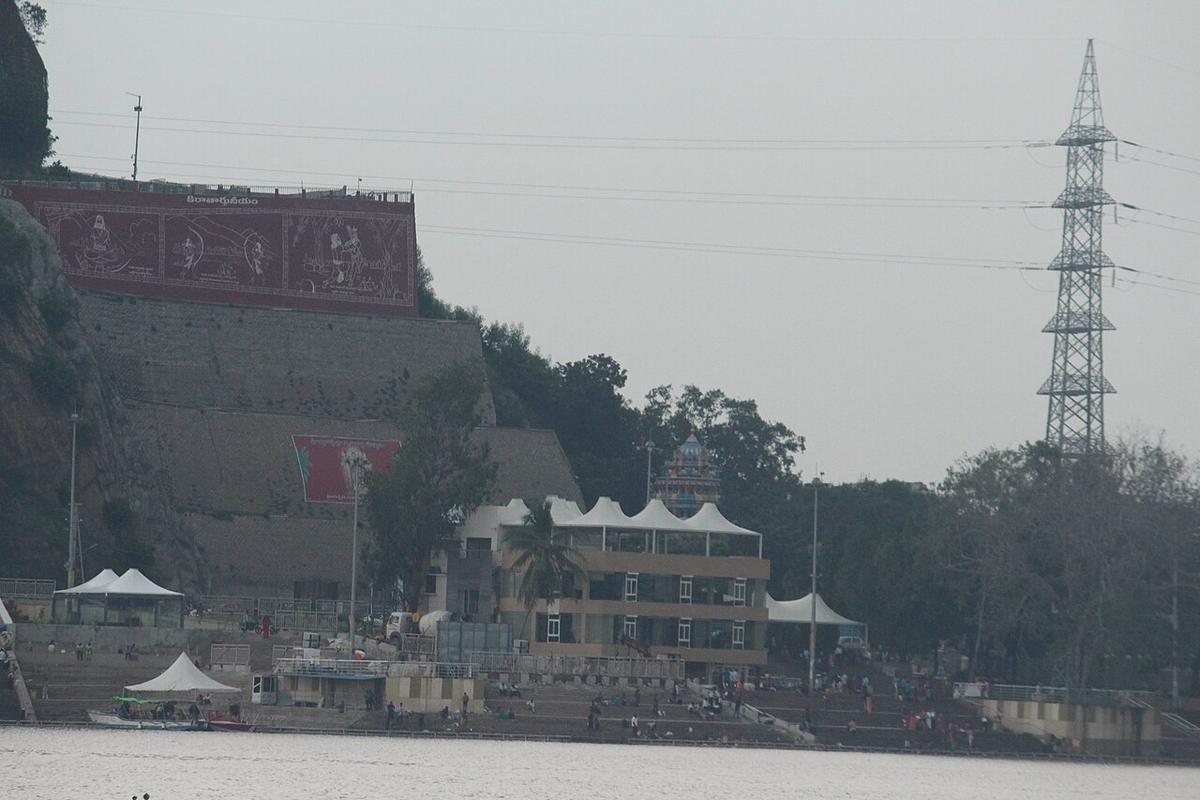
Fifty-two stone ghats step down into the lake all the way around its edge. Most were paid for by a different maharaja, and each carries its own name, its own presiding deity and its own particular rite. Gau Ghat, also called Gandhi Ghat, is where a share of the ashes of Mahatma Gandhi, Jawaharlal Nehru and Lal Bahadur Shastri was given to the water. On the full moon of Kartik the steps fill before dawn with pilgrims come to bathe.
Pap Mochani
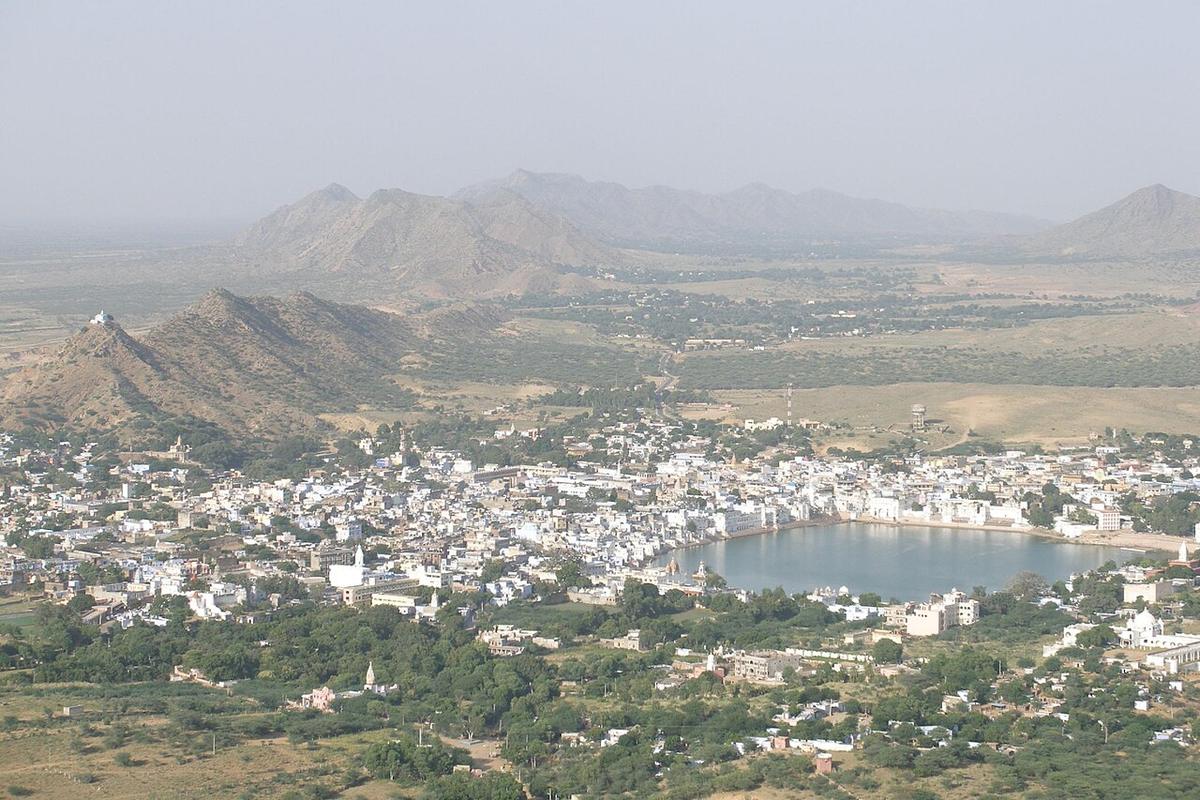
A small temple on the eastern spur above the town, reached by a short, sharp climb. Its name means “reliever of sins”, and by local tradition Rama raised it to shed the guilt of the war against Ravana. It houses Gayatri, in the Pushkar story, a village girl Brahma married in haste so his sacrifice could be completed at the right hour, when his first wife had not arrived. From the top the whole town, the lake and the full ring of hills open out at once.
Old Rangji Temple
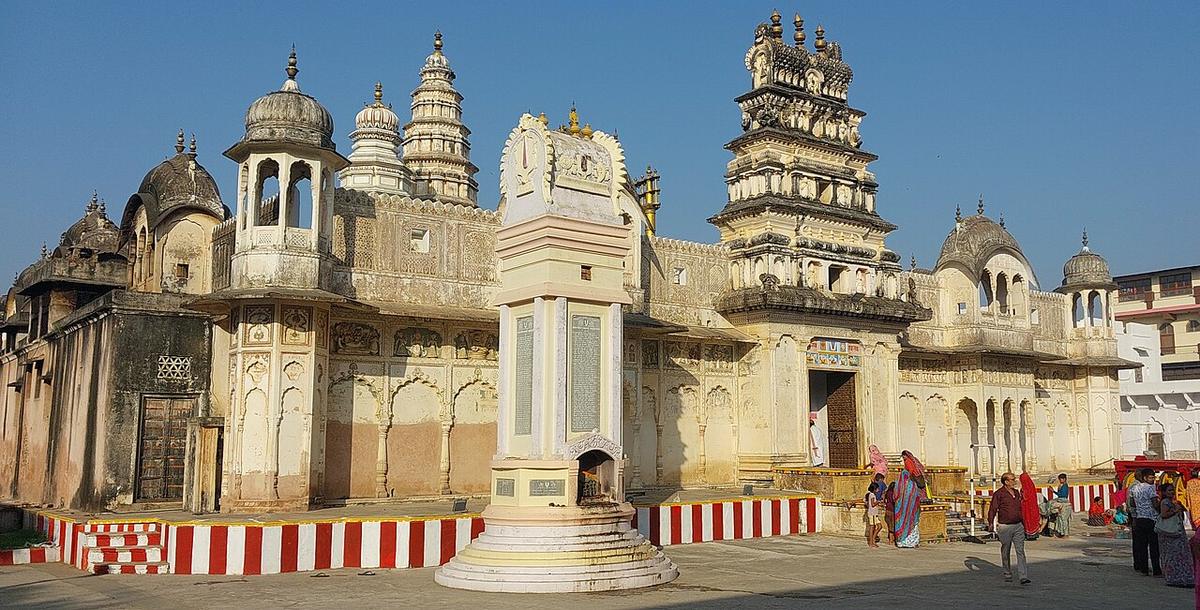
Built in 1823 by Seth Puran Mal Ganeriwal, a merchant from Hyderabad, the first temple of the South Indian Ramanuja tradition anywhere in Rajasthan. Rather than pick one style, it fused three: a Dravidian gopuram tower of the kind you would see in Tamil Nadu, Rajput domes and chhatris, and Mughal-influenced carving, all in the same courtyard.
New Rangji Temple
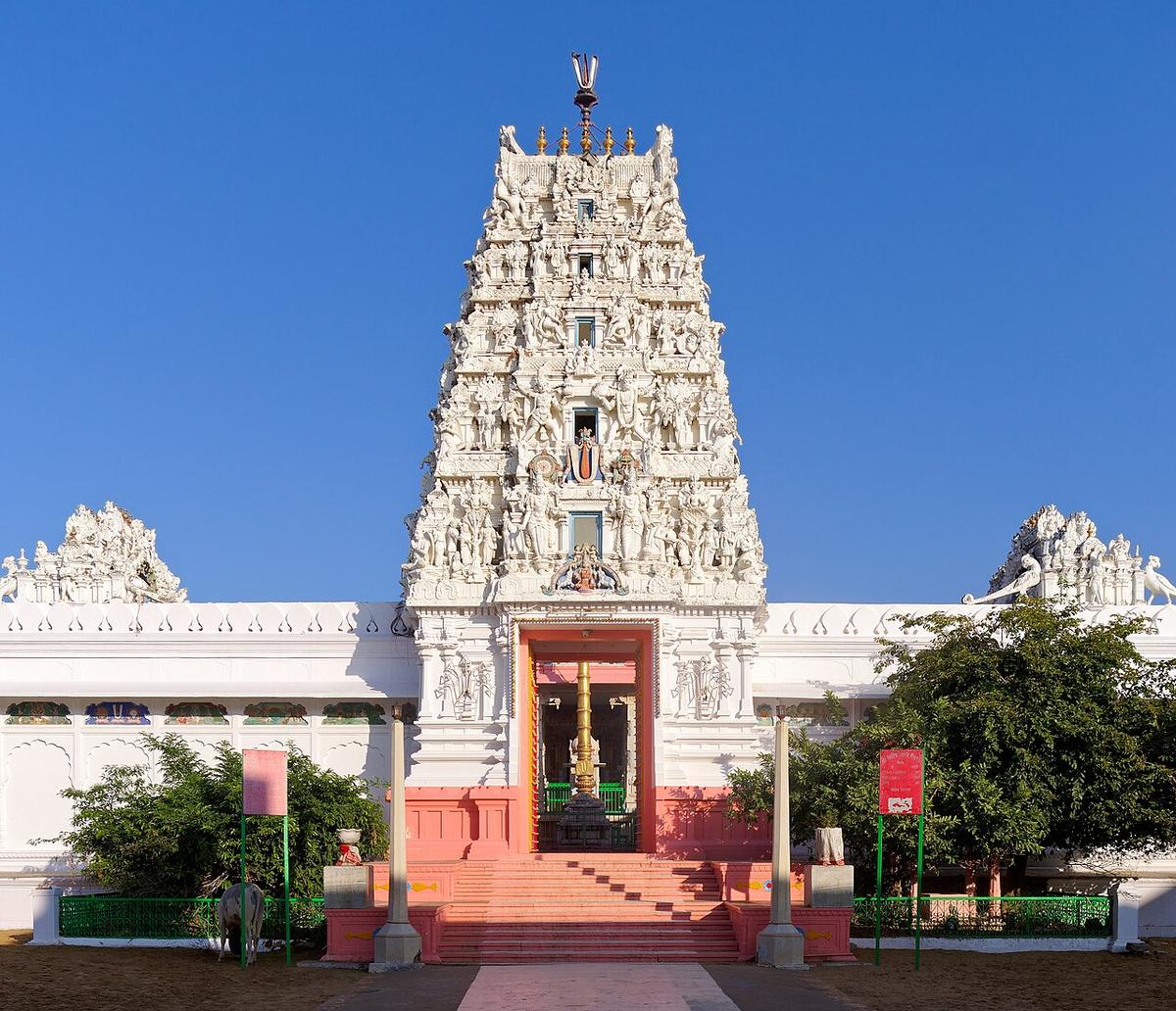
The Shri Rama Vaikunth Nath Swami temple, a much later work by the same Sri Vaishnava community that built the old one. Its white gopuram rises far above the surrounding roofs, and every tier of it is packed with carved figures, deities and guardians stacked one above the next to the finial.
Ravana Temple
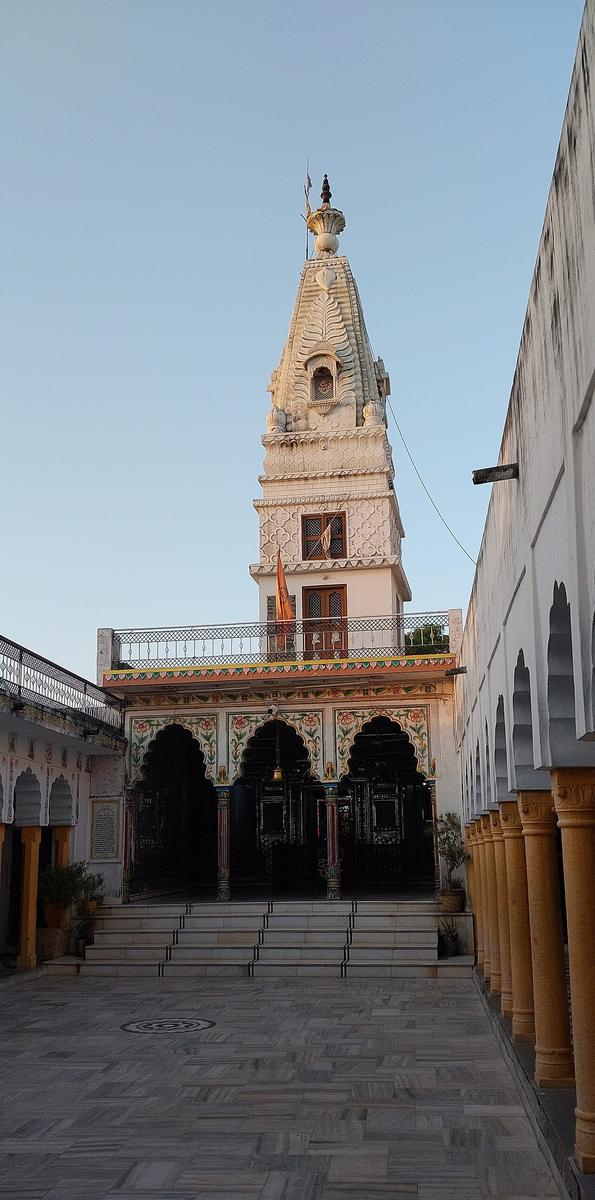
One of only a handful of temples in India dedicated to Ravana, the demon king who is the antagonist of the Ramayana. The Pushkar and Mandore region is linked in tradition to his wife Mandodari and her family, and a small community here has quietly honoured him for generations, a scholar, a devotee of Shiva, a capable king, as well as the abductor of Sita. A white spire on a red-ochre base.
Pushkar Mela Ground
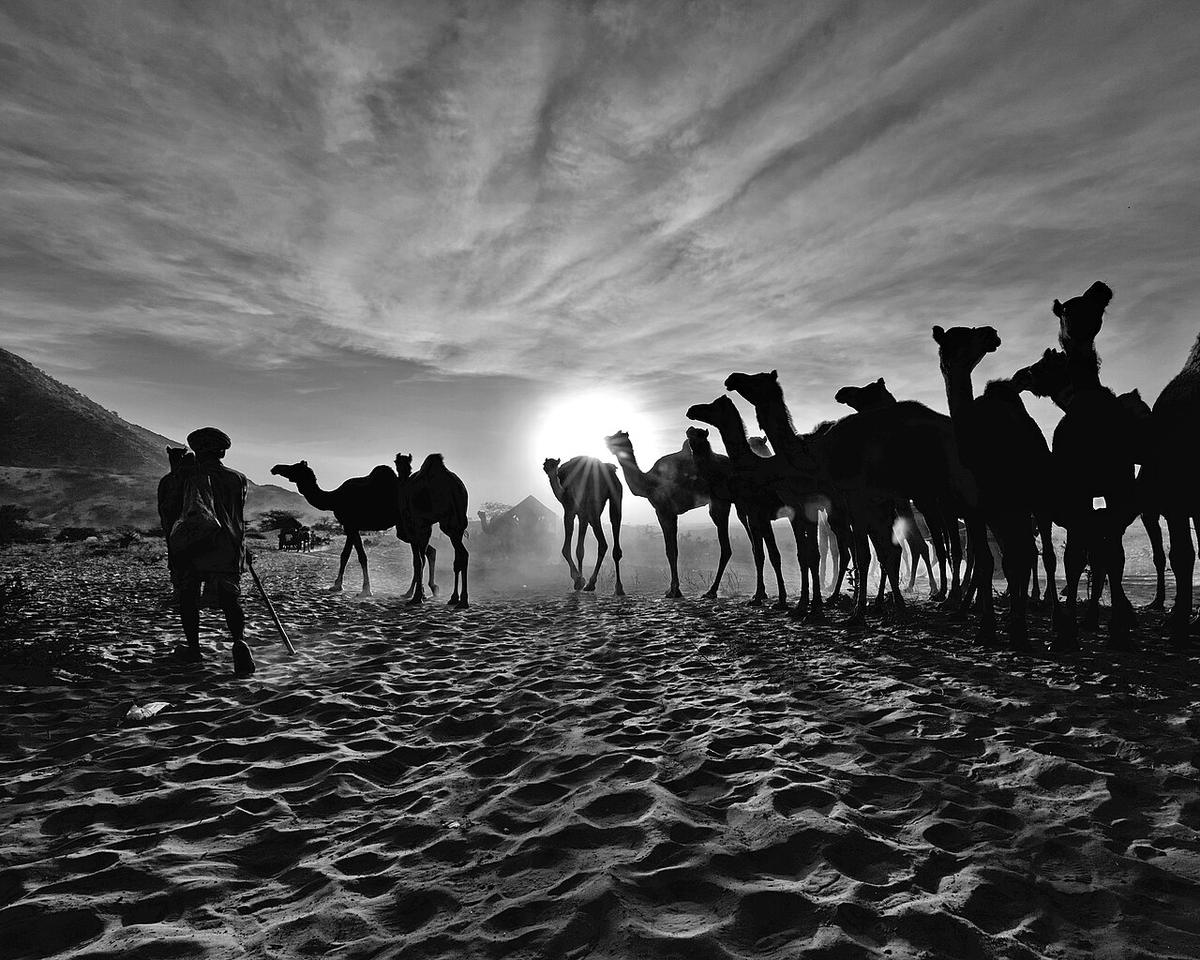
The open sand west of the lake where the Pushkar Fair is held every autumn, around the full moon of Kartik. It began as a working livestock market, herders bringing camels, horses and cattle to trade while the pilgrims bathed, and grew into one of the largest camel and livestock fairs on earth, drawing hundreds of thousands of people for a week each year, then emptying back to bare ground.
Savitri Mata Temple
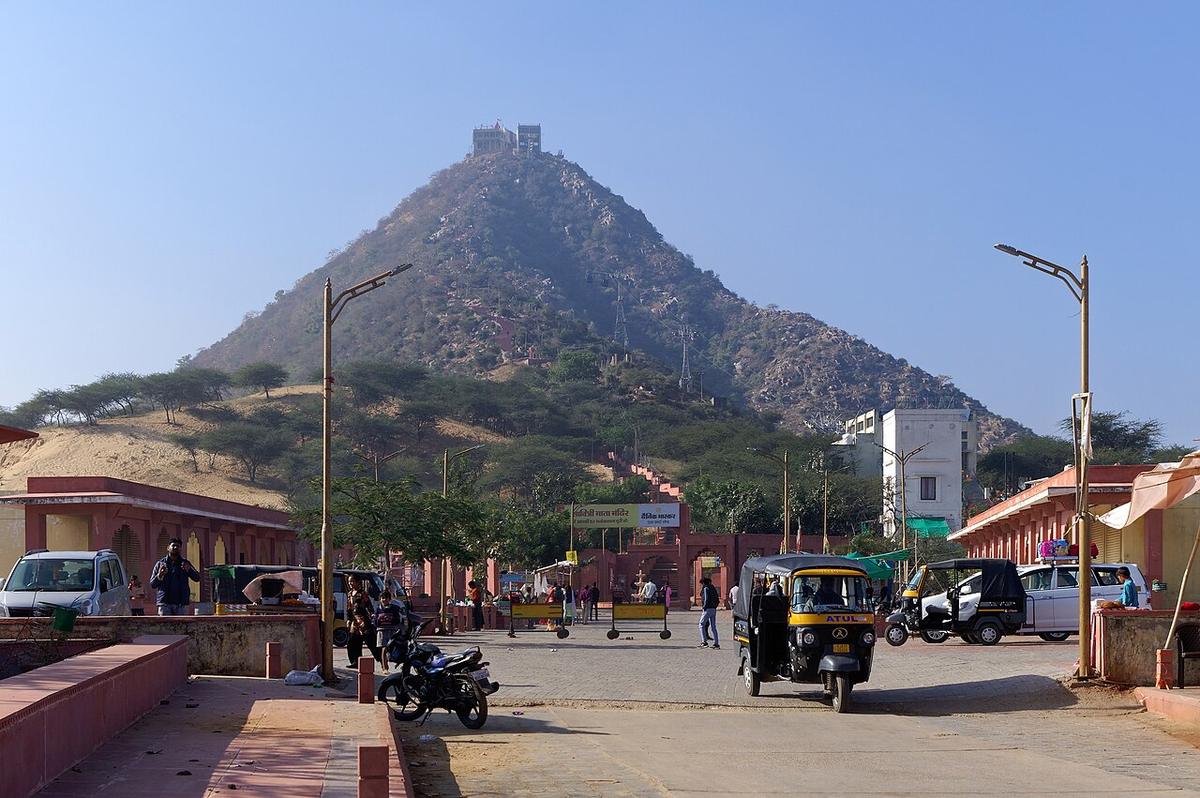
On the summit of Ratnagiri, the highest hill over Pushkar, up roughly 650 stone steps (there is now also a ropeway). It is dedicated to Savitri, Brahma’s first wife. When Brahma started the sacrifice without her and married Gayatri so it could finish on time, Savitri arrived to find another woman in her place, cursed Brahma to be worshipped nowhere but Pushkar, and withdrew to this peak, above the town, above the temple that broke the promise. The idol is held to be very old; the temple is dated to 1687 and was rebuilt in the early 1900s.
Nag Pahar
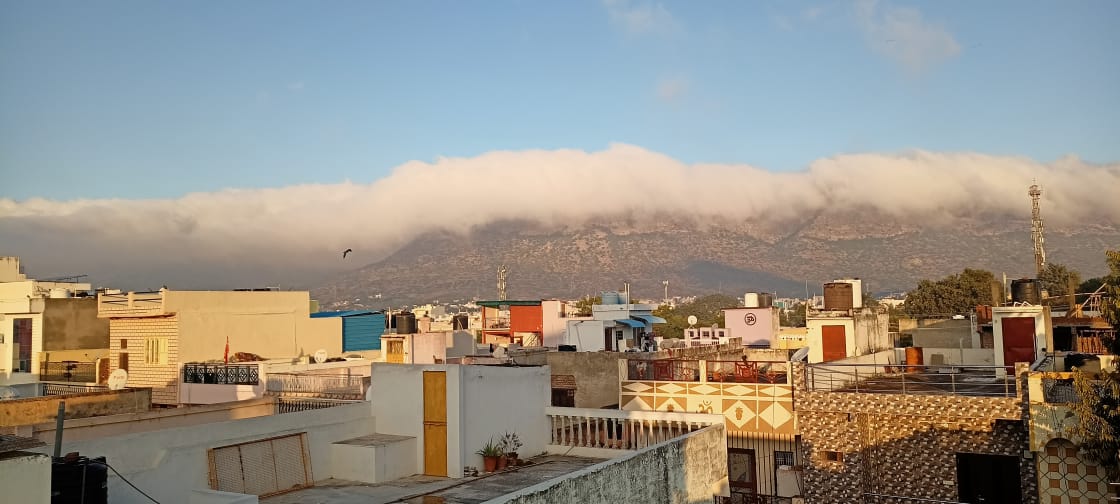
“Snake Mountain”, the long Aravalli ridge that walls Pushkar off from Ajmer on the other side. The sage Agastya is said to have meditated on it, and it carries a tangle of serpent lore. There is also a quiet local belief that the mountain is slowly settling, losing a little height each age, and that one day it will be level with the plain and the two towns will see each other.
Jagatpita Brahma Temple
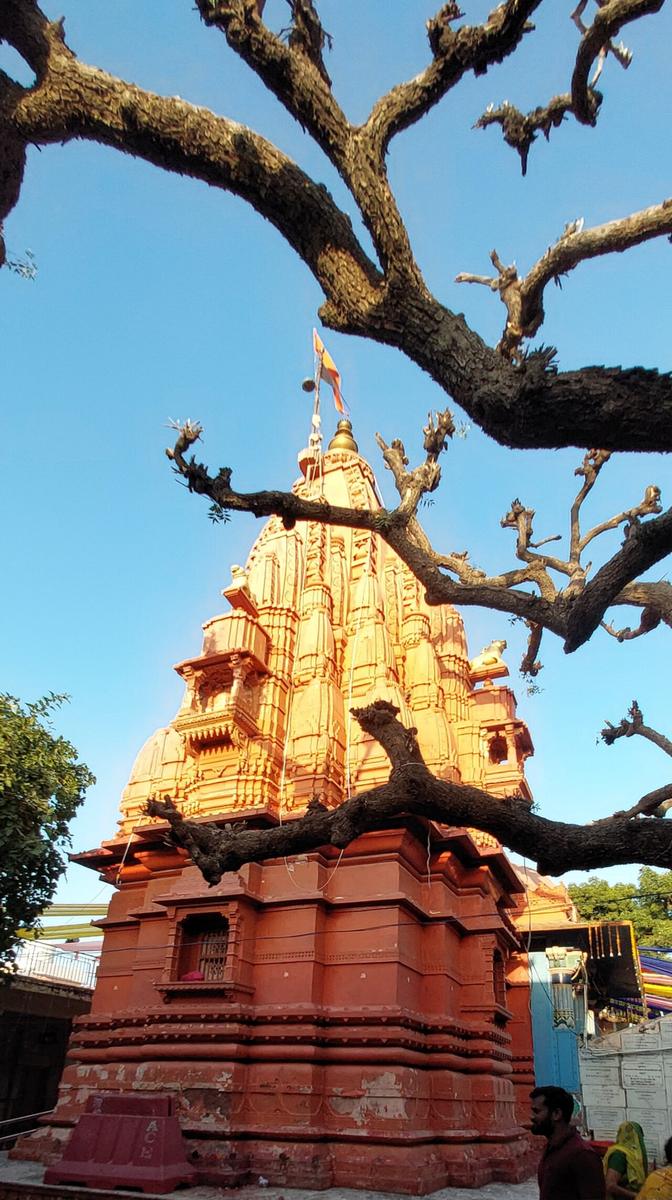
The chief temple of Brahma the creator, and one of the very few temples to him still active anywhere, most of that worship having drained away over the centuries to Vishnu and Shiva. The structure is dated to the 14th century, attributed in tradition to the sage Vishwamitra, said to have been consecrated by Adi Shankara, and reworked later by Maharaja Jawat Raj of Ratlam. Marble and stone, a distinctive red spire, a goose, Brahma’s mount, carved over the entrance, and in the sanctum a four-faced Brahma with Gayatri beside him.