Sanchi: The Buddhist Hilltop
The Sanchi Safarnama runs 1.3 km across 4 monuments, from Sanchi Museum to Stupa 2, part of The Ancient Heartland. Sanchi is known as the buddhist hilltop, here is the story the route tells, one stop at a time.
Sanchi Museum
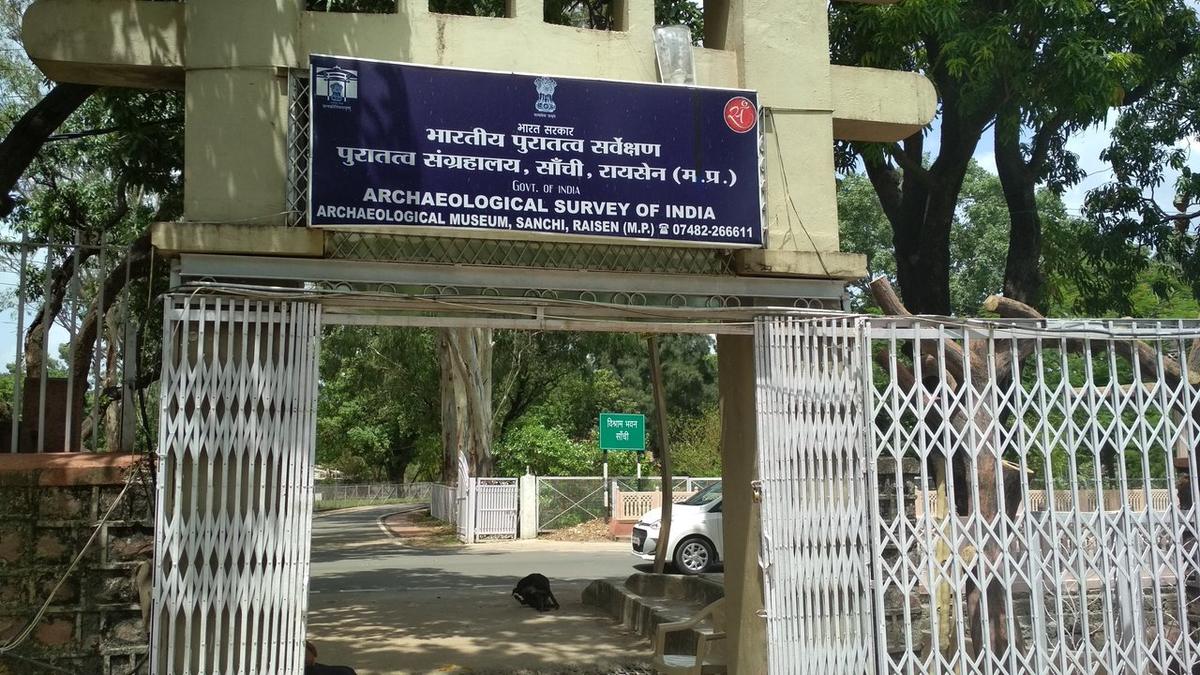
Opened in 1919, the Sanchi Archaeological Museum was funded by Sultan Jahan Begum of Bhopal, the same royal line whose earlier queens began the mosque a trail back in Bhopal, and holds the site’s excavated carvings, including fragments of Ashoka’s own pillar. John Marshall, the Archaeological Survey of India’s director-general and the man who led Sanchi’s restoration, dedicated his guidebook to the site to her in thanks.
Great Stupa & Ashoka Pillar
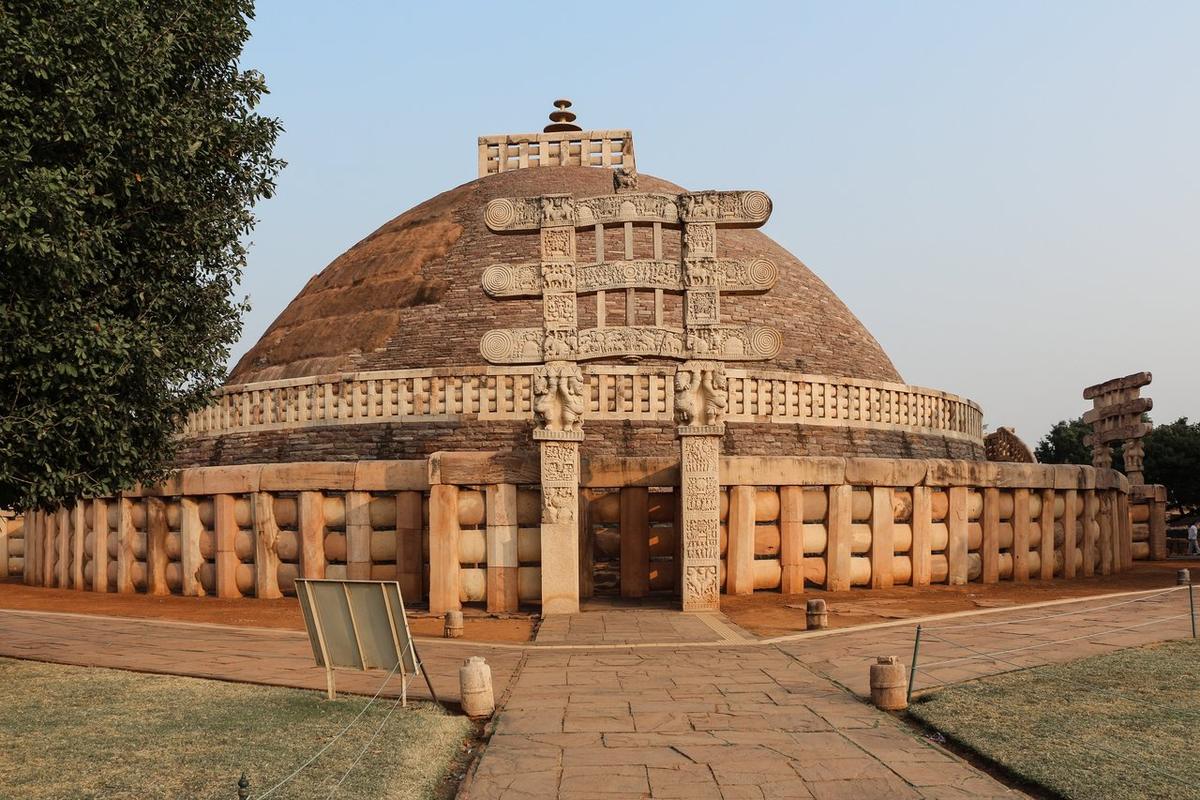
Commissioned in the 3rd century BCE by the Mauryan emperor Ashoka, the Great Stupa began as a modest brick mound roughly half its present size. Two centuries later the Shunga dynasty cased it in stone and doubled its diameter; a century after that the Satavahanas added the four intricately carved gateways still standing today. Beside its southern gateway lies the stump of one of Ashoka’s own pillars, its four-lion capital, badly damaged, now sits in the museum behind you, the same design echoed by the more famous Sarnath pillar that later became independent India’s national emblem.
Stupa 3
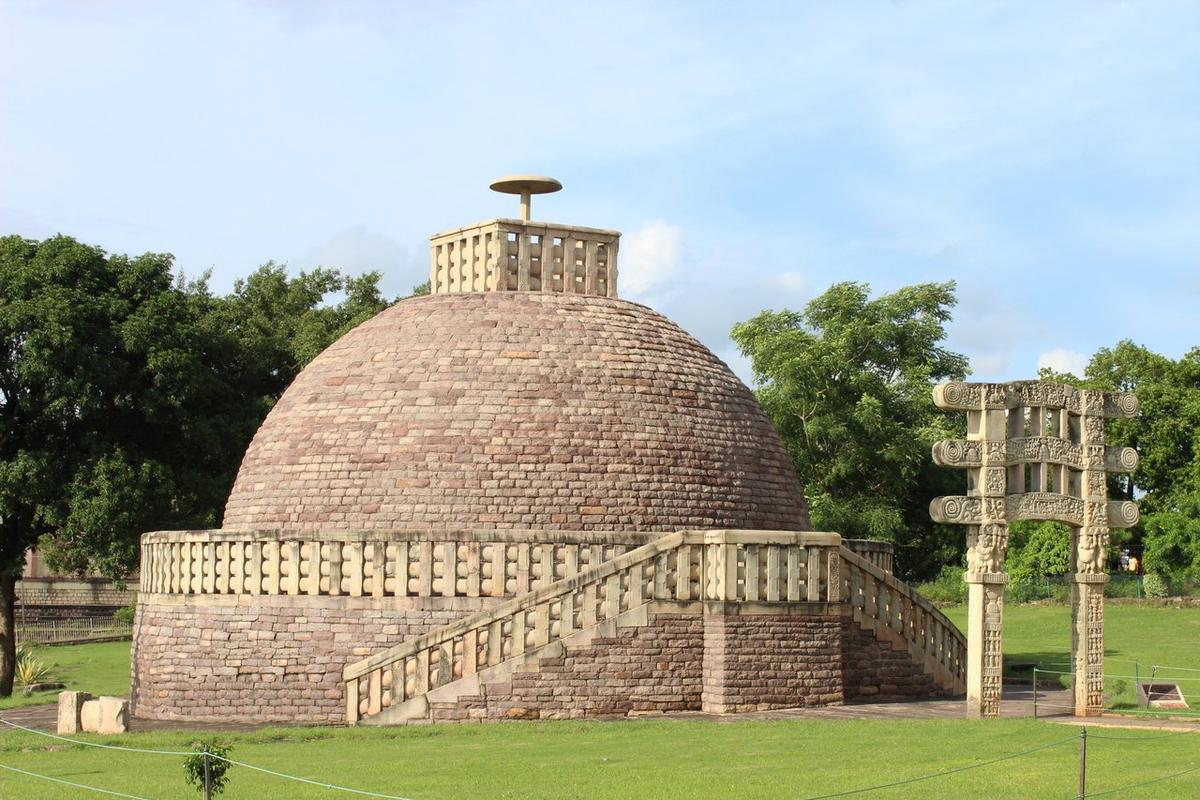
Built between roughly 150 and 100 BCE, Stupa 3 once enshrined relics identified as belonging to Sariputta and Moggallana, the Buddha’s two principal disciples. Smaller and simpler than the Great Stupa, with a single gateway instead of four, it stands barely sixty metres from its more famous neighbour, a quieter monument to two men remembered for how they supported someone else’s teaching rather than founding one of their own.
Stupa 2
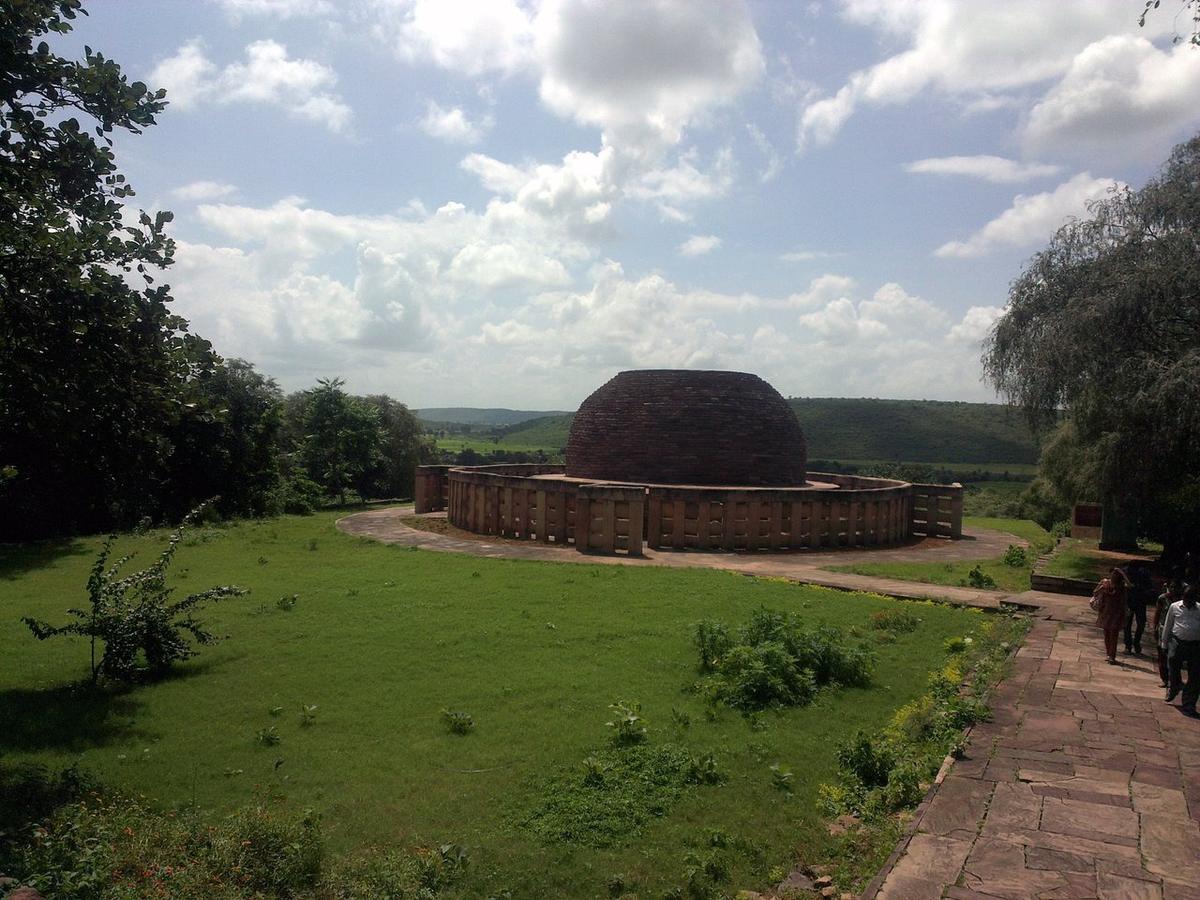
Built around the 2nd century BCE on the western edge of the hill, apart from the main group, Stupa 2 carries the oldest substantial stupa decoration known to survive, carved medallions of lotuses, animals and guardian spirits, some signed by masons working in a script traced to Gandhara, in what is now Pakistan and Afghanistan. The whole complex fell into obscurity for some 700 years after the 11th century, rediscovered by chance in 1818 by a British officer chasing bandits through the region, and properly excavated only in 1851.