Thanjavur: The Chola Capital
The Thanjavur Safarnama runs 3 km across 6 monuments, from Thanjavur Junction to Saraswathi Mahal Library, part of The Temple Trail. Thanjavur is known as the chola capital, here is the story the route tells, one stop at a time.
Thanjavur Junction
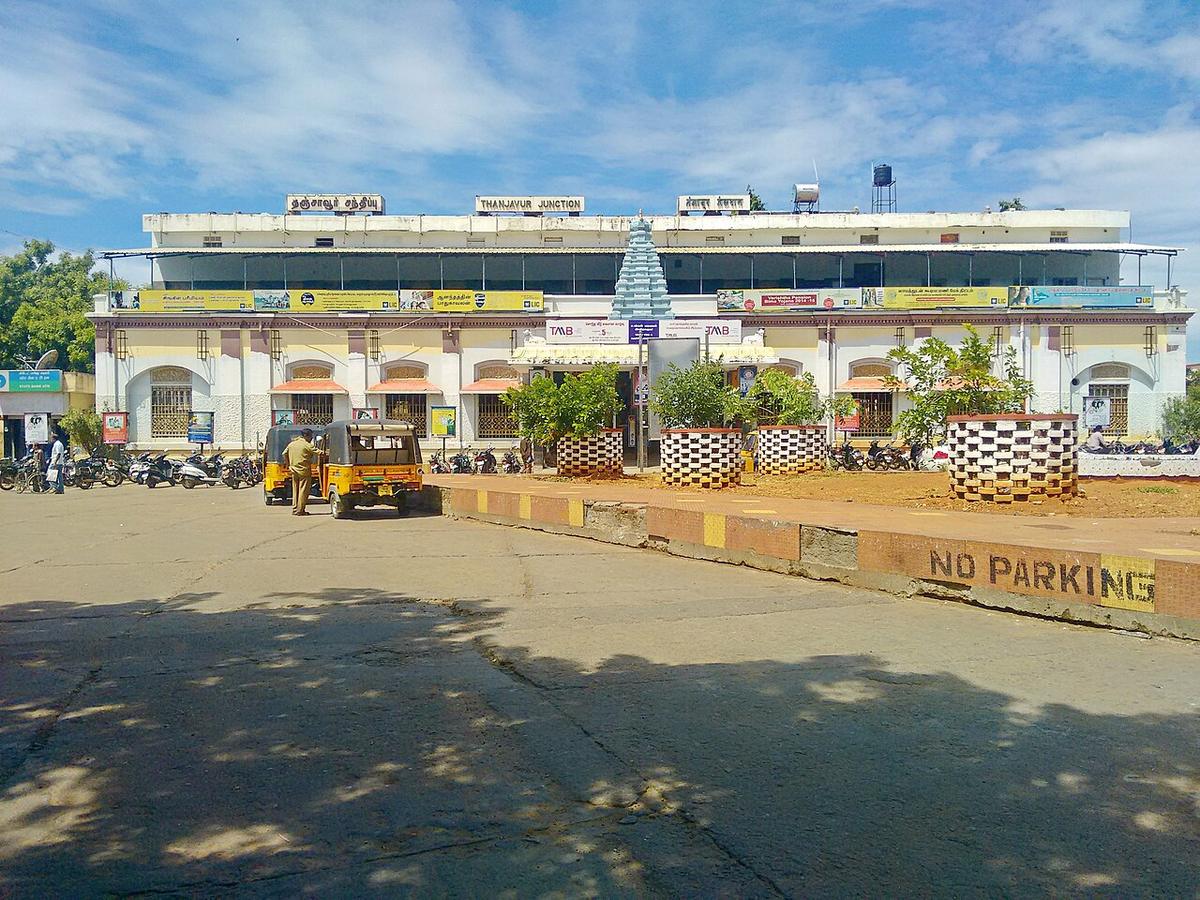
Thanjavur Junction is the modern gateway to a city that was already eight centuries old when the railway reached it, a junction station on the Southern Railway network linking the old Chola capital to Tiruchirappalli and the wider Tamil Nadu line. Everything this route visits predates the platform you are standing on by the better part of a millennium.
Brihadisvara Temple
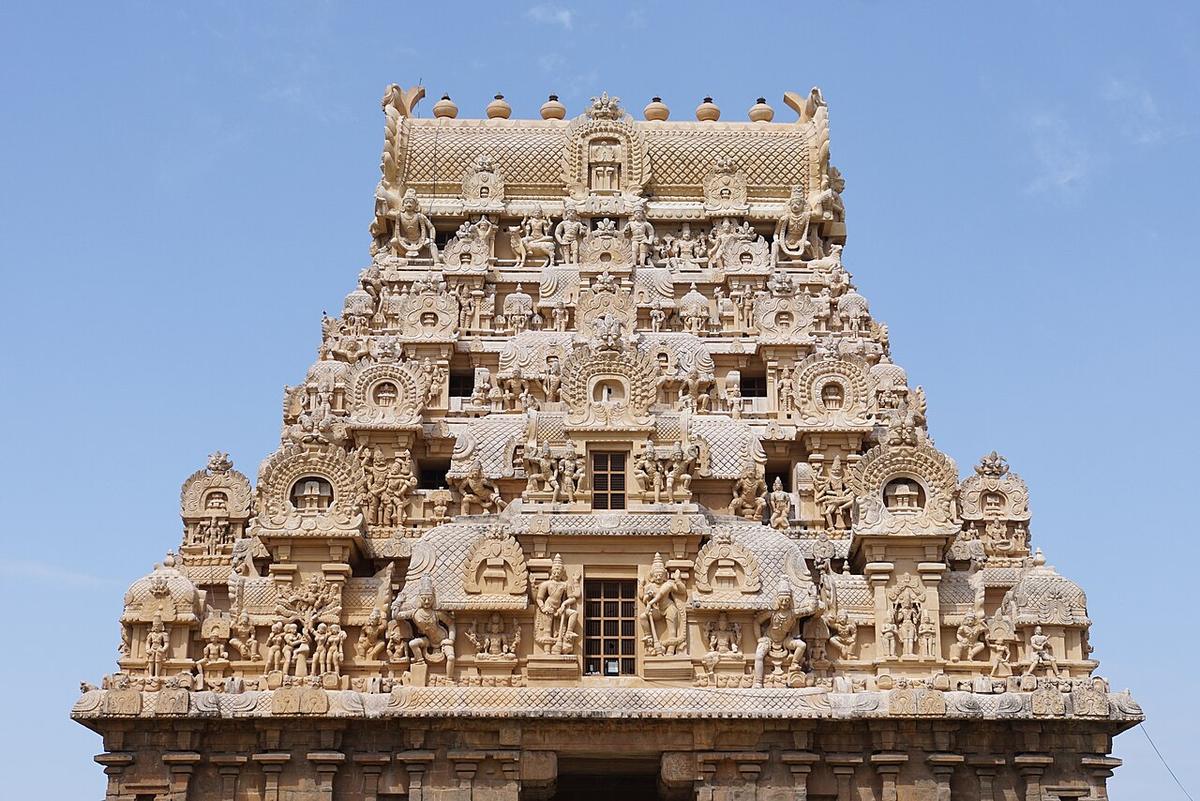
Built by the Chola emperor Rajaraja I between 1003 and 1010 CE and originally named Rajarajeshvaram after him, this granite temple is the centrepiece of the UNESCO World Heritage “Great Living Chola Temples.” Its vimana tower rises 63.4 metres, one of the tallest in South India, capped by a single cupola-shaped stone weighing 25 tonnes, and the sanctum holds one of the largest monolithic Shiva lingas in the country at 8.7 metres tall. A monolithic Nandi bull facing the shrine, carved from a single block, weighs about 25 tonnes of its own.
Sivaganga Park
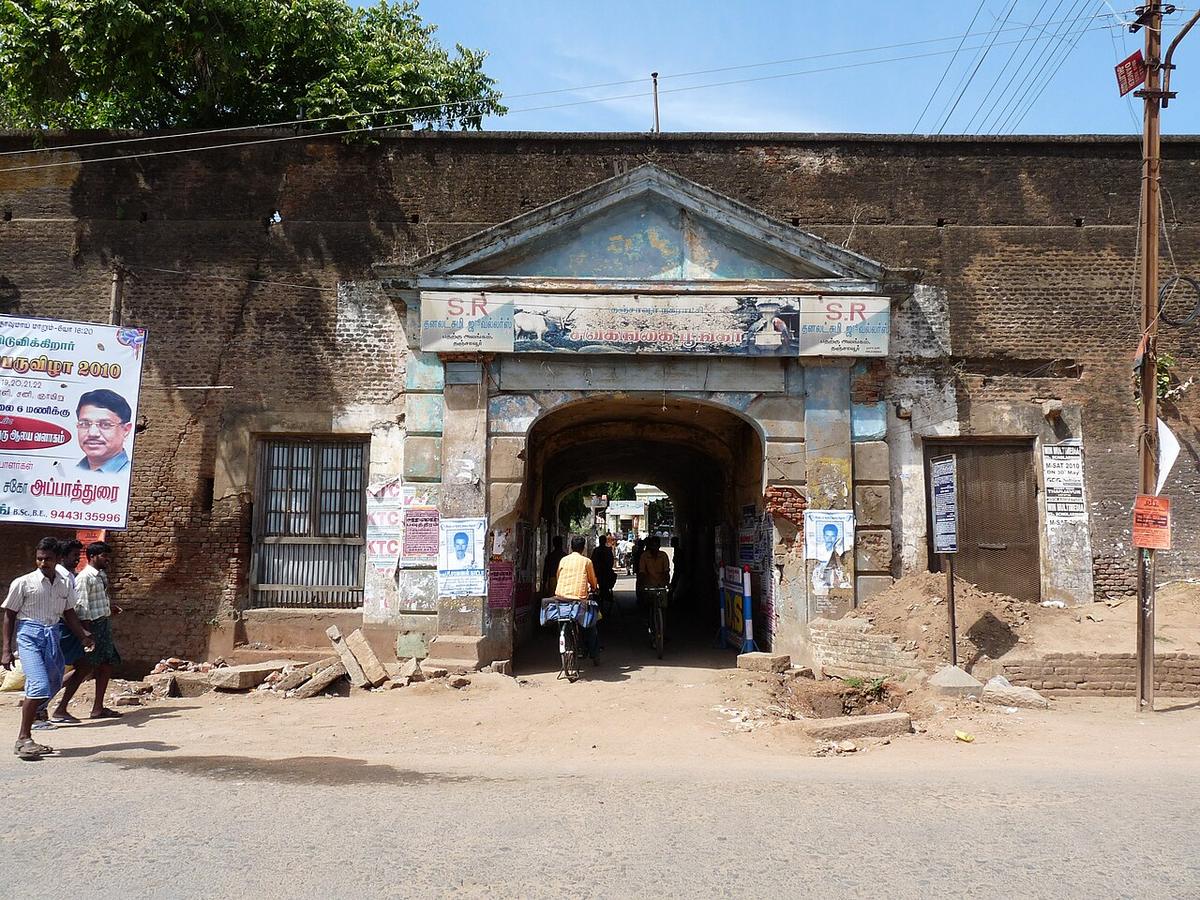
A recreational park immediately east of the Big Temple, laid out around the Sivaganga tank inside the old fort walls that once ringed the temple’s moat. It is one of the rare stretches of shade and open water in Thanjavur’s dense old town, used today for a quiet walk rather than any ceremony.
Schwartz Church
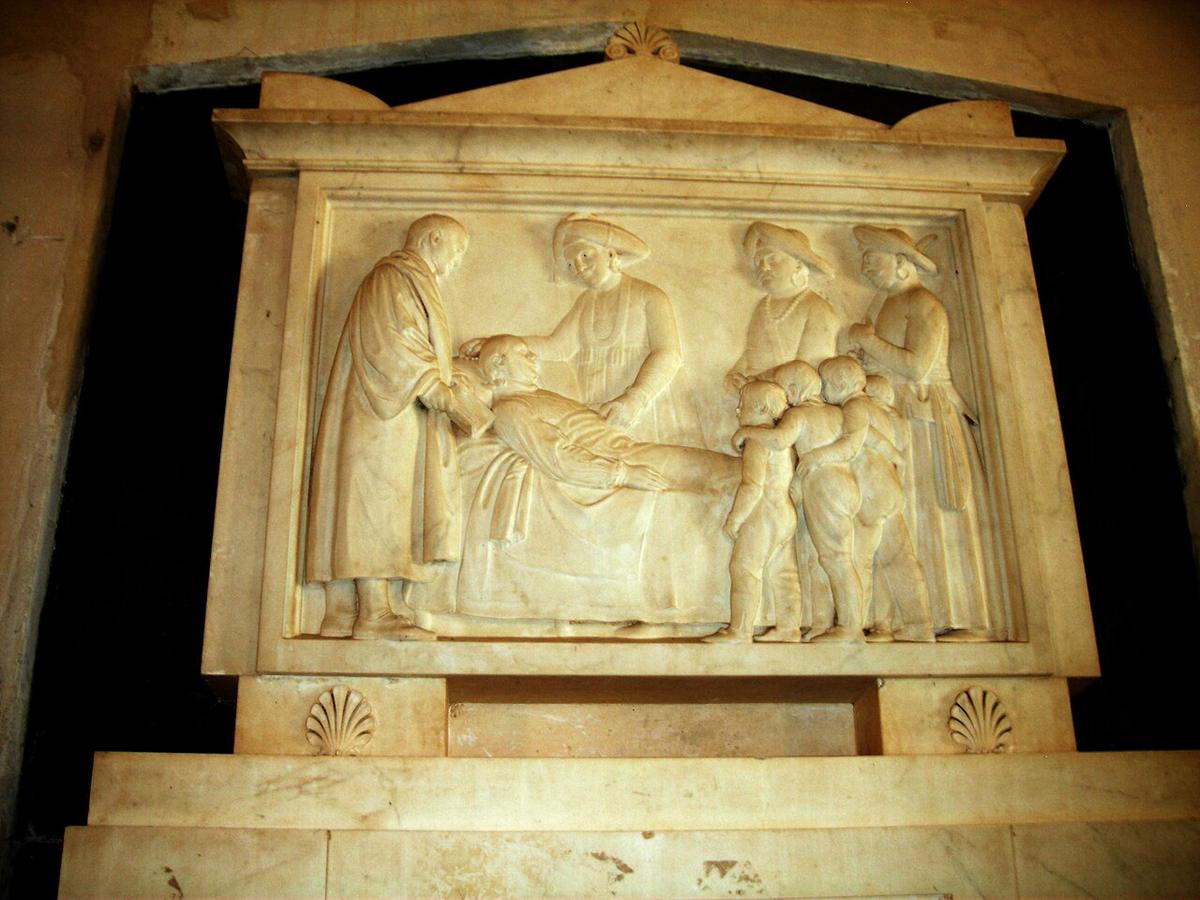
Built in 1779 by the Danish missionary Christian Friedrich Schwarz, this plain church holds a marble memorial sculpted in 1807 by the London-based sculptor John Flaxman, commissioned by King Serfoji II, showing Schwarz on his deathbed with the king and a fellow missionary at his side. Schwarz had tutored the young Serfoji II years earlier; the king had the finished sculpture installed in 1811, a Maratha ruler paying a European sculptor to commemorate a Danish missionary in a Tamil city.
Thanjavur Maratha Palace
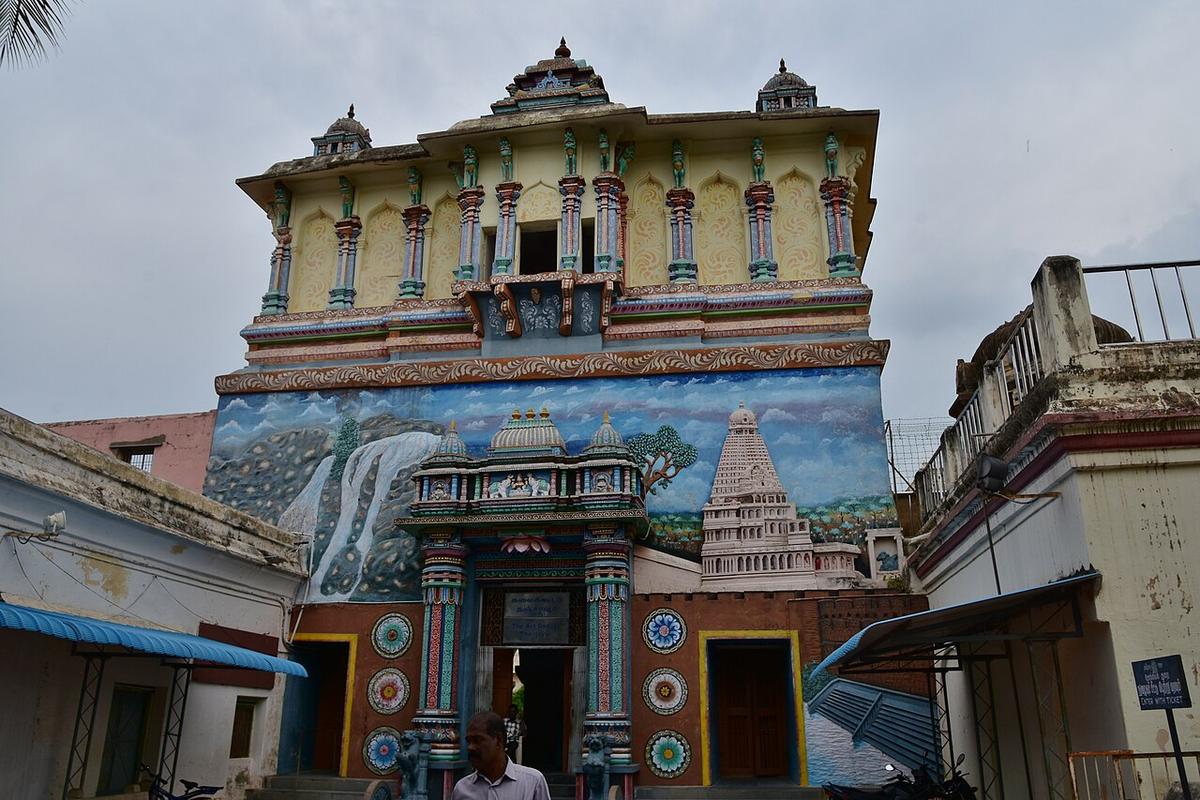
Known locally as Aranmanai, simply “the Palace”, this complex has been the seat of Thanjavur’s rulers since at least the 16th century, home most recently to the Bhonsle family, who governed as Maratha kings of Tanjore from 1674 to 1855. It sits at the historic heart of the old city, its durbar halls, courtyards and bell tower built up in stages by Nayak and then Maratha rulers over roughly three centuries.
Saraswathi Mahal Library
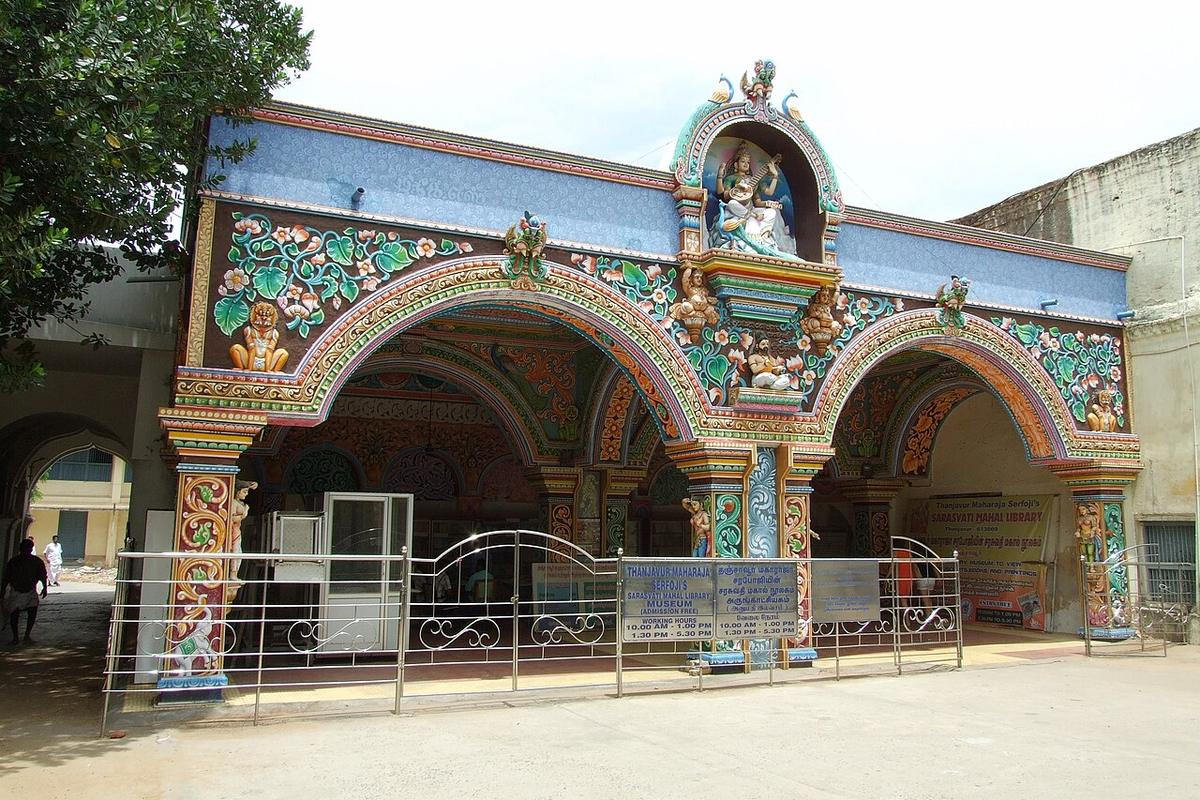
Established inside the palace complex by the Nayak kings in the 16th century and expanded by the Maratha rulers who followed, Serfoji II above all, an avid collector and patron of scholarship, the Saraswathi Mahal Library holds more than 49,000 volumes, most of them palm-leaf and paper manuscripts in Tamil and Sanskrit, alongside rare works on medicine, law and the arts. The Encyclopaedia Britannica once called it simply the most remarkable library in India.