Udaipur: The City of Lakes
The Udaipur Safarnama runs 25.4 km across 10 monuments, from Fateh Sagar Lake to Monsoon Palace, part of The Fort & Palace Trail. Udaipur is known as the city of lakes, here is the story the route tells, one stop at a time.
Fateh Sagar Lake
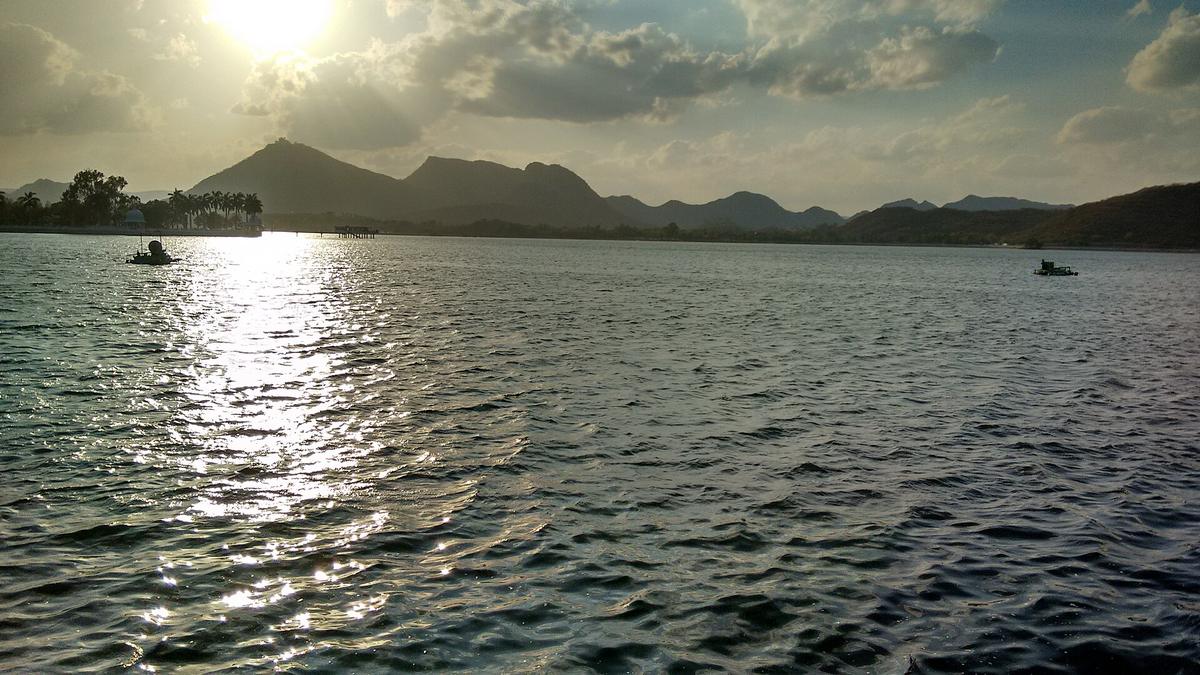
A lake first cut in 1678 under Maharana Jai Singh. Its earthen bund was washed out in floods roughly two centuries later, and in 1889 Maharana Fateh Singh rebuilt it with the masonry Connaught Dam, laid by the Duke of Connaught, Queen Victoria's son, and the lake took Fateh Singh's name. Built for irrigation, it is now Udaipur's second drinking-water source. The blue water ringed by green Aravalli hills is why Udaipur gets called "the second Kashmir".
Saheliyon ki Bari
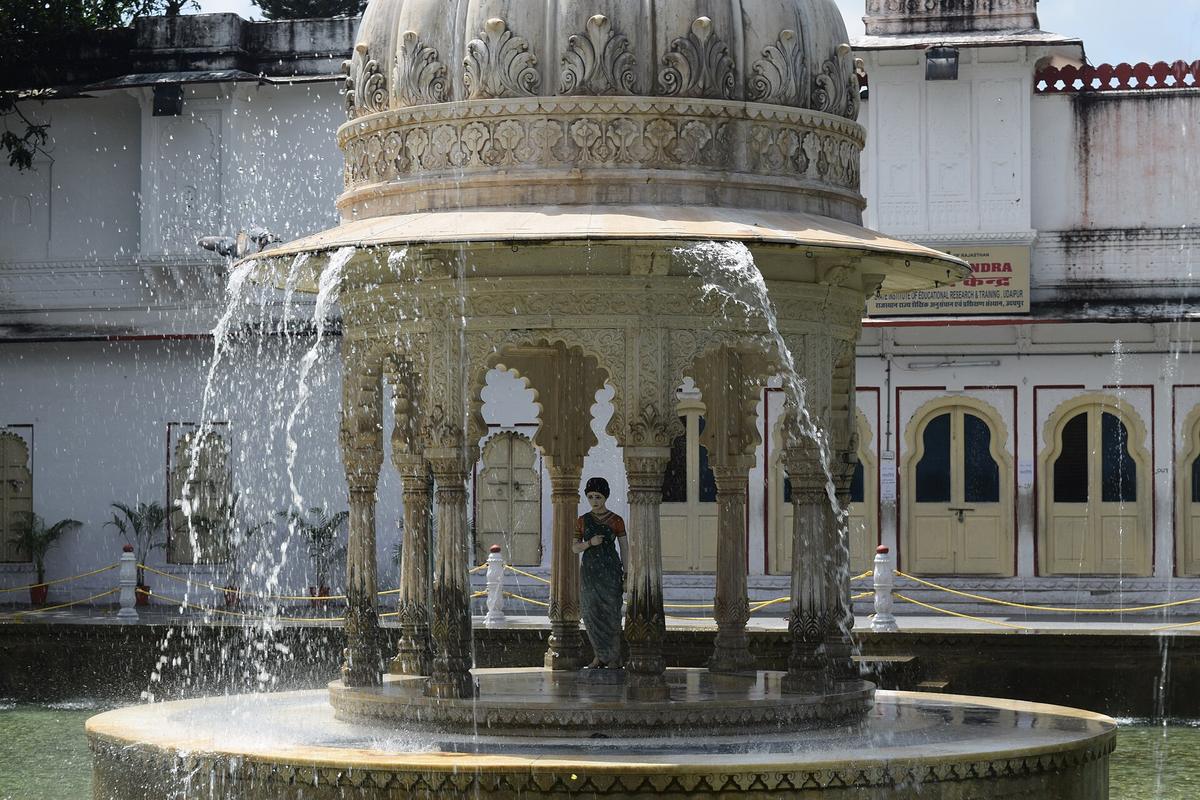
Laid out in the early 18th century as a retreat for the women of the royal household, by tradition for a queen and the attendants who came with her in her dowry. Fed entirely by gravity from Fateh Sagar Lake uphill, its fountains need no pump: lotus pools, marble elephants, a rain fountain and a black-marble kiosk, all running on water pressure alone.
Moti Magri
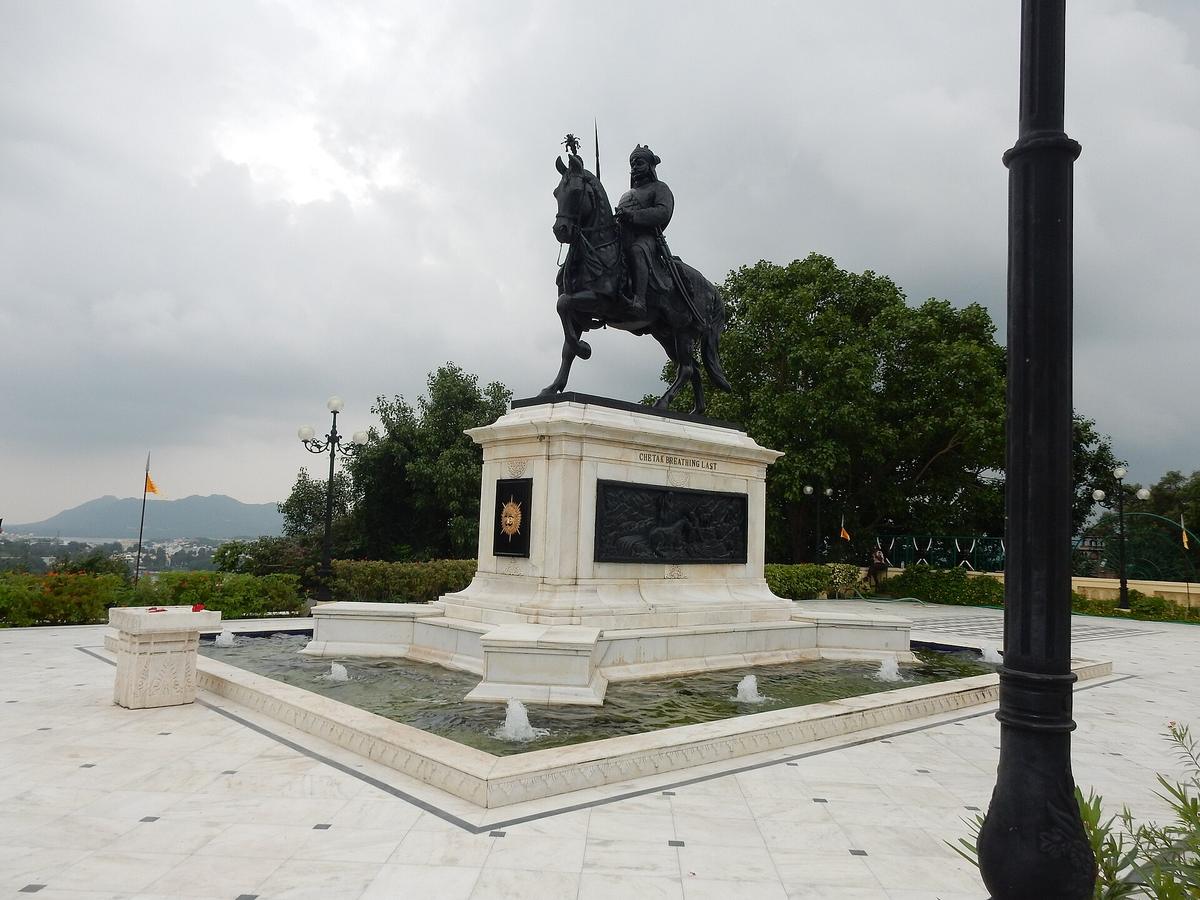
"Pearl Hill", overlooking Fateh Sagar Lake. The memorial was begun in 1948; the state gave the land free and the one-piece bronze statue, Maharana Pratap on his horse Chetak, was unveiled in 1962. It remembers the Battle of Haldighati (1576) against Akbar's army, where the wounded Chetak carried Pratap clear of the field before collapsing.
Ahar Cenotaphs
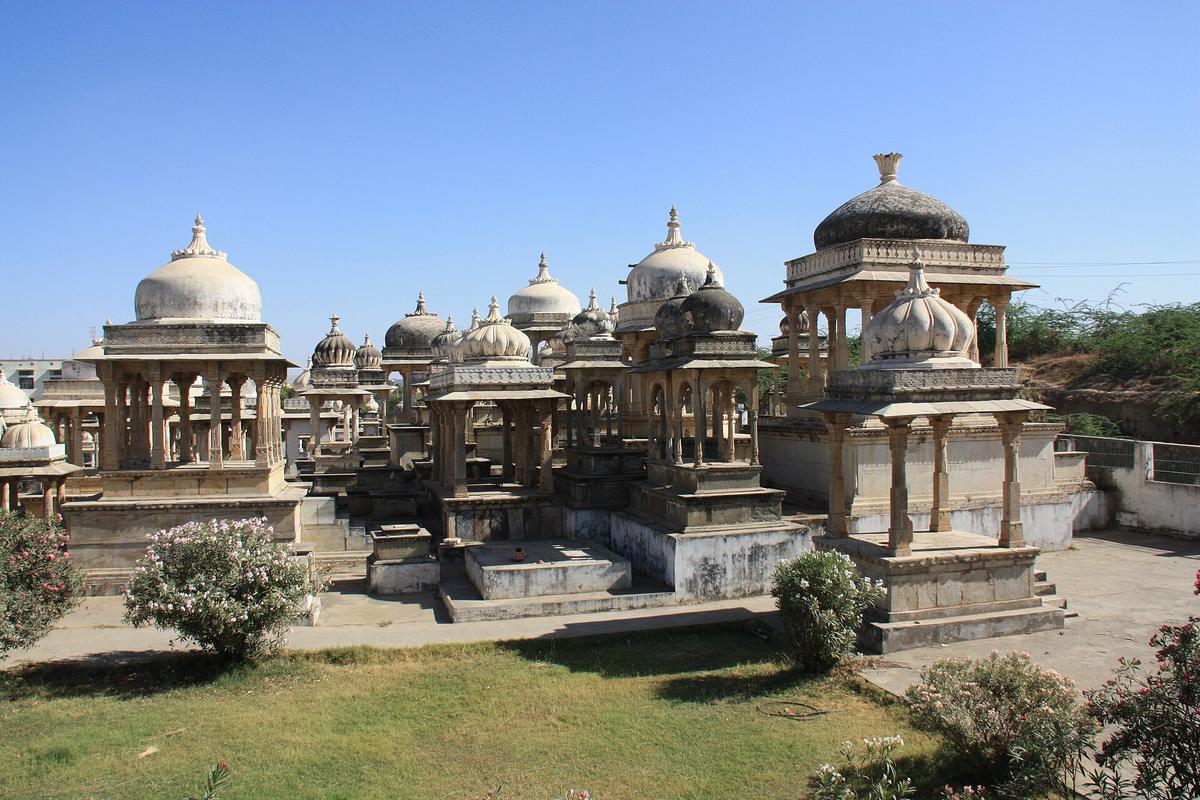
A field of about nineteen royal chhatris on the ground where the Maharanas of Mewar were cremated for some 350 years; the largest marks Maharana Amar Singh I (d. 1620). Ahar is far older still, excavations found a Chalcolithic settlement here from around 2500 BC, and as Aghatpura it was an early capital of Mewar's Guhila rulers around 948–1116 AD.
Gangaur Ghat
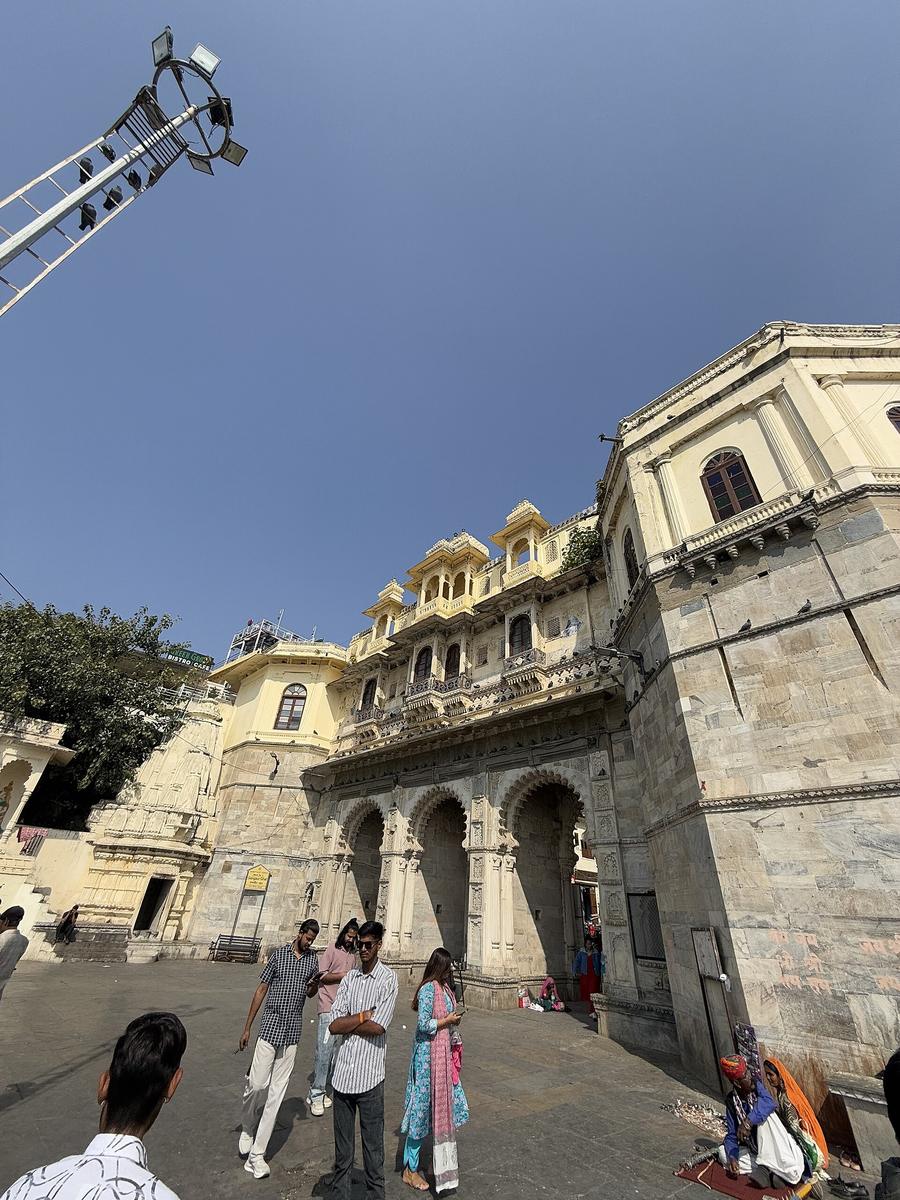
The main ceremonial step-landing on Lake Pichola, below the old city near Jagdish Chowk. Each spring the Gangaur procession, palanquins, chariots, bullock carts, folk musicians, winds down from the City Palace to this ghat, where the images of Gan and Gauri are carried into the lake.
Bagore ki Haveli
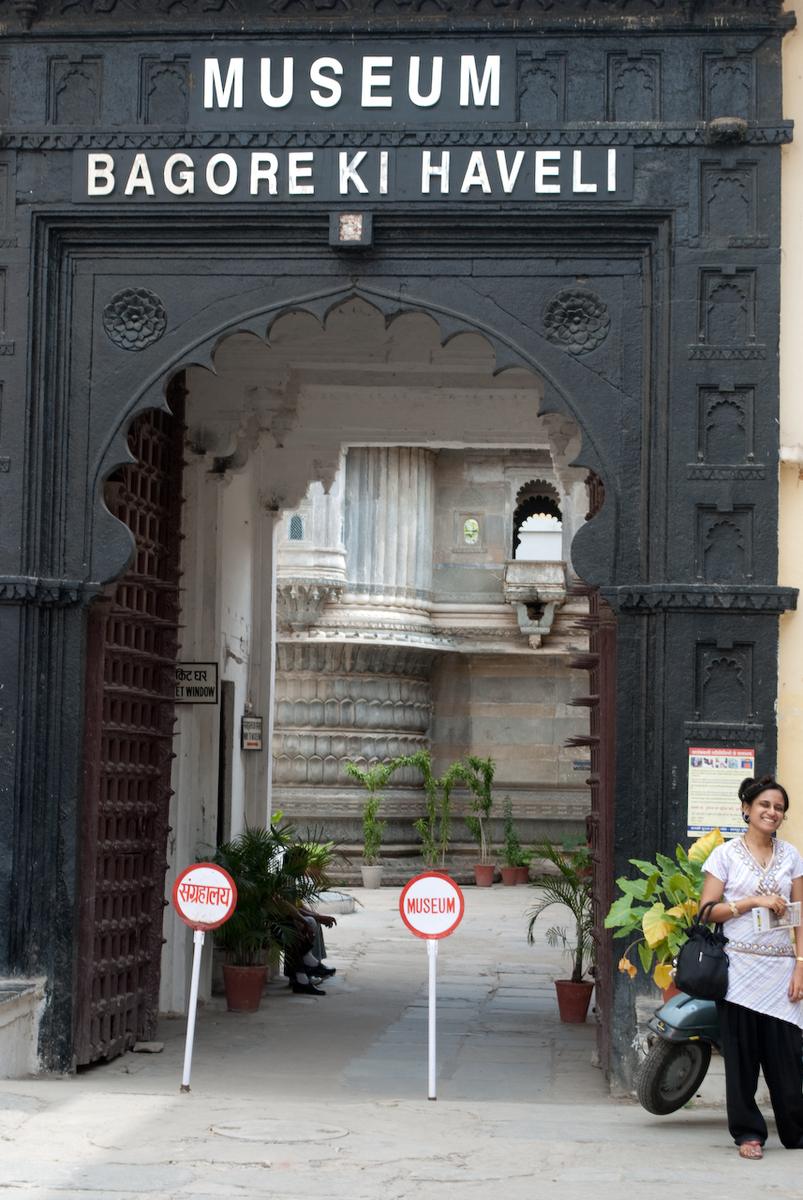
A lakefront mansion of 138 rooms built on Gangaur Ghat between 1751 and 1778 by Amarchand Badwa, prime minister of Mewar. It passed to the royal family, gained a triple-arched gate in 1878, then housed government staff until 1986. Restored by the West Zone Cultural Centre, lime mortar, lakhori brick, uncovered 18th–19th-century murals, it is now a museum with a nightly folk-dance show.
Jagdish Temple
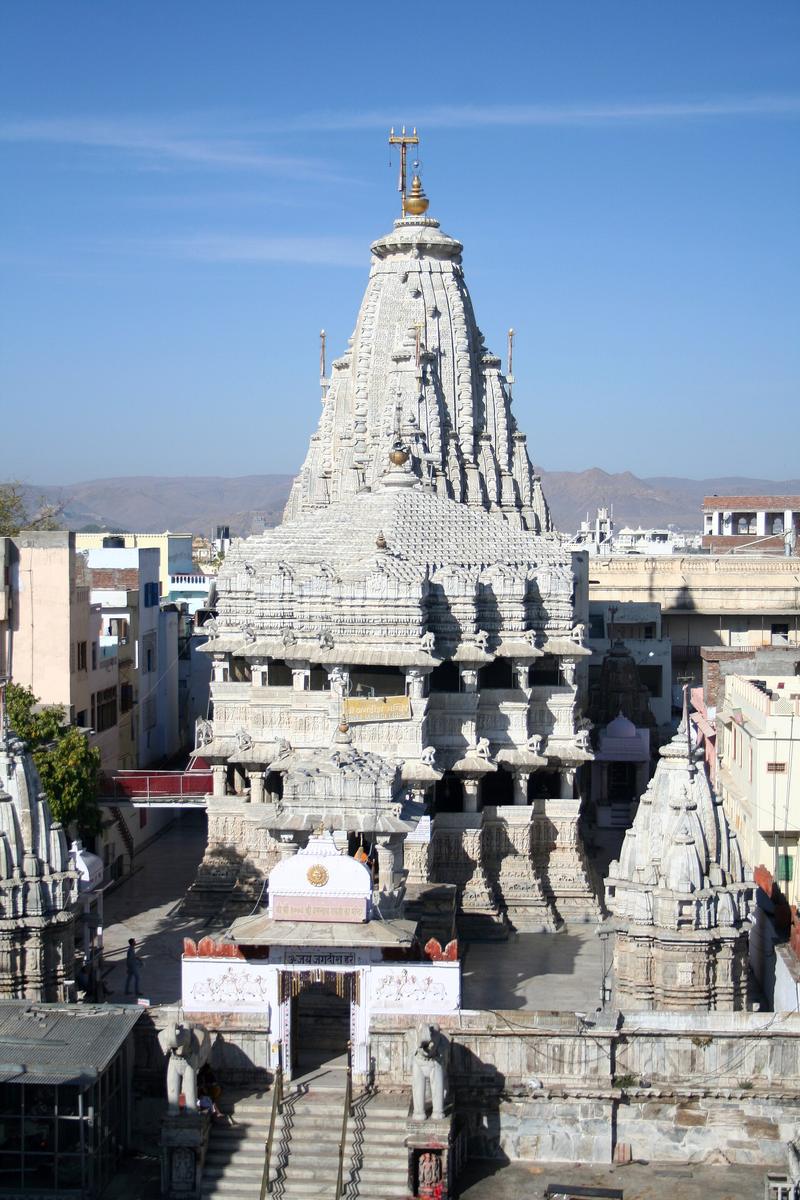
Built in 1651 by Maharana Jagat Singh for about 1.5 million rupees of the day, in the Maru-Gurjara style, and in continuous worship ever since. Thirty-two marble steps, guarded by a brass Garuda, climb to a sanctum holding a single block of black stone carved as Jagannath, a form of Vishnu. The spire stands nearly 79 feet, the tallest in the city.
City Palace
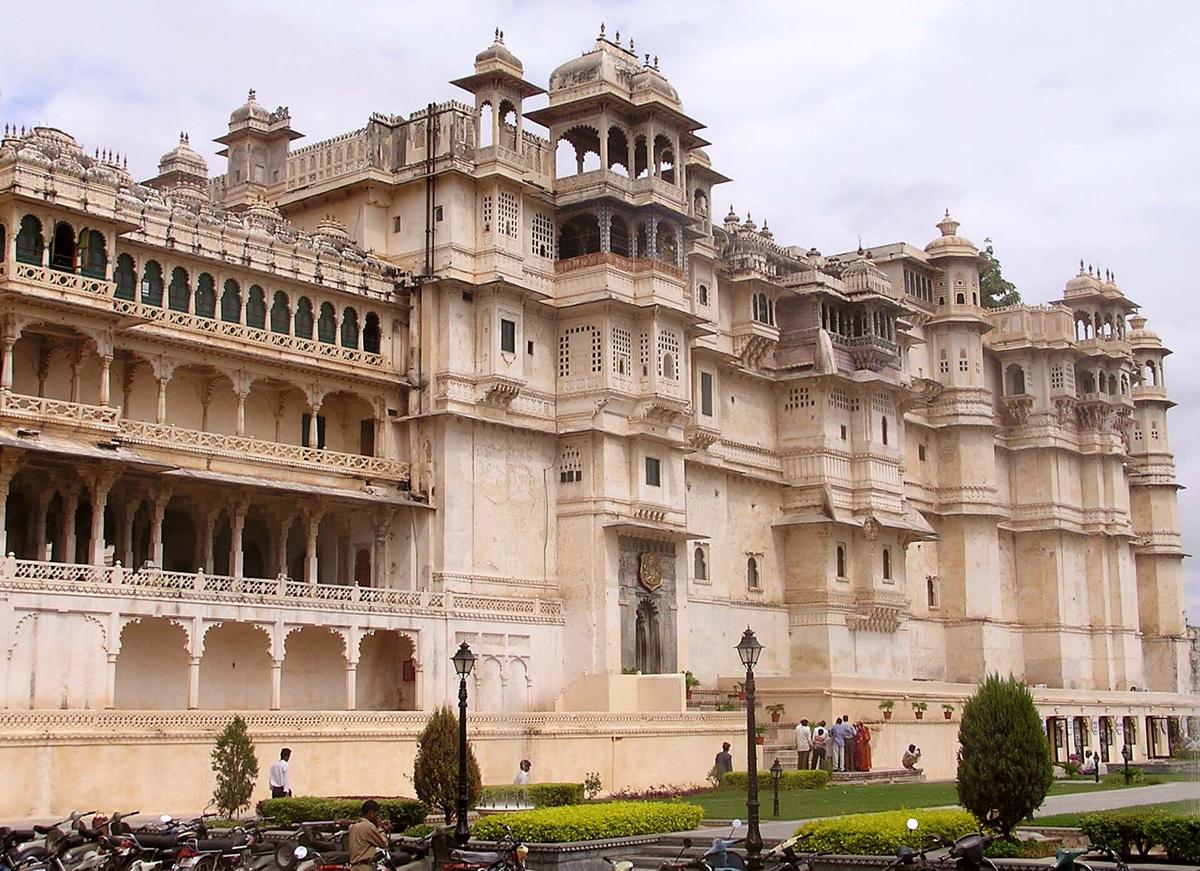
Begun in 1553 when Maharana Udai Singh II moved the Mewar capital from Chittorgarh to the new city on Lake Pichola. Twenty-two generations of Sisodia Rajputs added to it over nearly four centuries, eleven linked palaces behind a granite-and-marble facade 244 m long and 30 m high, including the Sheesh Mahal and the peacock-tiled Mor Chowk. It stood in for exotic locations in the 1983 Bond film Octopussy.
Jag Mandir
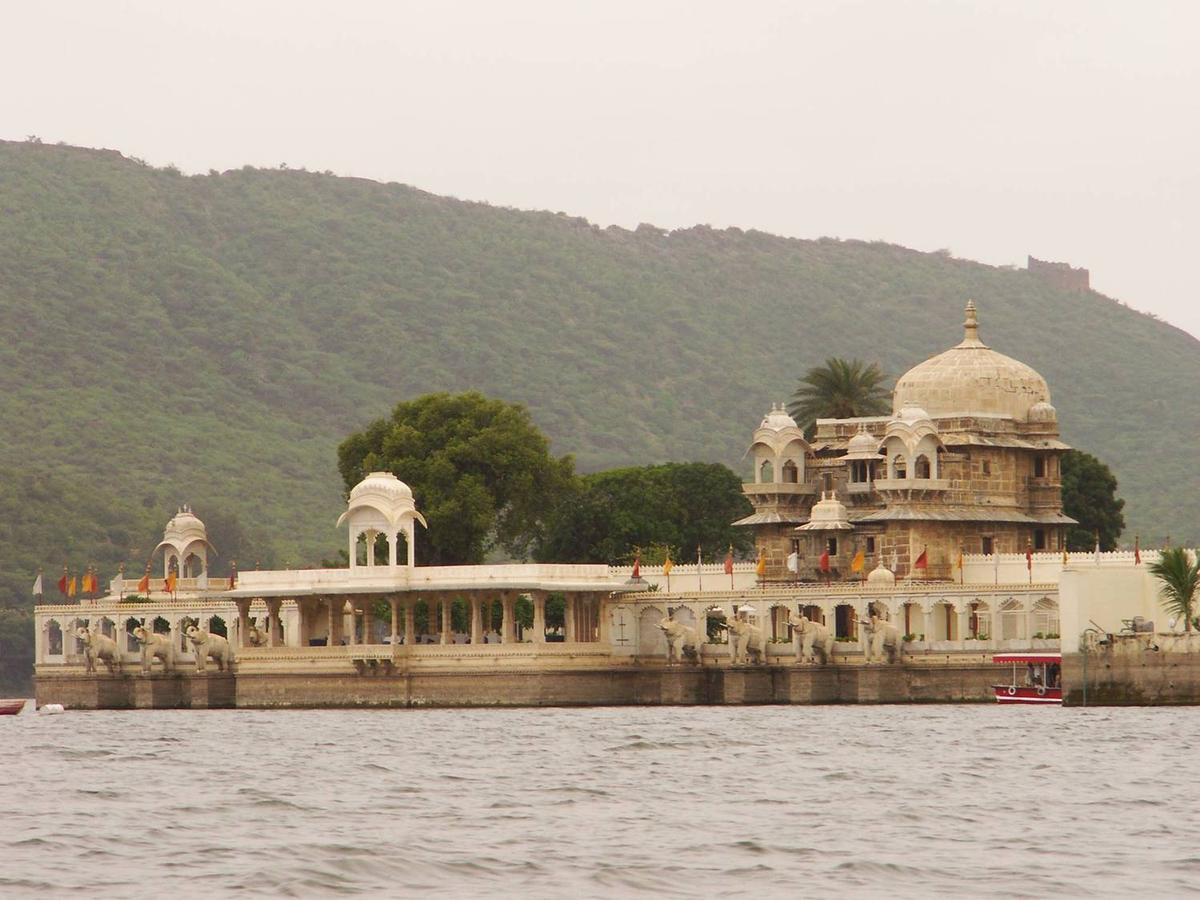
An island palace on Lake Pichola, started around 1616 under Maharana Amar Singh and finished under Jagat Singh I (1628–52), who gave it his name. In 1623 the Mughal prince Khurram, the future Shah Jahan, sheltered here during his revolt against his father; the domed Gul Mahal was raised for him. Yellow sandstone and marble, a jetty lined with carved stone elephants.
Monsoon Palace
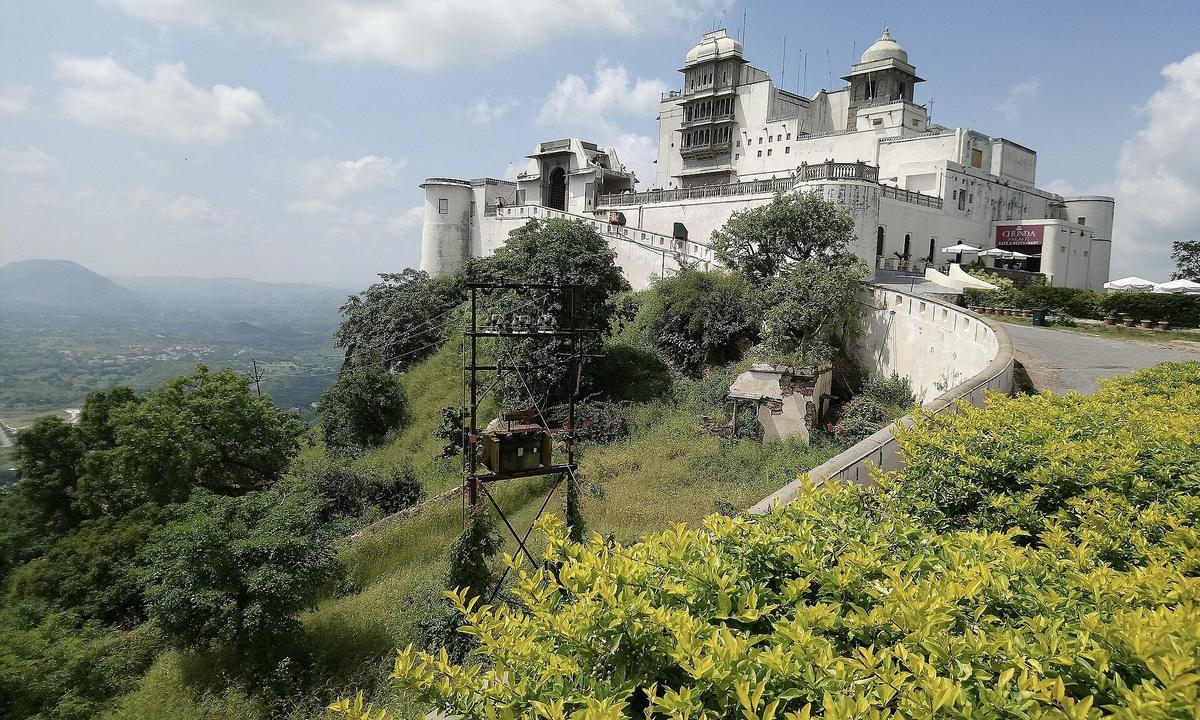
A white-marble palace on Bansdara peak, 944 m up in the Aravallis west of the city. Maharana Sajjan Singh began it in 1884, meaning it as a nine-storey observatory to track the monsoon clouds and to give work to his people. He died at 26 with the plan unfinished; Maharana Fateh Singh completed it as a monsoon retreat. At dusk the stone turns gold above the whole valley of lakes.