Vaishali: The city of the last sermon
The Vaishali Safarnama is a 6.9 km route across 5 stops, from Vaishali Museum to Ashokan Pillar, Kolhua, part of the Buddhist Circuit. See the whole trail.
Vaishali Museum
Vaishali was the capital of the Vajjika League, considered one of the first examples of a republic, from around the 6th century BCE. The Buddha preached his last sermon here before his mahaparinirvana.
Abhishek Pushkarini
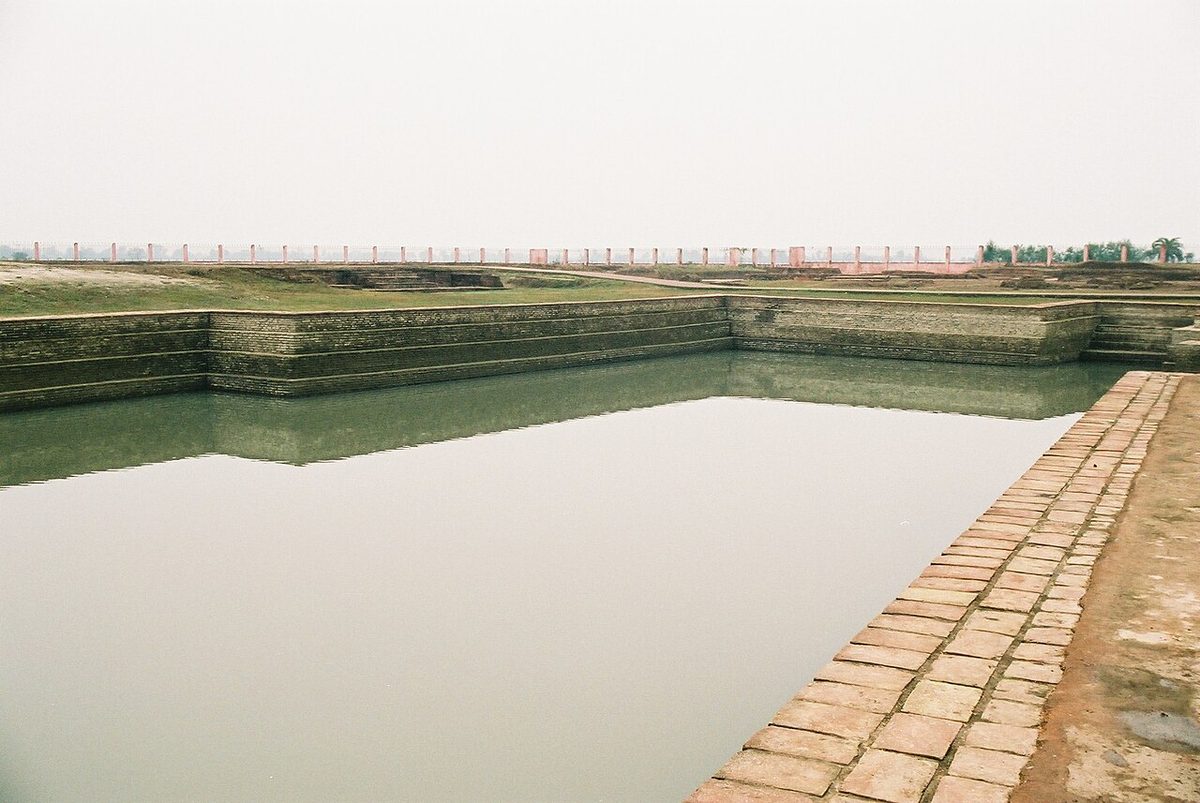
Abhishek Pushkarini is Vaishali's coronation tank. The Japanese temple and the World Peace Pagoda stand beside it.
Relic Stupa
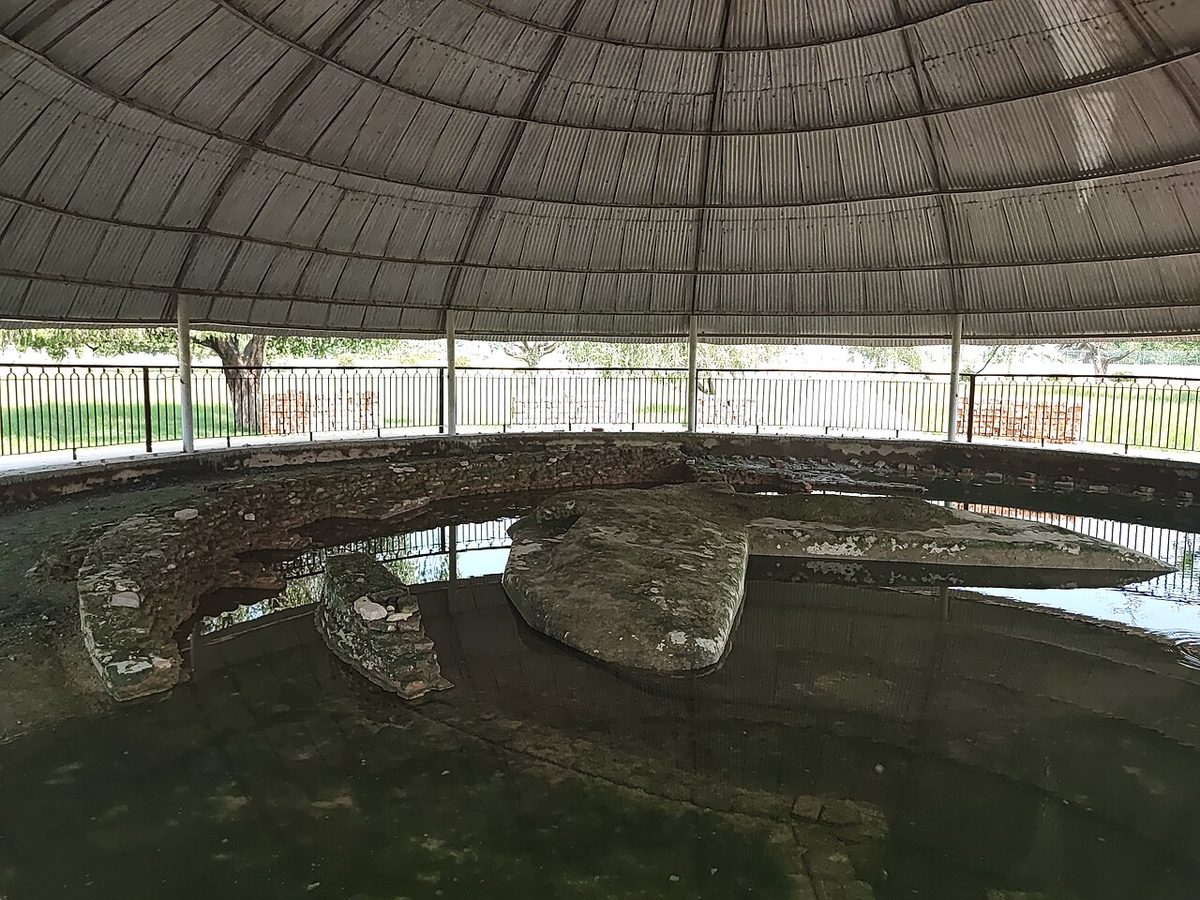
The Relic Stupa of Vaishali is a brick and clay stupa built by a Licchavi king to hold relics of the Buddha. Dated to around the 5th century BCE, it is considered the earliest archaeologically known stupa.
Vishwa Shanti Stupa
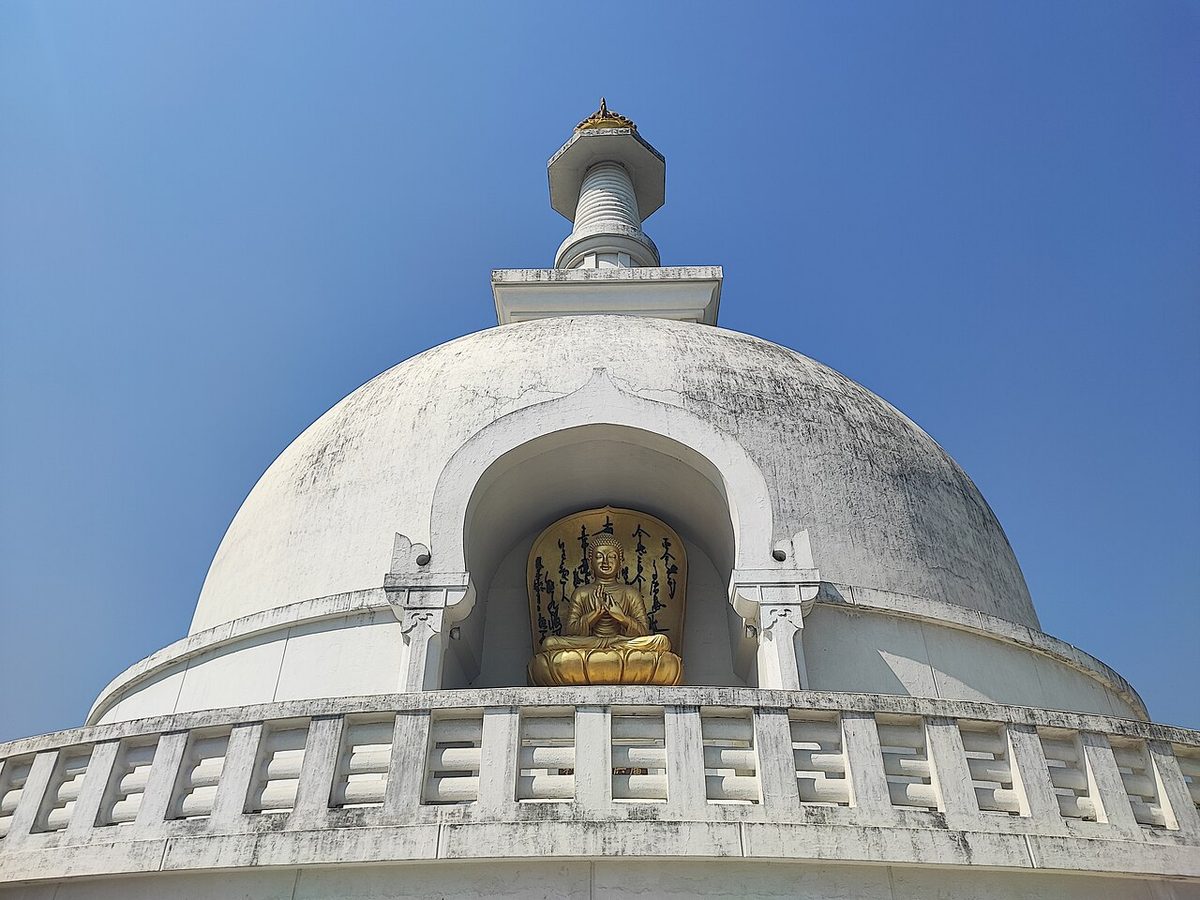
Vaishali's World Peace Pagoda was built by the Japanese Nipponzan Myohoji order. Peace Pagodas like it were begun in 1947 by the monk Nichidatsu Fujii as shrines to world peace.
Ashokan Pillar, Kolhua
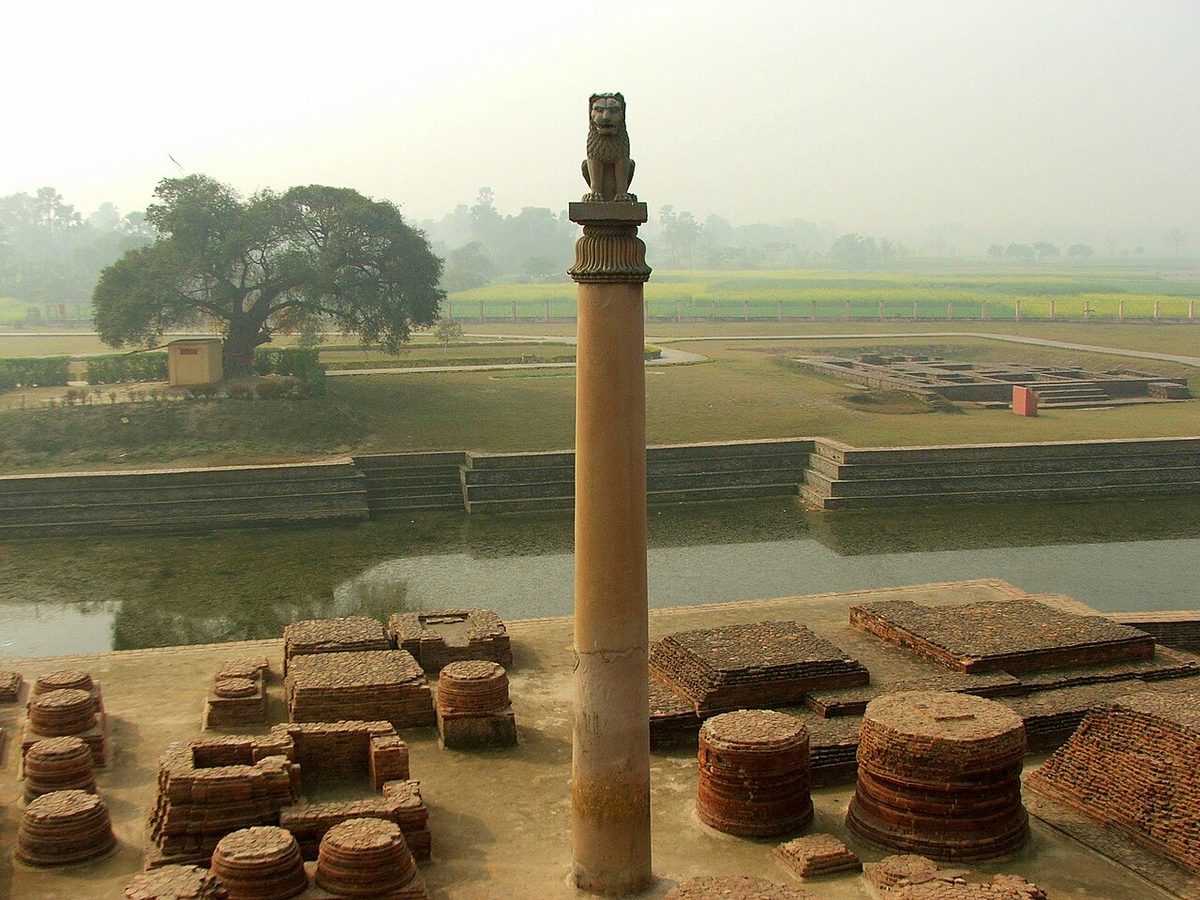
At Kolhua, excavations by the Archaeological Survey of India revealed a monastery, a tank, votive stupas and an Ashokan pillar: an 11-metre polished sandstone shaft, known locally as the Lat, topped with a lion capital and probably one of Ashoka's earliest pillars.